

Summer storm roof damage before fall is not always obvious. A roof may look normal from the driveway, but wind, hail, heavy rain, falling branches, and repeated heat can leave behind small problems that become more serious later.
Before fall arrives, homeowners should take time to look for signs that summer weather may have affected the roof. Small shingle issues, clogged gutters, loose flashing, attic moisture, or interior stains can all point to roofing concerns that should be checked before cooler weather and seasonal debris add more stress.
For homeowners in areas served by Ridgeline Roofing & Restoration, including Birmingham/Hoover, Huntsville, Odenville, Nashville, Atlanta, Marietta, and nearby Southeast communities, a post-storm roof check can help clarify whether the roof needs repair, storm restoration support, or continued monitoring.
What Should Homeowners Check After Summer Storms?
After summer storms, homeowners should check for lifted or missing shingles, granule loss, clogged gutters, dented vents, loose flashing, tree debris, attic moisture, and ceiling stains. These signs may indicate storm damage, roof aging, drainage problems, or moisture entry that should be inspected before fall.

Why Summer Storm Damage Can Be Easy to Miss
Summer storms can damage a roof without creating an immediate leak. Wind may lift shingles slightly. Hail may bruise shingles or loosen granules. Heavy rain may expose flashing weaknesses. Tree debris may collect in valleys and gutters. These issues can stay hidden until the next round of weather makes them worse.
That is why a roof can look fine from the ground but still have areas that need attention. The goal is not to assume every storm means major damage. The goal is to identify visible warning signs early and decide whether a professional inspection is needed.

1. Lifted, Missing, or Damaged Shingles
Shingles are often the first part of the roof affected by summer storms. Strong wind can lift shingle edges, loosen seals, or remove shingles entirely. Hail can weaken the shingle surface even when damage is hard to see from the ground.
Homeowners should look for uneven roof lines, missing shingles, lifted tabs, cracked shingles, exposed underlayment, or roof areas that look darker or more worn than others.
What this may mean: A few damaged shingles may be repairable. Widespread shingle lifting, missing sections, or storm-related wear across multiple slopes may require a more detailed inspection.
Limitation Note: Shingle damage can be difficult to confirm safely from the ground. Some lifted shingles may only be visible from roof level, and not every dark spot or uneven area means storm damage. A professional inspection can help determine the cause and severity.

2. Granule Loss, Gutter Debris, and Drainage Problems
After storms, gutters can reveal important clues about roof condition. If gutters are full of shingle granules, leaves, twigs, or storm debris, the roof and drainage system may need attention before fall.
Granules help protect asphalt shingles from weather exposure. Heavy granule buildup near downspouts may suggest aging shingles, hail impact, or storm-related wear. Clogged gutters can also cause water to back up near the roof edge, fascia, soffits, and siding.
What this may mean: Light debris may only require gutter cleaning. Heavy granule loss, sagging gutters, or repeated overflow may point to roof wear, drainage issues, or storm damage that should be reviewed.
Limitation Note: Granules in gutters can suggest shingle wear, but they do not confirm the full condition of the roof. Granule loss can come from age, storm exposure, recent roof work, or normal weathering. Gutters and roof surfaces should be evaluated together

3. Flashing, Vents, and Roof Penetration Concerns
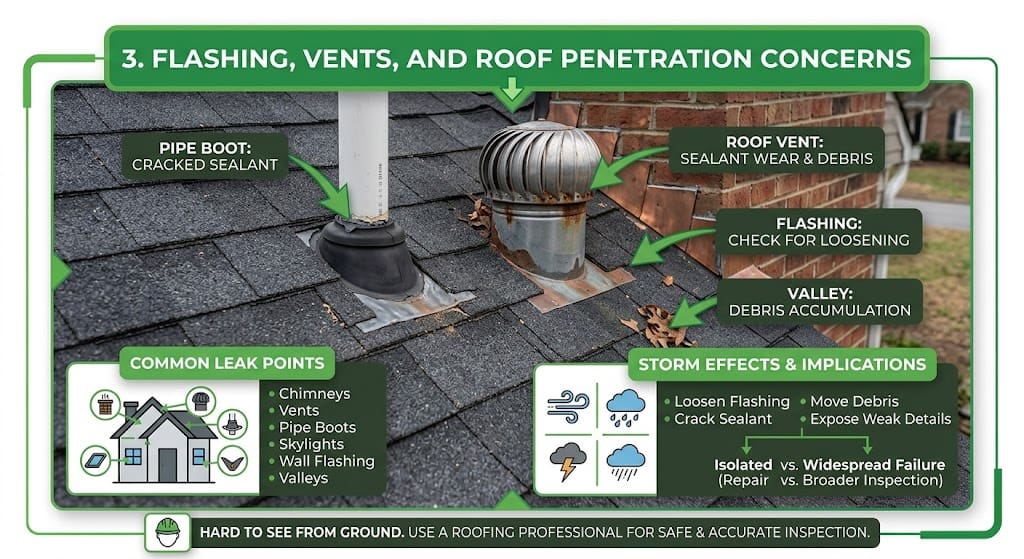
Some of the most common leak points are not in the middle of the shingles. They are around roof transitions and penetrations, including chimneys, vents, pipe boots, skylights, wall flashing, and valleys.
Summer storms can loosen flashing, move debris into valleys, crack old sealant, or expose weak roof details. These areas may not leak during every rain, but they can become more vulnerable as weather changes.
What this may mean: If flashing or pipe boot damage is isolated, repair may be enough. If multiple roof details are failing along with aging shingles or past storm damage, the roof may need a broader inspection.
Limitation Note: Flashing and roof penetration problems are often hard to see from the ground. Homeowners should avoid climbing onto the roof to check them. A roofing professional can inspect these areas more safely and accurately.
4. Attic Moisture and Interior Warning Signs
Not all storm-related roof problems show up outside. Sometimes the first warning signs appear in the attic or inside the home. After summer storms, homeowners should look for damp insulation, dark decking stains, musty odors, rusted nails, ceiling stains, bubbling paint, or soft drywall.
These signs may indicate a roof leak, flashing issue, ventilation problem, condensation concern, or moisture entering through a vulnerable roof area.
What this may mean: A small stain may come from an isolated leak, but recurring moisture, attic dampness, or multiple interior warning signs should be checked before fall weather brings more leaves, rain, and temperature changes.
Limitation Note: Interior stains and attic moisture can show that water or humidity is present, but they do not always identify the exact source. Moisture can travel through framing, insulation, and drywall before becoming visible.

When Should Homeowners Schedule a Roof Inspection After Summer Storms?
Homeowners should schedule a roof inspection after summer storms if they notice missing shingles, gutter granules, ceiling stains, attic moisture, loose flashing, clogged gutters, or tree debris on the roof. An inspection is also smart if the home was in the path of strong wind, hail, or repeated heavy rain.
A professional roof inspection can help determine whether the roof needs repair, storm documentation, gutter attention, flashing work, or replacement planning. It can also help homeowners avoid guessing based only on what is visible from the ground.
If you are concerned about what summer storms may have left behind, Ridgeline Roofing & Restoration can help homeowners understand the condition of their roof and the next step before fall.
Ridgeline Roofing & Restoration Service Areas
This topic is especially relevant for homeowners in Birmingham/Hoover, Huntsville, Odenville, Nashville, Atlanta, Marietta, and nearby Southeast communities served by Ridgeline Roofing & Restoration.
Homes across these areas can face heavy rain, wind, hail, heat, humidity, falling limbs, clogged gutters, and storm-related roof concerns during the summer. Checking the roof before fall can help homeowners address small issues before they become larger seasonal problems.

Trusted External Roofing Resources for Homeowners
For external links, homeowners should rely on genuine third-party sources such as manufacturer documentation, roofing industry organizations, weather safety resources, insurance resources, and building code information. These resources can help homeowners better understand storm damage, severe weather risks, roof maintenance, and insurance-related documentation.
For storm and severe weather safety, homeowners can review the National Weather Service thunderstorm safety resource and Ready.gov severe weather guidance.
For roofing industry guidance, homeowners can review educational resources from the National Roofing Contractors Association.
For manufacturer guidance on roof damage and storm-related roofing concerns, homeowners can review GAF roof damage resources and GAF storm damage resources.
For general insurance claim education, homeowners can review the National Association of Insurance Commissioners homeowners insurance resource.
Limitation Note: External resources are helpful for education, but they do not replace a roof-specific inspection. Manufacturer guides, weather resources, insurance pages, and industry information can explain general roofing concerns, but they cannot confirm the condition of one individual roof.
Limitation Note: External resources are helpful for education, but they do not replace a roof-specific inspection or project-specific guidance. Manufacturer guides, weather resources, insurance pages, and industry information can explain general roofing concerns, but they cannot confirm the condition of one individual roof.
Homeowners Ask After Summer Storms

Can summer storms damage a roof without causing a leak right away?
Yes. Wind, hail, heavy rain, and debris can weaken shingles, flashing, gutters, or roof penetrations without causing an immediate leak. Damage may become more noticeable later.
What are the first signs of roof damage after a summer storm?
Common signs include missing shingles, lifted shingle edges, granules in gutters, dented vents, loose flashing, clogged gutters, attic moisture, and ceiling stains.
Should I check my roof before fall?
Yes. Fall is a smart time to check the roof because it gives homeowners time to address storm-related concerns before more leaves, rain, and cooler weather arrive.
Can clogged gutters cause roof problems after storms?
Yes. Clogged gutters can cause water to back up near the roof edge, fascia, soffits, and siding. They can also hide granule loss or storm debris that may point to roof wear.
Should I climb on the roof to check for damage?
No. Homeowners should inspect from the ground when possible and avoid climbing onto the roof. Roof surfaces can be slippery, steep, or unsafe after storms.
Conclusion
Summer storms can leave behind more than broken branches and wet gutters. They can also leave behind lifted shingles, granule loss, flashing concerns, drainage problems, attic moisture, and small interior warning signs.
These issues do not always mean the roof needs major work. But they do mean homeowners should pay attention before fall brings more debris, rain, and seasonal changes.
If you are unsure what summer storms may have left behind on your roof, contacting Ridgeline Roofing & Restoration can help you understand whether your roof needs repair, storm damage documentation, or continued monitoring before fall.
FREQUENTLY ASKED QUESTIONS
What can summer storms leave behind on a roof?
Summer storms can leave behind lifted shingles, missing shingles, granule loss, clogged gutters, dented vents, loose flashing, attic moisture, and interior water stains.
How do I know if my roof has storm damage?
Visible signs may include missing shingles, shingle debris, granules in gutters, dents on vents or metal surfaces, ceiling stains, or debris in roof valleys. A professional inspection can confirm the extent of damage.
Should I schedule a roof inspection before fall?
Yes, especially if your home experienced hail, strong wind, heavy rain, falling limbs, or repeated summer storms. A fall inspection can help identify issues before seasonal weather changes.
Does every storm-damaged roof need replacement?
No. Some storm damage can be repaired, while more widespread damage may require replacement planning. The right option depends on roof age, condition, damage severity, and leak history.
Who can help check my roof after summer storms?
Ridgeline Roofing & Restoration can help homeowners understand roof condition, storm damage concerns, repair options, and next steps before fall.