
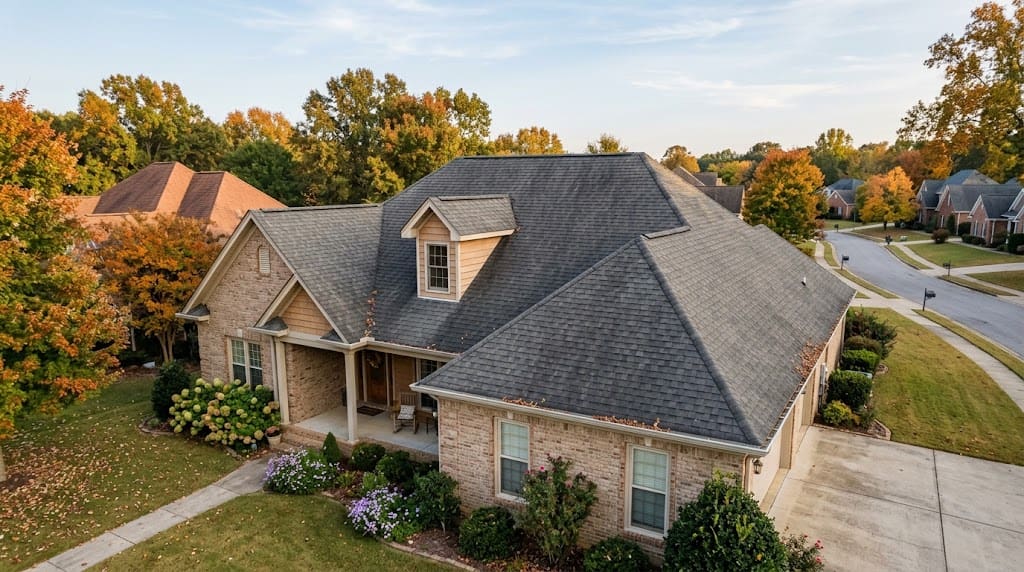
Huntsville, AL fall roofing maintenance is important because cooler weather can reveal roof problems that started during summer heat, heavy rain, wind, and storms. A roof may look fine from the ground, but small issues like loose shingles, clogged gutters, worn flashing, attic moisture, or hidden storm damage can become more noticeable as the season changes.
Fall is a smart time for Huntsville homeowners to slow down and check the roof before colder nights, seasonal rain, falling leaves, and winter weather add more stress to the home. The goal is not to assume every roof needs repair or replacement. The goal is to identify warning signs early so homeowners can make informed decisions before small roof issues become expensive problems.
If your home has been through another hot North Alabama summer, Ridgeline Roofing & Restoration can help evaluate your roof and explain whether it may need inspection, repair, storm damage review, maintenance, or replacement planning.
How Do I Know If My Huntsville Roof Is Ready for Cooler Weather?
Your Huntsville roof may be ready for cooler weather if the shingles are secure, gutters are draining properly, flashing is tight, roof valleys are clear, attic areas are dry, and there are no signs of leaks, granule loss, or storm damage. If you notice missing shingles, clogged gutters, ceiling stains, loose flashing, or attic moisture, it may be time to schedule a roof inspection before fall weather continues.
Why Fall Is an Important Roofing Season in Huntsville
Fall comes after months of roof stress. Huntsville roofs can experience high summer heat, humidity, thunderstorms, wind, heavy rain, and falling limbs. Even if the roof did not leak during summer, those conditions may have left behind small weak points.
Cooler weather also brings seasonal changes that can affect the roof. Leaves can clog gutters, temperature changes can reveal material wear, and fall rain can expose leaks that were not obvious during dry weather. Checking the roof early gives homeowners time to address concerns before colder weather arrives.

1. Check for Missing, Lifted, or Aging Shingles
Shingles are the first layer of defense against rain, wind, and seasonal weather. If shingles are missing, loose, cracked, curled, or aging, cooler weather and fall rain may make those problems more noticeable.
Huntsville homeowners should look for:
Missing shingles: Open areas may expose the roof to water intrusion.
Lifted shingle edges: Wind may have weakened the seal.
Curling shingles: This can suggest age, heat exposure, or ventilation issues.
Uneven roof color: Patchy areas may point to granule loss or wear.
What this may mean: The roof may have aging materials, wind damage, heat stress, or areas that need repair before cooler weather adds more pressure.
Limitation Note: Some shingle problems are difficult to see from the ground. Homeowners should avoid climbing onto the roof and schedule a professional inspection if damage is suspected.
2. Look for Granules in Gutters and Around Downspouts
Asphalt shingles have protective granules that help shield the roof from sun and weather exposure. Some granule loss can happen naturally over time, but heavy granule buildup may suggest that shingles are wearing down faster than expected.
Warning signs may include:
Dark sandy material in gutters: This may be loose shingle granules.
Granules near downspout exits: Rain can wash roof granules to the ground.
Patchy shingle color: Missing granules can make shingles look uneven.
Sudden buildup after storms: This may point to hail, wind, or heavy rain impact.
What this may mean: Granule loss can reduce shingle protection and may indicate roof aging, storm wear, or hail-related damage.
Limitation Note: Granule loss should be judged by amount, timing, and roof age. A small amount may be normal, but sudden or heavy buildup should be checked.

3. Clear Gutters Before Leaves Build Up
Fall leaves can quickly block gutters, especially on homes surrounded by mature trees. When gutters are clogged, rainwater may overflow or back up near the roof edge, fascia, soffits, and siding.
Homeowners should check for:
Leaves and twigs in gutters: Debris can stop water from draining correctly.
Water spilling over the edge: Overflow may point to blocked drainage.
Sagging gutter sections: Heavy debris and trapped water can pull gutters down.
Water stains near fascia: Repeated overflow may leave visible marks.
What this may mean: Gutter problems can increase the risk of roof-edge leaks, fascia damage, soffit moisture, and siding issues.
Limitation Note: A clogged gutter can sometimes look like a roof leak from inside the home. Gutters, roof edges, shingles, and fascia should be evaluated together.
4. Check Flashing Around Chimneys, Vents, Skylights, and Walls
Flashing protects some of the most leak-prone areas of the roof. It is installed around chimneys, vents, skylights, roof edges, and areas where the roof meets a wall. If flashing is loose, rusted, cracked, or separated, water may enter during fall rain.
Possible warning signs include:
Loose metal edges: Flashing should sit tight and secure.
Cracked sealant: Heat and age can cause sealant to split or shrink.
Gaps around chimneys or walls: These areas can allow water entry.
Interior stains near walls: These may point to flashing-related leaks.
What this may mean: Flashing problems are a common source of roof leaks and should be reviewed before repeated seasonal rain exposes the issue.
Limitation Note:Flashing damage can be subtle. The visible stain inside the home may not be directly below the actual entry point.
5. Look for Roof Valleys Holding Leaves or Debris
Roof valleys carry a large amount of water because they collect runoff from two roof slopes. During fall, valleys can collect leaves, pine needles, small branches, and other debris. When water cannot flow properly, it may slow down, pool, or move under vulnerable roofing materials.
Homeowners should look for:
Leaves sitting in valleys: Debris can block normal water flow.
Dark staining along valley lines: This may suggest repeated moisture exposure.
Uneven shingle wear: Valley areas often carry more water than other roof sections.
Leaks after long rain: Valley problems may show up during extended rainfall.
What this may mean: Roof valleys may need cleaning, maintenance, or closer inspection to confirm whether water is draining correctly.
Limitation Note: Valleys may look fine from a distance, but small drainage problems can become serious during repeated fall rain.

6. Inspect the Attic for Moisture, Stains, or Musty Odors
ttic can show early signs of water intrusion, ventilation issues, or moisture problems.
If it is safe to access, check for:
Dark roof deck stains: Staining may suggest past or active water movement.
Damp insulation: Wet insulation can indicate moisture entry.
Rusty nails: Rust may suggest humidity or moisture issues.
Musty odors: A damp smell may point to trapped moisture.
Ceiling stains below: Brown or yellow stains may suggest a leak path.
What this may mean: A roof leak, ventilation issue, condensation problem, or hidden storm damage may be present.
Limitation Note: Attic moisture does not always mean an active roof leak. It may also be connected to ventilation, indoor humidity, ductwork, or condensation.
7. Review Recent Storm Exposure Before Cooler Weather Arrives
Huntsville and North Alabama homes can experience strong storms, wind, hail, heavy rain, and falling limbs during the warmer months. Not all storm damage is obvious from the ground, and not every issue causes an immediate leak.
Storm-related signs may include:
Dented gutters or vents: Hail may leave marks on metal surfaces.
Branches or debris on the roof: Falling limbs can damage shingles.
Lifted or missing shingles: Wind can weaken shingle seals.
New leaks after rain: Water may reveal damage that was already present.
Neighbors scheduling inspections: The same storm may have affected nearby homes.
What this may mean: The roof may need storm damage documentation, repair, or a closer inspection before cooler weather continues.
Limitation Note: Not every storm causes roof damage, and not every roof needs replacement. A professional inspection can help determine the actual condition.
What Huntsville Homeowners Can Check Safely From the Ground
Homeowners should not climb onto the roof to inspect damage. A safe ground-level check can still help identify possible warning signs.
Look for missing, lifted, curling, or aging shingles.
Check gutters and downspouts for leaves, debris, or granules.
Look for sagging gutters or staining near fascia.
Watch for debris sitting in roof valleys.
Check ceilings and attic areas for moisture signs.
Look for storm debris, fallen limbs, or dented metal components.
If several warning signs are present, it may be time to schedule a professional roof inspection before cooler weather continues.
Huntsville and Nearby North Alabama Communities
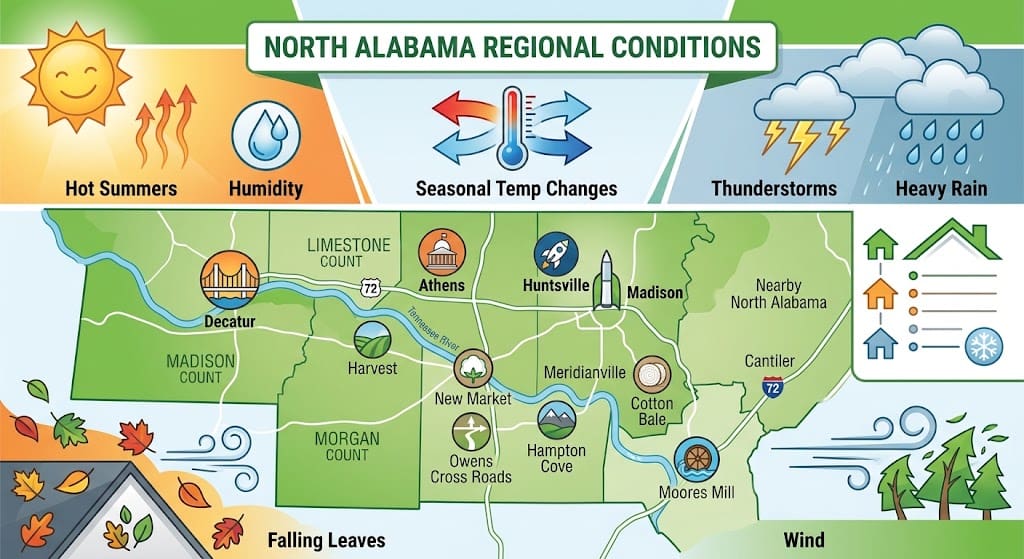
This topic is especially relevant for homeowners in Huntsville, Madison, Decatur, Athens, Harvest, Meridianville, New Market, Owens Cross Roads, Hampton Cove, Moores Mill, and nearby Madison, Limestone, and Morgan County areas.
Homes across North Alabama can experience hot summers, humidity, thunderstorms, heavy rain, wind, falling leaves, and seasonal temperature changes. These conditions can reveal roof concerns before winter weather creates more stress on the home.
When to Schedule a Roof Inspection Before Cooler Weather
You should consider scheduling a roof inspection if your roof has missing shingles, granule loss, clogged gutters, roof valley debris, flashing concerns, attic moisture, ceiling stains, or recent storm exposure.
Ridgeline Roofing & Restoration helps homeowners evaluate roof condition, storm damage concerns, repair needs, maintenance issues, and replacement planning. If your Huntsville roof has been through summer heat and storms, a fall inspection can help identify what needs attention before cooler weather continues.
Helpful External Resources for Homeowners
For additional homeowner education, review these trusted third-party resources:
National Weather Service thunderstorm safety guidance
Ready.gov severe weather preparedness guide
National Roofing Contractors Association
Limitation Note: General resources can help homeowners understand storm safety and roof damage basics, but they cannot diagnose the condition of one specific roof.
Birmingham, AL Roof Damage FAQs for Homeowners
What roof damage can summer heat and storms leave behind in Birmingham, AL?
Summer heat and storms in Birmingham, AL can leave behind lifted shingles, cracked shingles, granule loss, clogged gutters, loose flashing, roof stains, attic moisture, and hidden storm damage. Some issues may not cause an immediate leak but can become worse during the next heavy rain.
Can Birmingham roof damage happen without an active leak?
Yes. A roof can have weakened shingles, loose flashing, hail impact, wind damage, or granule loss before water appears inside the home. That is why Birmingham homeowners should check the roof after heavy summer storms even if there is no active leak.
How do I know if my Birmingham roof needs attention after summer storms?
Your roof may need attention if you notice missing shingles, lifted shingles, cracked shingles, granules in gutters, clogged drainage, roof stains, ceiling stains, attic moisture, or debris from recent storms. These signs can point to roof wear, storm damage, or drainage problems.
Are granules in gutters a sign of roof damage?
Granules in gutters can be normal in small amounts, especially as shingles age. However, heavy or sudden granule buildup after Birmingham storms may suggest shingle wear, hail impact, or roof surface damage that should be checked.
Can summer heat damage asphalt shingles in Birmingham?
Yes. Long periods of heat can dry out older asphalt shingles, make them more brittle, and make existing wear more noticeable. Heat damage may appear as curling shingles, cracking, uneven roof color, or shingles that no longer look flat and secure.
Why do clogged gutters matter after Birmingham summer storms?
Clogged gutters can stop rainwater from draining away from the roof. When gutters are filled with leaves, branches, and shingle granules, water may back up near the roof edge, fascia, soffits, or siding and increase the risk of moisture damage.
What roof areas should Birmingham homeowners check before fall?
Birmingham homeowners should check shingles, gutters, downspouts, flashing, roof valleys, roof edges, vents, attic areas, and ceilings before fall. These areas often show early signs of summer storm damage, heat stress, poor drainage, or hidden moisture problems.
Which Birmingham-area communities should check roofs after summer storms?
Homeowners in Birmingham, Hoover, Trussville, Vestavia Hills, Mountain Brook, Homewood, Irondale, Leeds, Moody, Pelham, Alabaster, and nearby Jefferson and Shelby County areas should check for roof damage after summer heat, humidity, wind, and storms.
Conclusion
Huntsville, AL fall roofing maintenance is about catching small warning signs before cooler weather and seasonal rain create bigger problems. Missing shingles, granule loss, clogged gutters, roof valley debris, loose flashing, attic moisture, and storm exposure can all point to roof concerns that should be checked.
Not every warning sign means the roof needs replacement, but early inspection can help homeowners understand whether repair, maintenance, monitoring, or replacement planning makes the most sense.
If your roof has been through summer heat, humidity, wind, heavy rain, or storm activity, Ridgeline Roofing & Restoration can help evaluate your roof before cooler weather continues.
FAQ: Ridgeline Roofing & Restoration Services in Birmingham, AL
Does Ridgeline Roofing & Restoration serve homeowners in Birmingham, AL?
Yes. Ridgeline Roofing & Restoration helps homeowners in Birmingham and nearby Central Alabama communities with roof inspections, roof repairs, storm damage concerns, roof replacement planning, gutters, siding, and exterior restoration needs.
What roofing services does Ridgeline offer in Birmingham?
Ridgeline Roofing & Restoration provides roof inspections, roof repairs, roof replacements, storm damage roof inspections, leak evaluations, shingle roofing, metal roofing, commercial roofing, gutter services, siding support, and exterior restoration guidance for Birmingham-area homeowners.
Can Ridgeline help after summer storm damage?
Yes. If your Birmingham home was exposed to wind, hail, falling limbs, heavy rain, or repeated summer storms, Ridgeline can inspect the roof for visible damage and help you understand whether repair, monitoring, documentation, or replacement planning may be needed.
Why do Birmingham homeowners choose Ridgeline Roofing & Restoration?
Birmingham homeowners choose Ridgeline because the team understands Alabama weather, roof damage patterns, storm-related concerns, and the importance of honest recommendations. The goal is to help homeowners protect their roof, their home, and their peace of mind.
Does Ridgeline recommend repair or replacement first?
Ridgeline looks at the actual roof condition before recommending the next step. Some roofs only need a repair or maintenance, while others may need replacement if there is widespread shingle damage, repeated leaks, soft decking, storm damage, or aging materials.
Can Ridgeline help if I feel unsure about my roof damage?
Yes. Roof damage can feel stressful, especially after storms or when leaks appear unexpectedly. Ridgeline can help homeowners understand what is happening, what areas need attention, and what options make sense without guessing from the ground.
Is Ridgeline experienced with more than basic shingle roofing?
Yes. Ridgeline works with multiple roofing and exterior systems, including asphalt shingles, metal roofing, commercial roofing, specialty roofing, gutters, siding, storm damage repairs, and full roof replacement planning for residential and commercial properties.
What certifications or manufacturer credentials does Ridgeline have?
Ridgeline Roofing & Restoration is connected with respected roofing manufacturer programs and credentials, including CertainTeed ShingleMaster, GAF Commercial, TAMKO Pro, and Brava Preferred. These credentials help show experience with quality roofing systems and installation standards.
Can Ridgeline help with gutters or siding along with roof concerns?
Yes. Roof problems can sometimes connect with gutter drainage, siding moisture, fascia issues, or exterior storm damage. Ridgeline can help review the bigger exterior picture so homeowners understand whether the concern is only the roof or part of a wider exterior issue.
How can Birmingham homeowners get started with Ridgeline?
Birmingham homeowners can contact Ridgeline Roofing & Restoration to schedule a roof inspection, request an online estimate, ask about roof repair options, or get guidance if they are unsure whether their roof needs repair, replacement, or storm damage review.