

Does your Nashville home need new siding? For many homeowners, the answer becomes clearer when the exterior starts showing visible wear, moisture problems, storm damage, or signs that the home is no longer as protected or energy efficient as it should be. Siding does more than improve curb appeal. It helps protect the structure from wind, rain, humidity, heat, and seasonal weather changes.
In Nashville and throughout Middle Tennessee, siding can take a beating from summer heat, moisture, heavy rain, wind, and changing temperatures. Some issues are easy to spot, while others build gradually over time. If your home’s exterior is showing wear, knowing what to look for can help you decide whether repair may be enough or whether replacement is the smarter long-term option.
If you are unsure about the condition of your siding, Ridgeline Roofing & Restoration can help homeowners better understand exterior damage, repair needs, and replacement planning.
How Do You Know It May Be Time to Replace Your Siding?
Your Nashville home may need new siding if you notice cracking, warping, loose panels, moisture damage, mold or rot, fading, peeling, rising energy bills, or visible storm damage. While some isolated issues can sometimes be repaired, widespread damage or repeated exterior problems often make replacement the better solution.
Why Siding Matters More Than Many Homeowners Realize
Siding helps protect the home from moisture intrusion, sun exposure, wind, pests, and seasonal wear. It also plays a role in insulation and curb appeal. When siding begins to fail, the problem is not always cosmetic. In some cases, damaged siding can allow water behind the exterior, contribute to interior moisture issues, and make the home less energy efficient.
That is why homeowners should pay attention when siding starts showing signs of age or damage instead of waiting until problems become more serious.

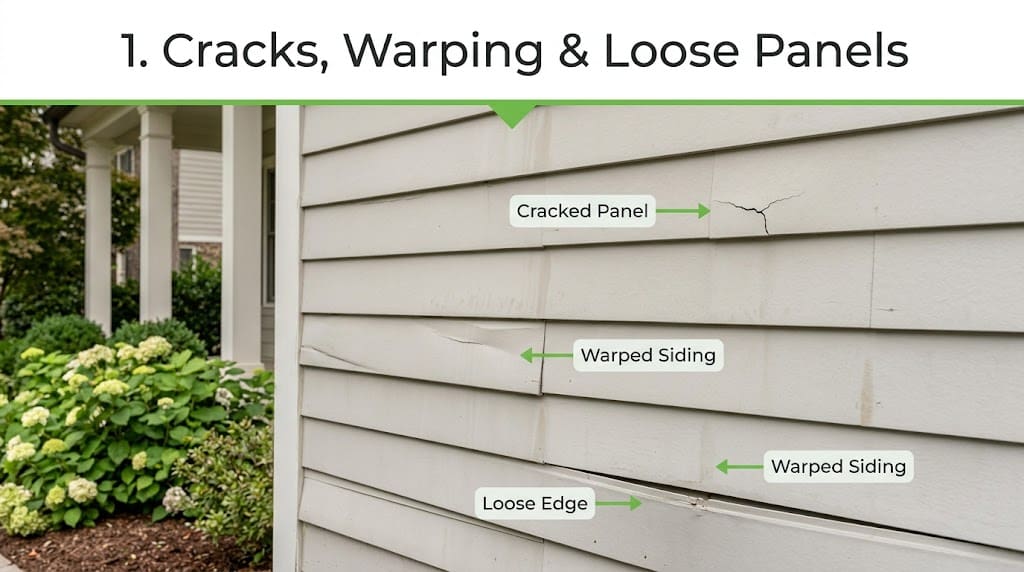
1. Cracks, Warping, or Loose Siding Panels
One of the clearest signs that a home may need new siding is visible physical damage. Cracks, warping, buckling, gaps, or loose panels can mean the siding is no longer sealing and protecting the home properly.
Cracks: Cracked siding can let in moisture and may spread over time.
Warping: Panels that bend outward or no longer lie flat may indicate heat, moisture, or long-term wear.
Loose panels: Wind and age can loosen siding, leaving the home more exposed during storms.
Visible gaps: Open joints or separated seams may allow water or pests behind the siding.
In Nashville, siding that has been exposed to repeated sun, rain, and storms may begin to move or weaken gradually. Small isolated sections may sometimes be repaired, but widespread movement or damage is often a sign that replacement should be considered.
Limitation Note: Surface damage can often be seen from the ground, but it may not reveal whether moisture has already reached the material underneath.
2. Fading, Peeling, or Siding That Looks Worn Out Too Soon
Color fading does not always mean siding has failed, but severe fading, peeling, staining, or siding that looks worn well before expected can point to age, weather exposure, or reduced material performance.
Fading: Significant fading can be a sign of long-term UV exposure and exterior aging.
Peeling or chipped finish: Protective surface layers may be wearing down.
Uneven appearance: Patchy color can suggest sections that have aged differently or been exposed to more stress.
Repeated repainting: If siding needs frequent repainting or touch-ups, replacement may be worth considering.
Cosmetic wear alone does not always require full replacement, but when fading or surface breakdown is widespread, homeowners should look more closely at the siding’s overall condition.
Limitation Note: Appearance can signal age or wear, but it does not always confirm whether the siding is still protecting the home effectively underneath.

3. Moisture Damage, Mold, Rot, or Soft Spots
This is one of the most important signs to take seriously. Siding is meant to help shed water away from the structure. If moisture starts getting behind the siding, the problem can affect trim, sheathing, wall materials, and even interior spaces.
Soft spots: Areas that feel weak or deteriorated may indicate moisture damage.
Mold or mildew: Persistent staining or biological growth may suggest trapped moisture.
Rot: Wood-based materials can rot when repeatedly exposed to water.
Interior clues: Musty odors, water stains, or wall discoloration inside the home can sometimes connect back to exterior moisture issues.
Nashville homes deal with rain, humidity, and seasonal weather swings, which can make moisture-related siding issues more serious if they are left unaddressed.
Limitation Note:Some moisture damage is hidden behind the siding and may not be fully visible until the material is closely inspected or removed.

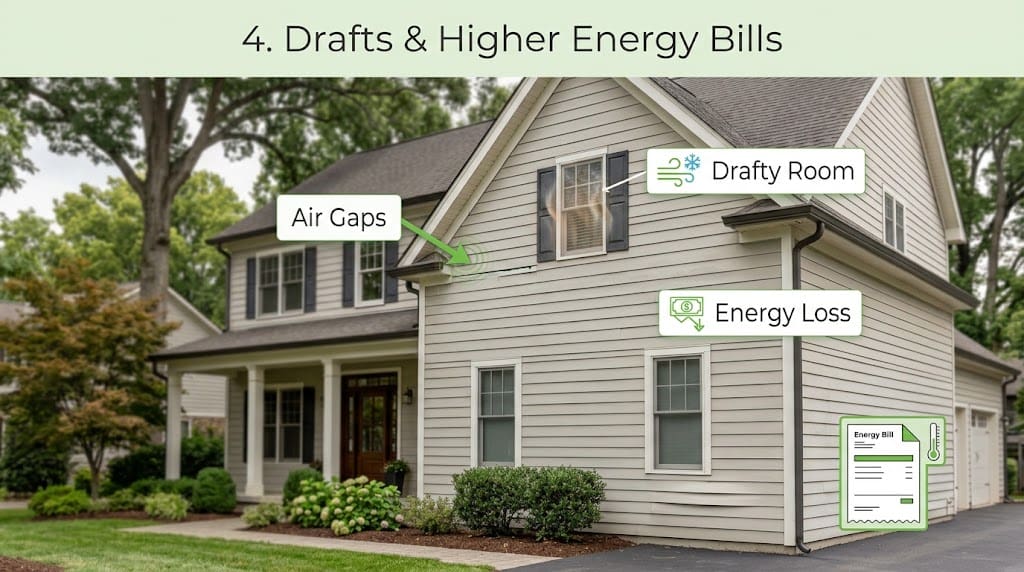
4. Higher Energy Bills or Drafts Near Exterior Walls
If your energy bills have been rising and your HVAC system seems to be working harder, siding may be part of the issue. While insulation and windows also matter, old or failing siding can reduce exterior performance and allow more outside air and moisture to affect the home.
Drafty rooms: Some rooms may feel hotter in summer or colder in winter.
Uneven indoor comfort: Exterior walls may not feel as insulated as they should.
Rising energy costs: Damaged siding can contribute to reduced efficiency.
Visible gaps or movement: These may allow air and moisture intrusion.
When siding problems combine with older insulation or weather exposure, the home may lose efficiency faster than homeowners realize.
Limitation Note: Higher energy bills do not prove siding is the only issue, but they can be part of the bigger picture when combined with visible exterior wear.
5. Storm Damage From Wind, Hail, or Flying Debris
Storm damage is a common reason homeowners begin thinking about siding replacement. Middle Tennessee storms can bring wind, hail, heavy rain, and debris that affect not only the roof but also the home’s exterior walls.
Cracked or punctured panels: Hail or debris can damage siding directly.
Loose or missing sections: Strong winds can pull siding away from the home.
Dents or impact marks: Some materials may show visible storm impact.
Moisture intrusion after storms: Damage may allow water behind the siding even if the problem is not obvious right away.
The National Weather Service thunderstorm safety resource explains that severe thunderstorms can bring damaging winds and hail, both of which can affect roofing and exterior materials. After a storm, it is a good idea to inspect not only the roof but also the siding, trim, gutters, and other exposed areas.
Limitation Note: Storm damage may be visible, but some siding problems develop after water gets behind damaged sections, which can take time to show up.

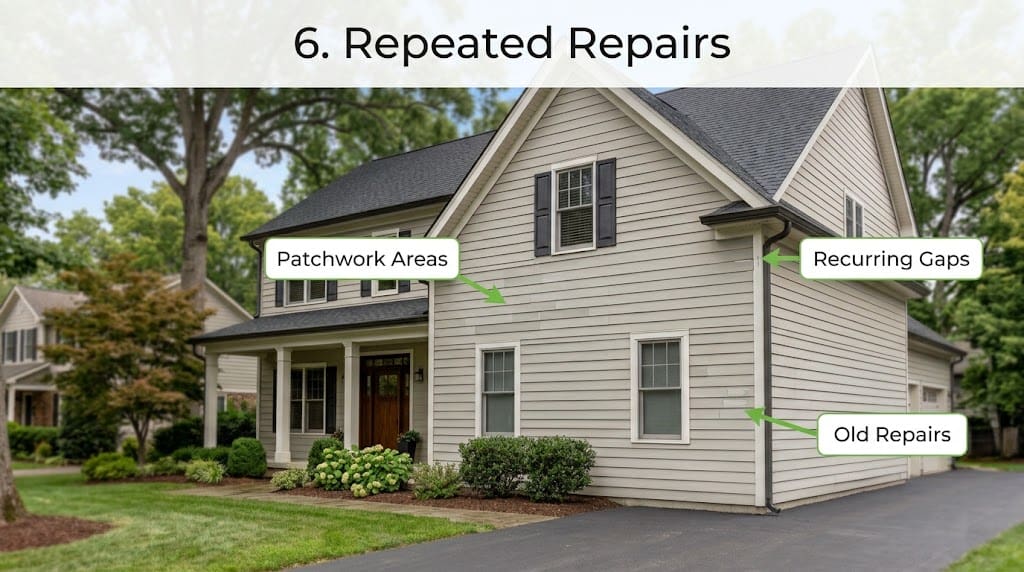
6. You Keep Repairing the Same Exterior Problems
Sometimes the best sign that replacement should be considered is repetition. If the home keeps having the same siding-related issues, it may be more cost-effective to replace the material instead of continuing to patch or repair it.
Repeated moisture concerns: Ongoing exterior leaks or dampness can signal a bigger issue.
Frequent panel repairs: Reattaching or replacing isolated sections over and over may not be a long-term solution.
Recurring trim or caulk failure: Repeated failure around edges and seams may suggest broader siding wear.
Mismatched patchwork appearance: Multiple repairs can affect both appearance and long-term value.
At a certain point, repeated repairs may cost more over time than a full replacement plan that properly updates the exterior system.
Limitation Note: Repair history can be a helpful warning sign, but the right decision still depends on how widespread the damage is and whether the rest of the siding is still performing well.
What Nashville Homeowners Can Check Safely
Homeowners do not need to climb ladders or remove siding to start spotting warning signs. A safe exterior walk-around can still reveal a lot.
Look for cracked, warped, or loose siding panels.
Check for fading, staining, or peeling areas.
Look near corners, seams, and trim for visible gaps.
Pay attention to mold, mildew, or soft-looking sections.
Check for storm impact, dents, or missing pieces after severe weather.
Notice any rooms inside the home that feel drafty or unusually hot.
If several of these signs are present, it may be time to get a more complete exterior evaluation.
Why Timing Matters Before Problems Get Worse
Waiting too long to deal with failing siding can allow moisture and exterior wear to affect more than just the surface. Once water gets behind damaged siding, the issue may expand into trim, wall materials, insulation, or interior spaces.
That does not mean every issue requires full replacement right away. But it does mean homeowners should not ignore warning signs, especially after storms or seasons with heavy heat and humidity.
Ridgeline Roofing & Restoration Service Areas
This article is especially relevant for homeowners in Nashville, Brentwood, Franklin, Hendersonville, Mount Juliet, Murfreesboro, Smyrna, and surrounding Middle Tennessee communities. Homes across this region often deal with sun exposure, humidity, storms, and seasonal exterior wear that can shorten the life of siding over time.
Ridgeline Roofing & Restoration helps homeowners understand when exterior problems may call for repair, maintenance, or replacement planning. If your Nashville home is showing siding wear, moisture issues, storm damage, or signs of reduced exterior performance, a professional evaluation can help you better understand the next step.

Trusted External Roofing Resources for Homeowners
For third-party educational resources, homeowners can review:
National Weather Service thunderstorm safety guidance
Ready.gov severe weather preparedness guide
Nashville Siding Replacement Questions Homeowners Ask
How do I know if my siding needs to be replaced or just repaired?
If the problem is small and limited to one area, repair may be possible. If damage is widespread, moisture-related, or keeps coming back, replacement may be the better long-term solution.
Can damaged siding cause higher energy bills?
Yes. Failing siding can contribute to drafts, reduced insulation performance, and higher heating or cooling costs, especially when combined with other exterior issues.
What does storm damage to siding look like?
Storm damage may include cracks, dents, punctures, loose panels, missing sections, or moisture problems that appear after wind or hail.
Is faded siding always a reason to replace it?
Not always. Fading may be cosmetic in some cases, but severe fading combined with peeling, cracking, or other signs of wear may suggest the siding is nearing the end of its useful life.
When should Nashville homeowners schedule a siding inspection?
Homeowners should schedule an inspection when siding shows visible wear, after strong storms, when moisture issues appear, or when they are unsure whether repair or replacement is the better choice.
Conclusion
Does your Nashville home need new siding? If you are seeing cracks, warping, moisture problems, fading, storm damage, or rising energy concerns, the answer may be yes. In many cases, siding problems start gradually, but they can lead to bigger exterior and moisture issues if they are left alone too long.
For homeowners in Nashville and nearby Middle Tennessee communities, watching for these six warning signs can help you understand whether the home may need repair or whether siding replacement should be part of your planning.
If you are unsure what your exterior is telling you, Ridgeline Roofing & Restoration can help you better understand the condition of your siding and what options make the most sense for your home.
FREQUENTLY ASKED QUESTIONS
Why should Nashville homeowners choose Ridgeline Roofing & Restoration for siding concerns?
Nashville homeowners can choose Ridgeline Roofing & Restoration when they want a professional exterior evaluation from a company that understands how roofing, siding, gutters, storm damage, and moisture protection work together. Siding problems are not always isolated, so it helps to work with a team that can look at the full exterior system instead of only one visible issue.
What makes a siding inspection helpful before replacing siding?
A siding inspection helps homeowners avoid guessing. It can show whether the siding has isolated damage, widespread wear, moisture issues, storm impact, or repeated failure points. This gives homeowners a clearer idea of whether repair, monitoring, or replacement makes the most sense.
Does Ridgeline Roofing & Restoration only handle roofing, or can they help with siding too?
Ridgeline Roofing & Restoration is known for roofing and exterior restoration, but siding is also part of the home’s protective exterior system. If your Nashville home has siding damage, storm-related exterior wear, moisture concerns, or visible panel problems, Ridgeline can help evaluate the condition and guide you on the next step.
How does replacing siding improve curb appeal?
New siding can make a home look cleaner, newer, and better maintained. For many Nashville homeowners, siding replacement improves curb appeal by updating faded, warped, cracked, or mismatched exterior panels. It can also help the home look more consistent from the street.
Can new siding help protect my home from Nashville weather?
Ridgeline Roofing & Restoration can help homeowners understand roof condition, storm damage concerns, repair options, and next steps before fall.
Is siding replacement worth it if I plan to sell my home?
Siding replacement may be worth considering before selling if the current siding looks worn, damaged, faded, or poorly maintained. Buyers often notice exterior condition quickly, and updated siding can help improve first impressions. The right decision depends on the home’s condition, budget, and local market.
How do homeowners feel more confident about replacing siding?
Homeowners usually feel more confident when they understand what is wrong, why it matters, and what options are available. A professional exterior evaluation can help explain whether the siding problem is cosmetic, moisture-related, storm-related, or part of a larger exterior issue.
What should I ask before hiring a siding contractor in Nashville?
Before hiring a siding contractor, homeowners should ask about the inspection process, siding material options, repair versus replacement recommendations, storm damage concerns, timeline, warranty details, and how the contractor protects the rest of the home during the project.
Can damaged siding affect how people view my home?
Yes. Damaged siding can make a home look older or poorly maintained, even when the interior is in good condition. Cracks, fading, stains, warped panels, and patchwork repairs can affect curb appeal and overall home presentation.