
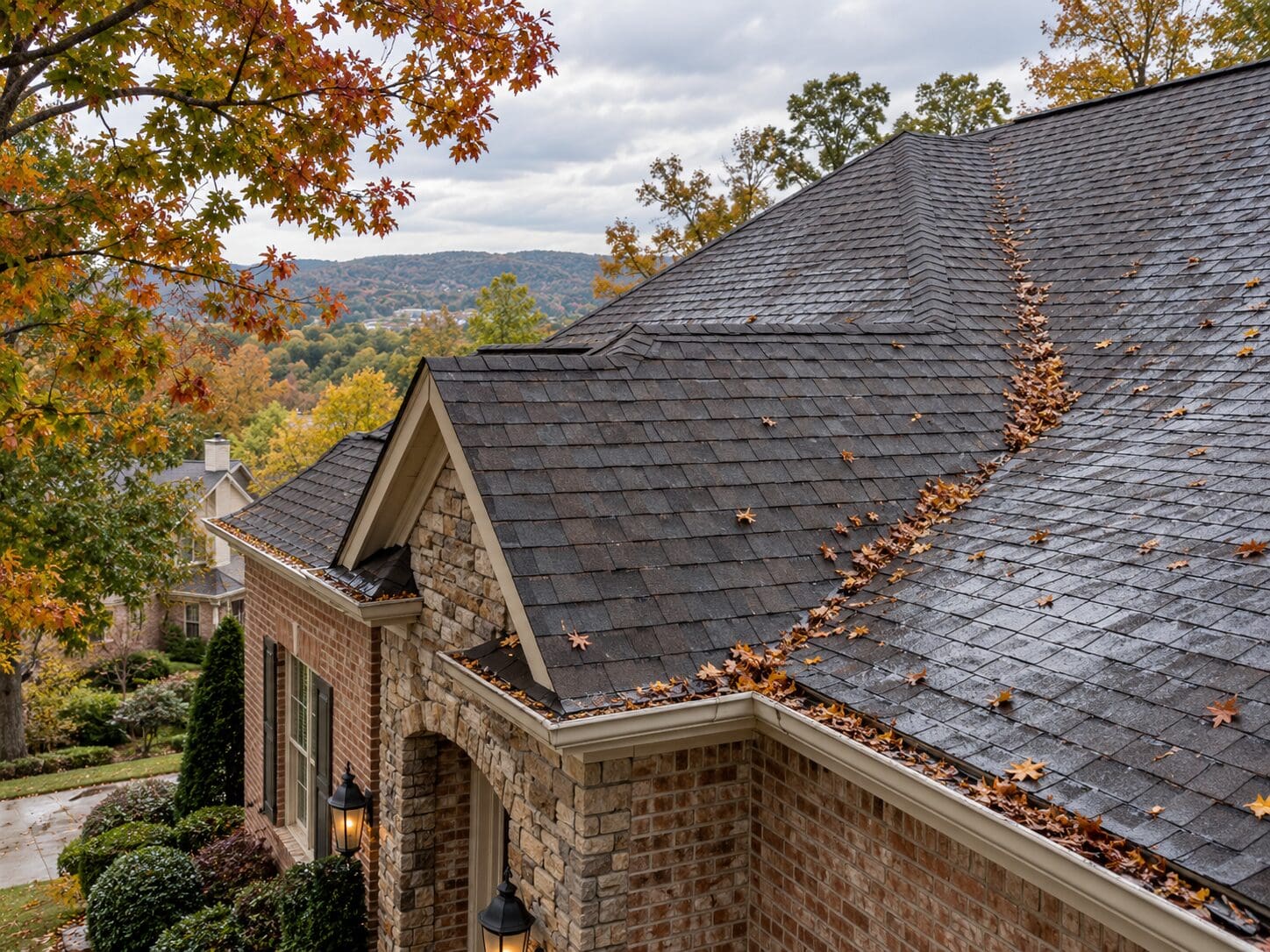
Do falling leaves damage your roof? For Birmingham homeowners, the answer is yes, they can create problems if they are left sitting on the roof, inside gutters, or in roof valleys for too long. Leaves may look harmless at first, but once they get wet, they can trap moisture, slow drainage, and hide early signs of roof wear.
Many Birmingham homes are surrounded by mature trees, shaded yards, and older neighborhoods with heavy seasonal leaf drop. During fall, leaves can collect quickly around gutters, valleys, chimneys, flashing, and roof edges. If the roof already has worn shingles, loose flashing, clogged gutters, or storm-related damage, falling leaves can make those issues more noticeable.
This guide explains how falling leaves can affect your roof, what Birmingham homeowners should check, and when it may be time to schedule a professional roof inspection. The goal is not to assume every leaf-covered roof is damaged. The goal is to prevent small seasonal issues from becoming roof leaks, gutter problems, attic moisture, or hidden roof damage.
Can Falling Leaves Damage Your Roof?
Falling leaves can damage your roof if they collect in gutters, roof valleys, and shaded roof areas where they hold moisture and block drainage. Wet leaves can contribute to clogged gutters, roof-edge stains, fascia damage, soffit moisture, shingle wear, attic moisture, and leaks during fall rain.
Birmingham homeowners should check gutters, downspouts, roof valleys, roof edges, flashing, attic areas, and ceiling stains during fall.
Why Falling Leaves Matter for Birmingham Roofs
Birmingham homeowners often deal with Alabama heat, humidity, seasonal storms, mature trees, and fall rain. By the time leaves start falling, many roofs have already been through months of summer sun, rain, wind, and storm runoff.
When leaves land on the roof, they may collect in areas where water already flows or sits. This can create more pressure on parts of the roof system that need to stay clear.
Falling leaves can affect:
Gutters
Downspouts
Roof valleys
Shingle edges
Flashing areas
Chimneys
Roof edges
Fascia and soffits
Attic areas
That is why fall roof maintenance in Birmingham AL should include more than cleaning visible leaves from the yard. The roof and gutter system should also be checked before repeated rain makes small problems worse.
1. Wet Leaves Can Trap Moisture on the Roof
Dry leaves are usually not the biggest issue. The problem starts when leaves get wet and stay on the roof. Wet leaves can hold moisture against shingles, especially in shaded areas that do not dry quickly.
Birmingham homeowners should watch for:
Leaves sitting on shaded roof slopes: These areas may dry slowly after rain.
Damp-looking shingles under leaf piles: Moisture may be staying on the surface longer.
Dark staining near leaf buildup: Water may be sitting in one area too often.
Leaves stuck near roof edges: Water may not be moving away properly.
What this may mean: Wet leaves can increase moisture exposure on parts of the roof, especially if shingles are already older, worn, or damaged.
2. Leaves Can Clog Gutters and Downspouts
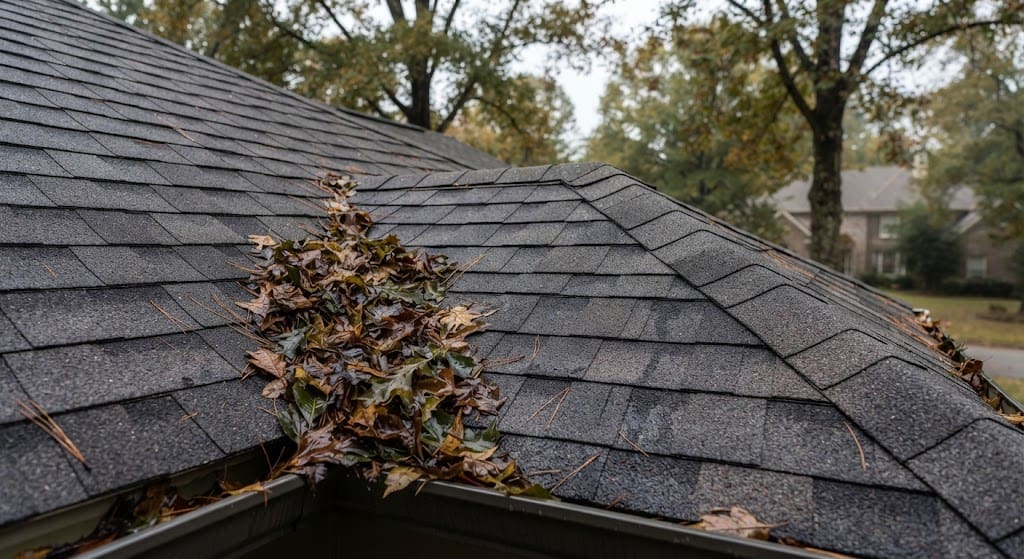
Gutters are designed to move rainwater away from the roof and home. When leaves, pine needles, twigs, and shingle granules fill the gutter, water may not drain correctly.
Gutter warning signs include:
Leaves packed inside gutters: Water may be blocked from reaching the downspout.
Water spilling over gutters: Overflow may be happening during rain.
Stains on the gutter face: Water may have repeatedly spilled over.
Pooling near downspouts: Water may not be moving away from the home.
What this may mean: Clogged gutters can push water toward roof edges, fascia, soffits, siding, and foundation areas.
3. Leaf Buildup Can Affect Roof Valleys
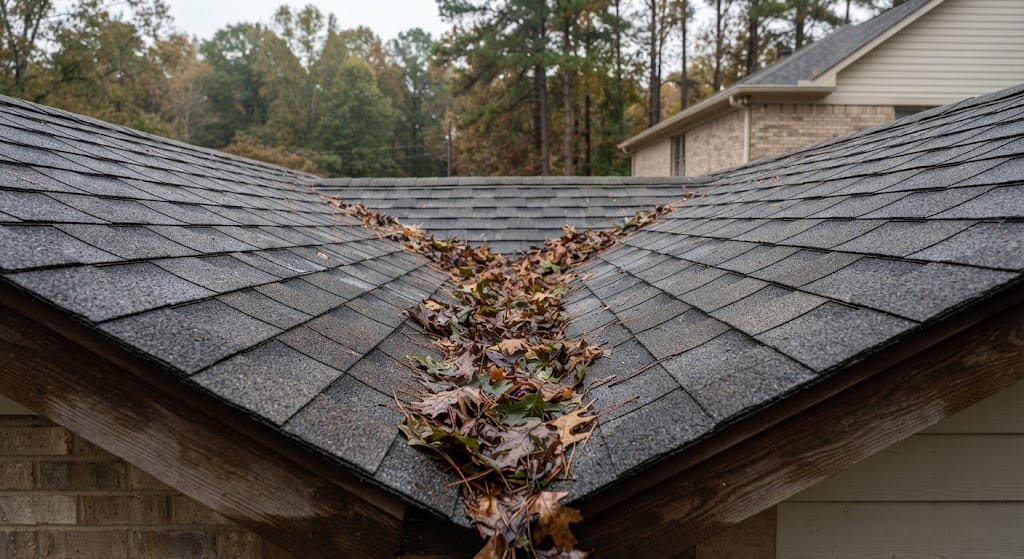
Roof valleys are important because they move water from two roof slopes down toward the gutters. If leaves collect in the valley, water may slow down, sit longer, or move under vulnerable roofing materials.
Roof valley warning signs include:
Leaves gathered in the valley: Water may not flow freely.
Pine needles packed into shingle edges: Narrow debris can hold moisture.
Dark staining along the valley: Moisture may be sitting longer than it should.
Leaks after steady rain: A weak valley area may be allowing water in.
What this may mean: Roof valley debris can increase leak risk if water is blocked, slowed, or pushed under shingles.
4. Leaves Can Hide Small Roof Problems
Falling leaves can also cover small warning signs that homeowners might otherwise notice from the ground. A leaf-covered roof may hide missing shingles, lifted shingle edges, granule loss, roof stains, flashing concerns, or debris from recent storms.
Hidden warning signs may include:
Lifted shingles: Wind may have weakened the shingle seal.
Missing shingles: Open areas may expose the roof system to moisture.
Loose granules: Shingle wear may be collecting near gutters.
Storm debris: Twigs or branches may be sitting near roof valleys.
What this may mean: A roof may look covered with simple fall debris, but the leaves may be hiding signs of roof wear or storm damage.
5. Clogged Gutters Can Damage Fascia and Soffits
When gutters overflow, water can repeatedly run over the roof edge. Over time, this may affect fascia boards, soffits, exterior trim, and nearby siding.
Homeowners should look for:
Brown or dark fascia stains: Water may be running over the gutter.
Soft or damaged trim: Repeated moisture may be affecting the material.
Peeling paint near roof edges: Water may be reaching painted surfaces.
Soffit discoloration: Water may be backing up near the underside of the roof edge.
What this may mean: Fascia and soffit stains can be early signs that leaf-clogged gutters are affecting the roof edge.
6. Leaves and Granules Can Collect Together
When leaves collect in gutters, they may mix with dark shingle granules. Asphalt shingles use granules to protect the roof surface from sun and weather. Some granule loss can happen over time, but repeated or heavy buildup may need attention.
Granule warning signs include:
Dark grit inside gutters: This may be loose shingle granules.
Granules near downspouts: Rain may be carrying roof material down.
Uneven roof color: Some shingle areas may be wearing faster.
Granules mixed with leaf debris: Roof wear may be showing up during gutter cleaning.
What this may mean: Granules mixed with fall leaves may point to shingle aging, storm wear, or roof surface damage.
7. Attic Moisture Can Show Hidden Roof Issues
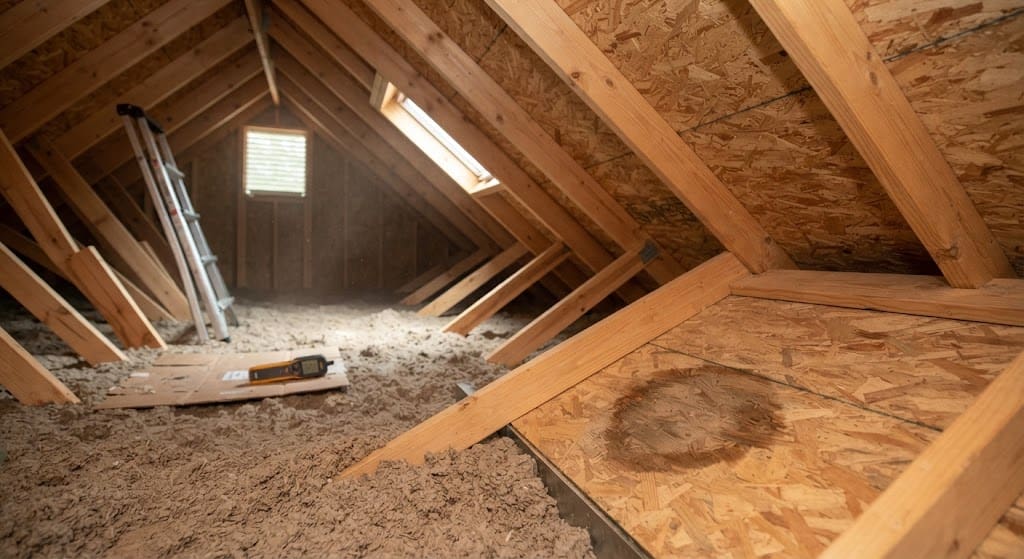
Some roof issues show up inside the attic before they appear on the ceiling. If wet leaves, clogged gutters, or roof valley debris cause drainage problems, moisture may eventually reach the roof deck, insulation, or framing.
Attic warning signs include:
Dark roof decking stains: Moisture may be affecting the underside of the roof.
Damp insulation: Water may be entering or collecting inside the attic.
Musty odors: Moisture may be trapped in the attic space.
Rust on nail tips: Condensation or attic moisture may be present.
What this may mean: Attic moisture should be checked because it may be connected to roof leaks, gutter overflow, ventilation issues, or indoor humidity.
Limitation Note: Attic moisture does not always mean the roof is leaking. A full inspection can help separate roof issues from ventilation, HVAC, plumbing, or indoor humidity concerns.
8. Ceiling Stains After Fall Rain Should Be Checked
Ceiling stains may appear after heavy rain, repeated gutter overflow, or a hidden roof leak. The source of the water is not always directly above the stain because water can travel along rafters, insulation, and framing before showing inside the home.
Interior warning signs include:
Brown or yellow ceiling stains: These may suggest water intrusion.
Peeling paint: Moisture may be affecting interior finishes.
New stains after rain: The leak may still be active.
Recurring stains: The original source may not have been corrected.
What this may mean: Ceiling stains should be checked before moisture spreads into insulation, drywall, or framing.
9. What Birmingham Homeowners Should Check This Fall
Before leaves build up heavily, Birmingham homeowners should check simple roof and gutter warning signs around the home.
Fall roof checklist:
Leaves sitting on roof slopes
Leaves gathered in roof valleys
Clogged gutters or downspouts
Water spilling over gutters
Granules mixed with leaf debris
Roof-edge stains
Fascia or soffit discoloration
Lifted or missing shingles
Attic moisture or musty odors
Ceiling stains after rain
What this may mean: If several warning signs appear together, the home may need gutter cleaning, roof repair, drainage review, or a professional roof inspection.
10. When to Schedule a Roof Inspection
A roof inspection may be helpful if clogged gutters are happening often or if you already notice water stains, roof-edge damage, or interior moisture signs.
You should consider scheduling an inspection if you notice:
Recurring clogged gutters
Water overflowing near the roof edge
Fascia or soffit stains
Granules collecting in gutters
Roof valley debris
Attic moisture
Ceiling stains
Missing, lifted, or worn shingles
Leaks during fall rain
What this may mean: The goal is to understand whether the home needs gutter cleaning, roof repair, flashing work, ventilation review, storm damage evaluation, monitoring, or replacement planning.
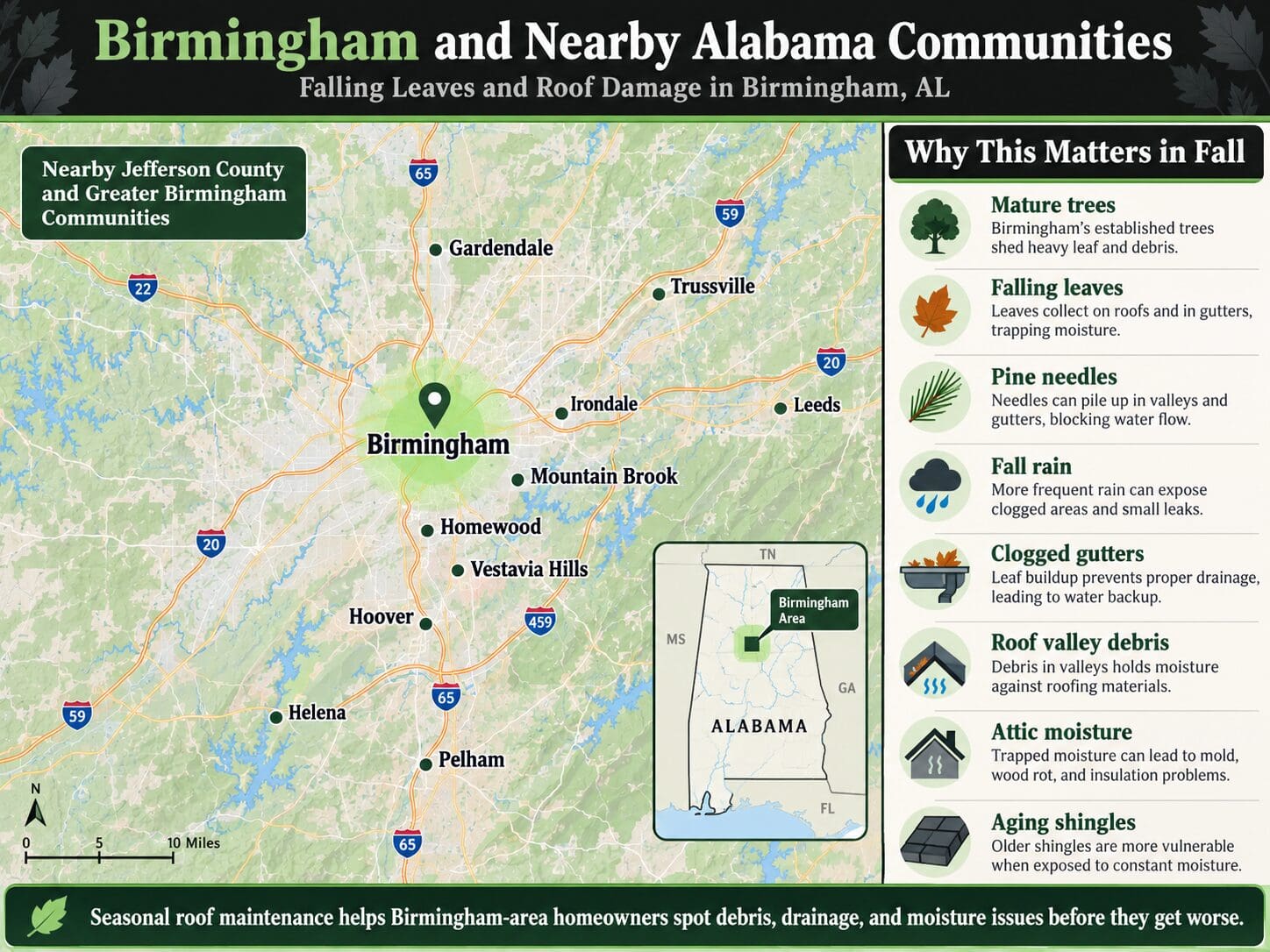
Birmingham and Nearby Alabama Communities
This topic is especially relevant for homeowners in Birmingham, Hoover, Vestavia Hills, Mountain Brook, Homewood, Trussville, Irondale, Leeds, Gardendale, Pelham, Helena, and nearby Jefferson County communities.
Homes in these areas may deal with mature trees, falling leaves, pine needles, fall rain, clogged gutters, roof valley debris, attic moisture, and aging shingles. These conditions can make falling leaves and roof damage in Birmingham more noticeable during fall.
When to Contact Ridgeline Roofing & Restoration
You should contact a roofing professional if you notice ceiling stains, attic moisture, missing shingles, lifted shingles, clogged gutters, loose flashing, cracked pipe boots, or leaks that appear during fall rain.
Ridgeline Roofing & Restoration helps Huntsville-area homeowners with roof inspections, roof repairs, roof leak concerns, storm damage evaluations, and roof replacement planning. If you are not sure where a roof leak is coming from, a professional inspection can help identify the likely source.
Helpful External Resources for Homeowners
Ridgeline Roofing & Restoration
Contact Ridgeline Roofing & Restoration
New Roof Installation in Birmingham, AL
For additional homeowner education, review these trusted third-party resources:
National Weather Service thunderstorm safety guidance
Ready.gov severe weather guidance
National Roofing Contractors Association
Note: These resources support homeowner education about severe weather, roofing, and roof damage, but they cannot diagnose one specific Birmingham roof. A professional roof inspection can help confirm the condition of your home.
FAQ: Falling Leaves and Roof Damage in Birmingham

Can falling leaves damage my roof?
Yes. Falling leaves can damage your roof if they collect in gutters, roof valleys, or shaded areas where they trap moisture and block drainage. This can contribute to roof-edge stains, clogged gutters, shingle wear, and leaks.
Should I remove leaves from my roof?
Yes, leaves should be removed safely if they are building up on the roof, especially near valleys, gutters, chimneys, and roof edges. Homeowners should avoid climbing onto the roof and consider professional help when needed.
Can leaves in gutters cause roof leaks?
Yes. Leaves in gutters can block normal water flow. When water overflows or backs up near the roof edge, it may contribute to fascia stains, soffit moisture, roof-edge damage, or leaks.
What roof areas collect leaves the most?
Leaves often collect in gutters, downspouts, roof valleys, low-slope areas, roof edges, and around chimneys or roof transitions. These areas should be checked during fall maintenance.
When should I call Ridgeline Roofing & Restoration?
Conclusion
Falling leaves can damage your roof when they collect in the wrong places and stay wet for too long. For Birmingham homeowners, leaf buildup can clog gutters, block roof valleys, trap moisture, hide shingle damage, and contribute to leaks during fall rain.
Not every leaf-covered roof is damaged. Some homes may only need gutter cleaning, downspout clearing, or basic seasonal maintenance. But if you also notice roof-edge stains, fascia discoloration, attic moisture, ceiling stains, or recurring leaks, it may be time for a professional roof inspection.
If your Birmingham home is dealing with heavy leaf buildup or possible roof damage this fall, contact Ridgeline Roofing & Restoration to schedule an inspection and get clear guidance before the next round of seasonal rain.