

Birmingham, AL roof damage is not always obvious right after summer storms. A roof can look mostly fine from the ground while still having shingle wear, granule loss, loose flashing, clogged gutters, attic moisture, or small storm-related weak spots that become more noticeable later.
In Birmingham and nearby Central Alabama communities, roofs deal with months of heat, humidity, heavy rain, wind, falling limbs, and strong summer storms. These conditions can age roofing materials faster, loosen vulnerable areas, and leave behind problems that may not turn into leaks until the next round of rain.
If your roof has been through a hot and stormy summer, now is a good time to check for warning signs before fall weather adds more stress. Ridgeline Roofing & Restoration helps homeowners understand whether a roof may need inspection, repair, storm damage review, or replacement planning.
What Roof Damage Can Summer Heat and Storms Leave Behind?
Summer heat and storms can leave behind roof damage such as lifted shingles, granule loss, cracked shingles, loose flashing, clogged gutters, roof stains, attic moisture, ceiling stains, and hidden storm damage. Birmingham homeowners should check these signs before fall because small roof problems may worsen during the next heavy rain.
Why Birmingham Summer Weather Can Be Hard on Roofs
Birmingham summers can be tough on roofing systems because heat and storm activity often work together. Heat can dry out or stress shingles, humidity can contribute to moisture concerns, and storms can loosen shingles, damage flashing, drop branches, or push debris into gutters.
A roof may not fail all at once. Instead, small issues can build gradually. By late summer or early fall, homeowners may begin noticing dark stains, gutter debris, small leaks, attic moisture, or shingles that no longer look as secure as they used to.
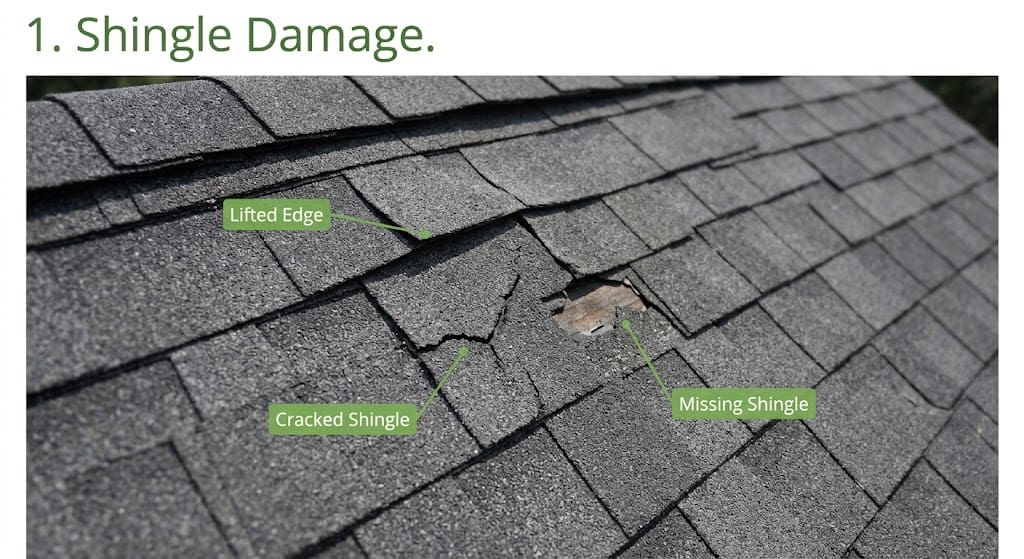
1. Lifted, Cracked, or Missing Shingles
Shingle damage is one of the most common signs that summer weather may have affected your roof. High heat can make older shingles more brittle, while wind and storms can loosen edges or remove shingles entirely.
Homeowners should look for:
Lifted shingles: Wind may have weakened or broken the seal.
Cracked shingles: Heat, age, and storm impact can cause cracking.
Missing shingles: Open roof areas are more exposed to water intrusion.
Uneven roof sections: Patchy or raised areas may need closer inspection.
What this may mean: The roof may have wind damage, aging shingles, heat stress, or areas that are more vulnerable to leaks.
Limitation Note: Some shingle problems are hard to confirm from the ground. Homeowners should avoid climbing onto the roof and schedule a professional inspection if damage is suspected.
2. Granule Loss in Gutters or Around Downspouts
Granules help protect asphalt shingles from sun exposure and weather. After heavy rain, hail, or storm activity, homeowners may notice dark sandy material collecting in gutters, downspouts, or splash blocks.
Warning signs include:
Granules in gutters: This may suggest shingle surface wear.
Granules near downspouts: Rain may wash loose granules to the ground.
Patchy roof color: Missing granules can make shingles look uneven.
Sudden buildup after storms: This may point to hail, wind, or heavy rain impact.
What this may mean: Granule loss can reduce the protective surface of shingles and may indicate roof aging, storm impact, or hail damage.
Limitation Note: Some granule loss is normal over time. The concern is heavy, sudden, or uneven granule loss, especially after storms.
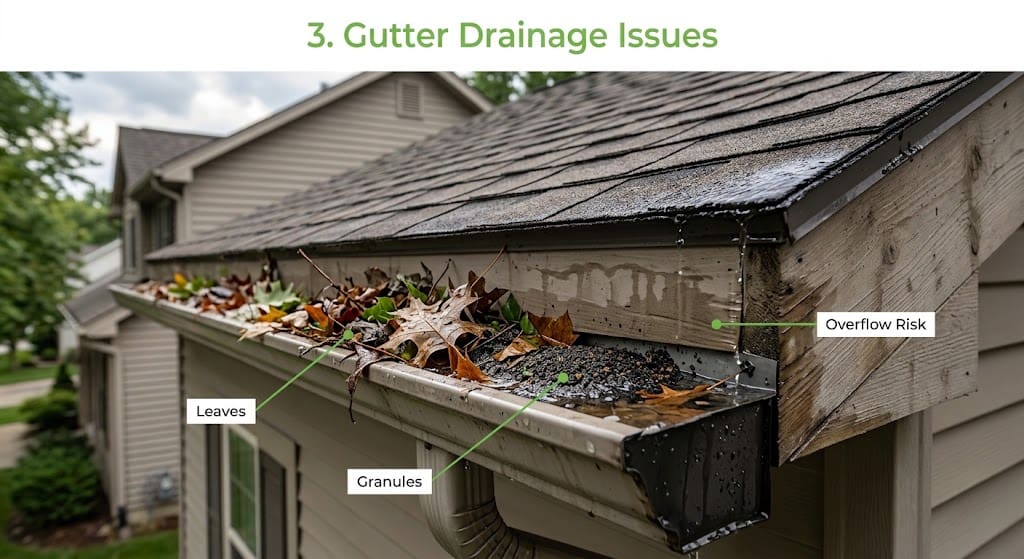
3. Clogged Gutters and Roof Edge Drainage Problems
Storm debris, leaves, branches, and shingle granules can build up in gutters after summer weather. When gutters cannot drain properly, water may back up near the roof edge, fascia, soffits, or siding.
Homeowners should watch for:
Overflowing gutters: Water spilling over the edge may mean drainage is blocked.
Sagging gutters: Heavy debris or water weight can pull gutters out of position.
Water stains near fascia: Repeated overflow can leave marks near roof edges.
Debris in valleys or gutters: Leaves and branches can slow water flow.
What this may mean: Poor drainage can increase the risk of roof-edge moisture problems, leaks, fascia damage, and siding issues.
Limitation Note:A gutter problem can sometimes look like a roof leak. Gutters, roof edges, shingles, and fascia should be evaluated togeth
4. Loose Flashing Around Chimneys, Vents, or Walls
Flashing protects vulnerable roof transitions. It is commonly installed around chimneys, vents, skylights, dormers, roof edges, and areas where the roof meets a wall. If flashing is loose, cracked, rusted, or separated, water may enter during rain.
Homeowners should watch for:
Gaps around chimneys: Water can enter around failed chimney flashing.
Loose metal edges: Flashing should sit tight and secure.
Cracked sealant: Old sealant can shrink or split over time.
Interior stains near walls: These may point to flashing-related leaks.
What this may mean: Flashing problems are a common source of roof leaks and should be checked before fall rain exposes the issue.
Limitation Note: Flashing issues can be hard to see from the ground. A leak inside the home may appear far from where the water actually entered.
5. Dark Roof Stains, Algae, or Areas That Stay Damp
Dark streaks, algae growth, moss, or roof staining can become more noticeable after a humid summer. Some staining is cosmetic, but repeated moisture or shaded areas that stay damp may increase roof wear over time.
Look for:
Black streaks: These may be algae or moisture-related staining.
Moss or organic growth: Growth can hold moisture against shingles.
Debris under tree cover: Leaves can trap dampness on the roof.
Uneven staining: Certain slopes may be holding moisture longer.
What this may mean: The roof may need maintenance, cleaning, or inspection to determine whether the issue is cosmetic or connected to moisture
Limitation Note: Homeowners should avoid pressure washing asphalt shingles because it can remove protective granules and damage the roof surface.

6. Attic Moisture, Musty Smells, or Ceiling Stains
Some roof damage shows up inside the home before it becomes obvious outside. If water has entered through the roof system, attic moisture, musty odors, or ceiling stains may appear after storms.
Interior signs include:
Ceiling stains: Brown or yellow stains may suggest past or active leaks.
Damp insulation: Wet insulation can indicate water entry.
Dark roof decking stains: Moisture may be moving along the underside of the roof.
Musty attic odors: Damp conditions can create a persistent smell.
What this may mean: A roof leak, ventilation issue, condensation problem, or hidden storm damage may be present.
Limitation Note: Attic moisture does not always mean an active roof leak. It may also be related to condensation, ventilation, ductwork, or humidity. A professional evaluation can help separate the cause.
7. Storm Damage That Is Easy to Miss From the Ground
Not all storm damage is obvious. A roof can be damaged by wind, hail, or falling debris without having large missing sections or immediate leaks. Sometimes the first signs are dented vents, lifted shingles, granule loss, or new leaks during the next storm.
Storm-related clues may include:
Dented gutters or vents: Hail can leave marks on metal components.
Branches or debris on the roof: Falling limbs may damage shingles.
Neighbors getting roof inspections: The same storm may have affected your home.
New leaks after heavy rain: Water may reveal damage that was already there.
What this may mean: Storm damage may need documentation, repair, or closer inspection before it becomes a larger problem.
Limitation Note: Not every storm causes roof damage, and not every roof needs replacement. A professional inspection can help separate minor wear from actual storm-related damage.
What Birmingham Homeowners Can Check Safely From the Ground
Homeowners should avoid climbing onto the roof. A ground-level check can still reveal useful warning signs.
Look for missing, lifted, cracked, or curling shingles.
Check gutters and downspouts for granules or debris.
Look for sagging gutters or water stains near fascia.
Watch for dark roof stains, moss, or areas that stay damp.
Check ceilings and attic areas for moisture signs.
Look for branches, debris, or storm impact around the home.
If several signs are present, it may be time to schedule a professional roof inspection before the next season creates more stress on the home.
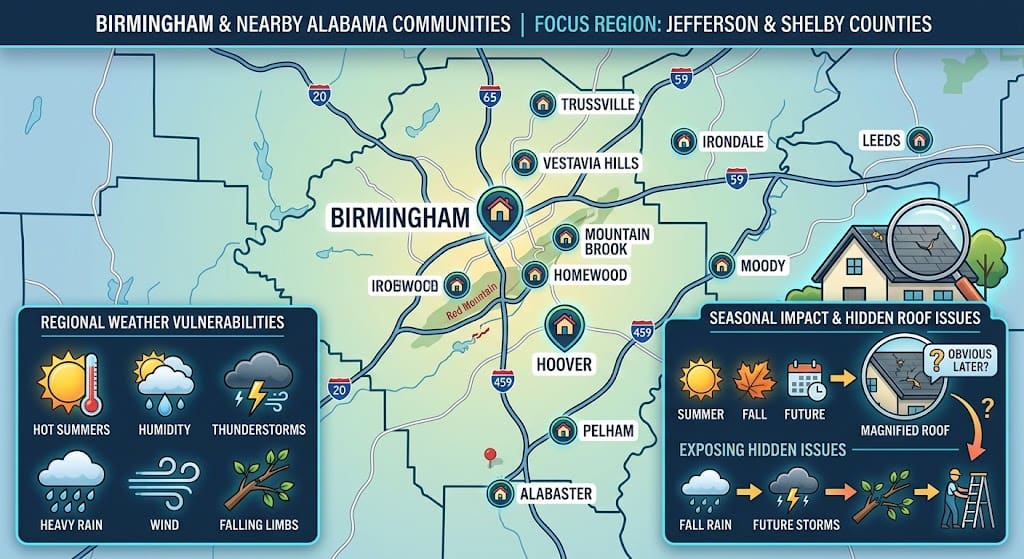
Birmingham and Nearby Alabama Communities
This topic is especially relevant for homeowners in Birmingham, Hoover, Trussville, Vestavia Hills, Mountain Brook, Homewood, Irondale, Leeds, Moody, Pelham, Alabaster, and surrounding Jefferson and Shelby County areas.
Homes across this region can experience hot summers, humidity, thunderstorms, heavy rain, wind, and falling limbs. Those conditions can leave behind roof issues that may not become obvious until fall rain or future storms expose them.
When to Schedule a Roof Inspection After Summer
You should consider scheduling a roof inspection if your roof has visible shingle wear, granule loss, clogged gutters, flashing concerns, attic moisture, ceiling stains, dark roof streaks, or recent storm exposure.
Ridgeline Roofing & Restoration helps homeowners evaluate roof condition, storm damage concerns, repair needs, and replacement planning. If your Birmingham roof has been through another hot and stormy summer, an inspection can help identify what needs attention before small problems get worse.
Helpful External Resources for Homeowners
For additional homeowner education, review these trusted third-party resources:
National Weather Service thunderstorm safety guidance
Ready.gov severe weather preparedness guide
National Roofing Contractors Association
Limitation Note: General resources can help homeowners understand storm safety and roof damage basics, but they cannot diagnose the condition of one specific roof.
Birmingham, AL Roof Damage After Summer

What roof damage can summer heat and storms leave behind?
Summer heat and storms can leave behind lifted shingles, cracked shingles, granule loss, clogged gutters, loose flashing, roof stains, attic moisture, and hidden storm damage.
Can roof damage happen without an active leak?
Yes. A roof can have storm damage, granule loss, loose flashing, or weakened shingles before an active leak appears inside the home.
Are granules in gutters a sign of roof damage?
Granules in gutters can be normal in small amounts, but heavy or sudden granule buildup may suggest shingle wear, hail impact, or aging materials.
Should Birmingham homeowners inspect their roof after summer storms?
Homeowners can safely inspect from the ground, but they should avoid climbing onto the roof. A professional inspection is safer and more complete if damage is suspected
When should I call Ridgeline Roofing & Restoration?
Conclusion
Birmingham, AL roof damage after summer heat and storms may not always be obvious right away. Shingle wear, granule loss, clogged gutters, loose flashing, dark roof stains, attic moisture, and hidden storm damage can all point to roof concerns that need attention.
Not every warning sign means the roof needs replacement, but early inspection can help homeowners understand whether repair, maintenance, monitoring, or replacement planning makes sense.
If your roof has been through heat, humidity, wind, heavy rain, or storm activity this summer, Ridgeline Roofing & Restoration can help you evaluate the condition of your roof before small issues become bigger problems.
FAQ: Ridgeline Roofing & Restoration Services in Birmingham, AL
Does Ridgeline Roofing & Restoration serve homeowners in Birmingham, AL?
Yes. Ridgeline Roofing & Restoration helps homeowners in Birmingham and nearby Central Alabama communities with roof inspections, roof repairs, storm damage concerns, and roof replacement planning.
Can Ridgeline inspect my roof after summer heat and storms?
Yes. Ridgeline can inspect your roof after a hot or stormy summer to check for shingle wear, granule loss, loose flashing, clogged gutters, attic moisture, and other signs of roof damage.
Does Ridgeline help with roof repairs in Birmingham?
Yes. Ridgeline Roofing & Restoration can help evaluate roof repair needs when homeowners notice leaks, missing shingles, lifted shingles, flashing problems, gutter-related moisture issues, or storm damage.
Can Ridgeline help with storm damage roof inspections?
Yes. If your Birmingham home was exposed to wind, hail, falling limbs, or heavy rain, Ridgeline can inspect the roof for visible storm damage and help you understand what next steps may be needed.
Why choose Ridgeline Roofing & Restoration for roof concerns in Birmingham?
Birmingham homeowners can choose Ridgeline Roofing & Restoration when they want a local roofing team that understands Alabama weather, storm damage, roof repairs, roof replacements, and the signs that summer heat and storms can leave behind.
How can Birmingham homeowners get started with Ridgeline?
Homeowners can contact Ridgeline Roofing & Restoration to schedule a roof inspection, ask about roof repair options, or get guidance if they are concerned about roof damage after summer heat, humidity, wind, or storms.