
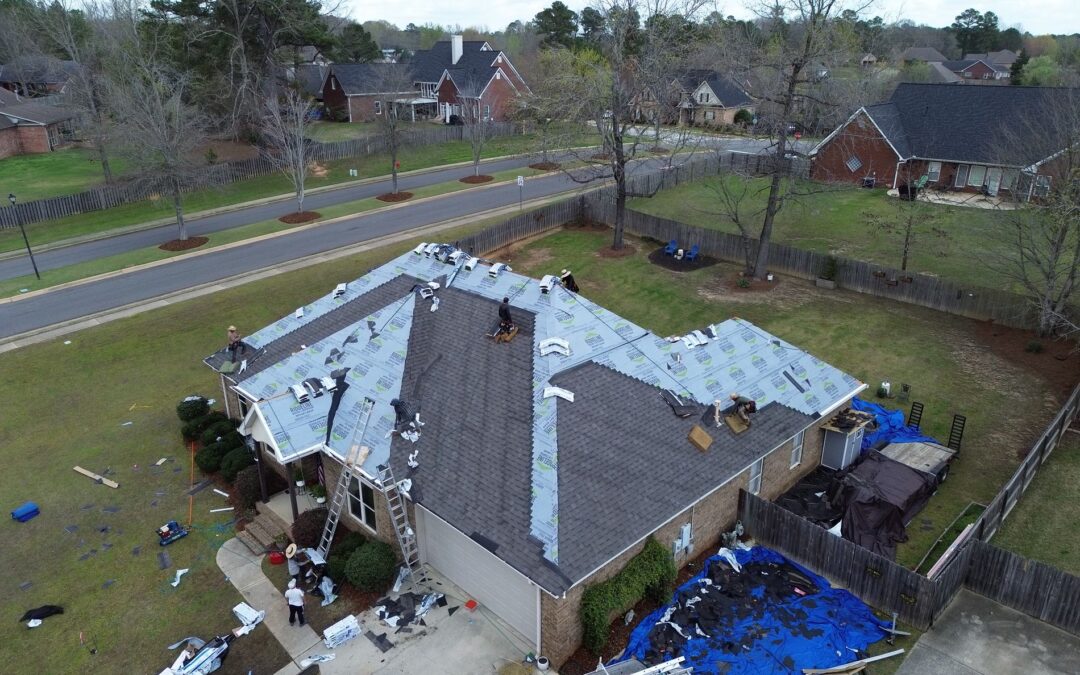
Spring storm season in Alabama can be rough on homes, and the roof usually takes the first hit. From large hail and wind damaged shingles to debris impacts and tornado-related structural damage, a single storm can create visible destruction or hidden problems that do not show up until weeks later. For homeowners in Birmingham, Huntsville, Montgomery, Mobile, Tuscaloosa, Auburn, and smaller communities across the state, a timely roof inspection in Alabama after severe weather can help prevent leaks, mold, wood rot, insulation damage, and higher repair costs.
This guide explains what homeowners should check after spring hail, wind, and tornado season, how to spot common signs of roof storm damage, and when to schedule storm damage roof repair. It also cover<script type=”application/ld+json”>
what to document for an insurance roof claim, how temporary mitigation works, and why acting quickly matters before Alabama’s summer heat and thunderstorms make roof problems worse.
Why Post-Storm Roof Checks Matter in Alabama
Alabama is no stranger to severe spring weather. Thunderstorms, hail, straight-line winds, and tornado outbreaks are all common seasonal threats. According to the National Weather Service, severe thunderstorms and tornadoes are recurring hazards across Alabama, especially during the spring months when atmospheric conditions are favorable for dangerous storms. Source: National Weather Service.
What makes post-storm inspections so important is that not all roof damage is obvious. A homeowner may notice a few tree limbs in the yard and assume the roof is fine because there is no water dripping inside. But roofing damage often starts small. A loosened shingle tab, dented flashing, or minor puncture can let in moisture gradually. That moisture can then travel into the decking, attic, insulation, and ceilings.
Think of storm damage like a cracked windshield. At first, it may seem like a small issue in one corner. Then changing temperatures, wind pressure, and vibration cause that crack to spread. Roof damage can work the same way. What looks minor after spring hail or wind can become a much bigger repair problem by midsummer if it is left alone.
Regional Differences Across Alabama
Not every part of Alabama faces the exact same roofing risks. In North Alabama, homeowners often deal with intense thunderstorm systems, hail, and tornado threats that move across the region during spring. In Central Alabama, wind-driven rain and widespread severe storm outbreaks can create mixed forms of roof damage, especially on aging asphalt shingle roofs. Along the Gulf Coast, including Mobile and surrounding areas, higher humidity, heavy rain, salt exposure, and tropical weather patterns can accelerate wear on roofing materials and worsen storm-related vulnerabilities.
That local variation matters. A roof inspection in Alabama should account for both recent storm activity and the region’s long-term climate stress. What affects a roof in Huntsville may not look exactly the same as what affects one near the coast, even if both homes experienced strong spring storms.
Common Types of Alabama Roof Damage After Spring Storms
After hail, wind, and tornado season, homeowners should look for the most common forms of residential roof damage:
- Hail damage: bruised, cracked, or punctured shingles; dented metal surfaces; damaged vents and flashing; accelerated granule loss
- Wind damage: wind damaged shingles that are lifted, curled, creased, loosened, or missing entirely
- Tornado damage: impact damage from flying debris, torn roofing sections, punctures, ridge cap loss, and possible structural movement requiring tornado roof repair
- Water intrusion: attic leaks, wet insulation, stained ceilings, mold growth, and rotted wood decking
- Drainage system damage: dented or detached gutters, downspout separation, clogs, and overflow that can force water back toward the roof edge
FEMA advises homeowners to inspect their property after severe weather and identify structural and roofing damage as quickly as it is safe to do so. Source: FEMA.
The Insurance Institute for Business & Home Safety also highlights the importance of protecting roof coverings and attachments against wind and hail exposure, especially in storm-prone regions. Source: IBHS.
Start With Safety Before Any Roof Inspection
Do not climb onto a storm-damaged roof unless you are trained and properly equipped. Alabama roofs can be slick after rain, and storm damage may create soft spots, loose edges, or compromised decking that is not visible from above. A safer approach is to start from the ground, use binoculars if available, and inspect the attic and upper interior rooms for signs of leaks.
- Wait until all storm activity has fully passed.
- Check for downed power lines, unstable trees, and hanging branches first.
- Walk the perimeter of the home and photograph visible damage.
- Inspect ceilings and the attic before assuming the roof is undamaged.
- Schedule a professional hail damage roof inspection or wind damage inspection if anything appears unusual.
What Homeowners Should Check After Spring Hail, Wind, and Tornado Season
1. Missing, Lifted, or Creased Shingles
One of the most common signs of wind damage is missing or lifted shingles. Strong gusts can break the adhesive seal on asphalt shingles, particularly on older roofs or roofs that were not installed to modern wind-resistance standards. In many cases, shingles are not blown off completely but are bent upward, folded back, or creased. Once that happens, they are more vulnerable to future failure.
Look from the ground for uneven areas, exposed underlayment, roof patches that appear different in color, or pieces of shingles in the yard. Wind damaged shingles can compromise the roof’s water-shedding ability even before an interior leak becomes visible.
2. Hail Impact Marks and Granule Loss
Hail damage is not always easy to identify from the ground, but there are some clues. Watch for dark spots on shingles, random circular impact marks, soft bruised areas, or sections where granules have been stripped away. Granules may also accumulate in gutters and at downspout exits after a severe hail event.
A hail damage roof inspection is important because granule loss weakens the protective outer layer of the shingle. Those granules help shield the roof from UV rays and weathering. In Alabama’s hot climate, exposed shingle surfaces can age faster after hail damage, making small impacts more serious over time.
3. Flashing Around Vents, Chimneys, and Valleys
Flashing is one of the most leak-prone parts of a roof after storms. Wind-driven rain can exploit even a small gap around a vent stack or chimney. Hail can dent metal flashing, and high winds can loosen fasteners or lift edges. Check for bent metal, exposed seams, rust, separation, or displaced sealant around roof penetrations and valleys. These areas often create hidden leaks that do not show up inside immediately.
4. Dented Metal Roofing Components
Even if your main roofing material is asphalt shingle, the metal accessories around the roof can provide important clues. Inspect vents, ridge vents, flashing, gutters, and downspouts for fresh dents or impact marks. If your home has a metal roof, look for dimples, seam damage, coating wear, and loose fasteners after hail or high wind events. Visible dents on metal components can support the case for a professional inspection and possible storm damage roof repair.
5. Gutters, Downspouts, and Drainage Performance
Gutters often reveal what happened on the roof. After severe storms, check for sagging sections, detached fasteners, hail dents, blockages, and heavy shingle granule accumulation. If gutters overflowed during a storm, inspect the fascia and roof edge for signs of water staining or deterioration. When drainage systems fail, water can back up beneath shingles or pool near the foundation, creating both roofing and structural concerns.
6. Soffit, Fascia, and Roof Edge Damage
High winds and debris can damage soffit panels, fascia boards, drip edges, and other roof-edge components. These areas are more than cosmetic. They help protect the home from water intrusion and support proper ventilation. Watch for cracked panels, exposed wood, peeling paint, holes, and signs that wind got underneath the roof line. Damage at the edges can be an early sign that broader repairs are needed.
7. Debris Strikes and Tree Limb Impact
Tornado-producing storms and severe straight-line winds can send limbs, branches, and debris onto the roof. Even when the impact seems small, the force may fracture shingles, puncture the roofing system, or damage the decking underneath. If any tree limb struck your roof, arrange for a professional inspection. Tornado roof repair is not just about visible holes. It may also involve hidden structural stress and water entry points that become obvious only after the next rainfall.
8. Attic Moisture, Wet Insulation, and Interior Water Stains
Some of the best evidence of roof trouble appears inside the house. Go into the attic with a flashlight and check for dark staining on wood, damp insulation, mildew odor, mold, or visible daylight through the roof boards. In upper rooms, look for ceiling spots, bubbling paint, peeling texture, or damp drywall. These interior symptoms often confirm that roof damage has moved beyond the exterior surface.
When checking the attic, pay attention to where the moisture appears. Water can travel along rafters or decking before it drips, so the interior leak point may not sit directly below the damaged shingle or flashing. That is one reason a professional inspection is often more effective than guesswork.
How to Tell if Roof Damage Is New or Old
Fresh storm damage usually looks more defined and sudden than long-term wear. For example, new hail hits may appear as sharp, dark impact points with recently displaced granules. New wind damage may show clean creases, freshly lifted shingle edges, or tabs that were intact before the storm but now look folded or broken. New dents on metal tend to look bright and recent rather than oxidized or weathered.
By contrast, older roofing wear often appears more uniform. You may see widespread granule loss from age, curling that has developed gradually, faded surfaces, or sealant that has been drying out over time. If you have older shingles, take photos after each major storm. That makes it much easier to compare conditions and determine whether damage is likely new.
For a more actionable approach, homeowners should note the date of the storm, photograph each roof slope from the ground, document any debris found in the yard, and compare the roof’s current appearance to older home photos if available. A licensed contractor can then use those details during a roof inspection in Alabama to help distinguish fresh storm damage from normal aging.
Temporary Mitigation Steps While Waiting for Professional Help
If you suspect roof damage but cannot get immediate repairs, take steps to limit interior damage. Place buckets or containers under active drips, move furniture and valuables away from leak areas, and use towels or plastic sheeting to protect flooring when needed. If water is entering near light fixtures or electrical systems, turn off power to the affected area if it is safe to do so and contact the appropriate professional.
Homeowners should be cautious with emergency roof tarping. Emergency roof tarping can reduce further water intrusion, but it should ideally be handled by qualified professionals, especially after wind or tornado events. Walking a damaged roof without proper equipment can make the problem worse and create serious injury risk.
What to Document for an Insurance Roof Claim
If your roof may have suffered storm damage, documentation matters. A well-organized insurance roof claim can help support the case for covered repairs and reduce confusion later. Start by taking clear photos of visible roof damage from the ground, as well as damaged gutters, siding, windows, fencing, or outdoor structures that were affected by the same storm. Save the date of the storm, screenshots of weather reports if relevant, and notes about what you observed immediately afterward.
- Take wide and close-up photos of visible exterior damage.
- Photograph interior leaks, attic moisture, ceiling stains, and wet insulation.
- Write down the date and approximate time of the storm.
- Keep receipts for temporary protective measures if taken.
- Request written inspection notes from the roofing contractor.
- Record any emergency services performed, including tarping or debris removal.
Good documentation does not replace a professional assessment, but it gives homeowners and adjusters a clearer timeline and record of the damage.
When to Call a Roofing Contractor
You should schedule a professional inspection if you notice any missing shingles, lifted flashing, hail dents, interior stains, fallen limbs on the roof, sudden granule buildup, or signs of moisture in the attic. A qualified contractor can identify whether you need a localized repair, broader storm damage roof repair, or full replacement.
For Alabama homeowners, timing matters. The longer storm damage sits unresolved, the more likely it is that summer heat, humidity, and additional storms will turn a manageable repair into a much larger project. Prompt inspections also make it easier to document conditions while the evidence is still fresh.
Do Not Sign a Repair Agreement Too Quickly
After major storms, homeowners are often approached quickly by contractors offering immediate repairs. Avoid signing repair agreements before a full inspection and estimate are completed. You need a clear scope of work, material details, pricing, and an understanding of whether the issue is isolated or part of a larger roofing failure. Taking a little extra time to review the findings can help you avoid rushed decisions, incomplete repairs, or work that does not address the full problem.
Should You Repair the Roof or Replace It?
The decision between repair and replacement depends on several factors: the age of the roof, the roofing material, the number of damaged areas, and whether the damage is cosmetic, functional, or structural. If only a small area of shingles was affected and the rest of the roof remains in good condition, a targeted repair may be enough. If hail damage is widespread, multiple slopes are affected, the decking has taken on water, or the roof is already nearing the end of its lifespan, replacement may be the more cost-effective choice.
Homeowners should ask actionable questions during the inspection process. Is the damage confined to one slope or spread across the roof. Are the shingles still repairable and available for a proper match. Has moisture reached the decking or attic. Will a repair solve the issue for the long term, or is it likely to become a recurring leak point. These questions help clarify whether a short-term fix is sensible or whether replacement provides better value and protection.
In many Alabama homes, delaying that decision creates the biggest cost risk. A few compromised shingles can become a leak path during the next thunderstorm. Once moisture reaches the decking and insulation, repair costs can move beyond the roof itself and into ceilings, framing, paint, and indoor air quality concerns.
Future Implications for Alabama Homeowners
Looking ahead, post-storm roof checks may become even more important. Meteorologists and resilience experts continue to watch changes in storm behavior, including severe thunderstorm intensity, heavy rainfall events, and damaging wind exposure across the Southeast. While no single event defines a trend, homeowners should be prepared for the possibility of more frequent high-impact weather stress on residential roofs.
That forecast has practical implications. More Alabama homeowners may choose impact-resistant shingles, stronger underlayment systems, enhanced flashing details, and upgraded fastening methods when replacing a roof. Better attic ventilation and moisture control may also become more important, especially in areas where humidity and heat intensify wear after storms. In short, the future of roofing in Alabama may involve systems designed not only for routine rain protection but also for repeated severe weather resilience.
Final Takeaway
After spring hail, wind, and tornado season, Alabama homeowners should not wait for a major leak to confirm there is a problem. A careful exterior review, interior attic check, and professional roof inspection in Alabama can reveal damage early enough to prevent bigger issues. Missing shingles, hail impacts, flashing problems, gutter damage, and attic moisture are all signs that your roof may need attention.
If severe weather recently passed through your area, document what you see, protect the interior if needed, and arrange a professional inspection as soon as possible. Prompt action can strengthen your insurance roof claim, reduce the need for larger storm damage roof repair later, and help prevent summer heat and additional storms from turning minor damage into major secondary loss.