
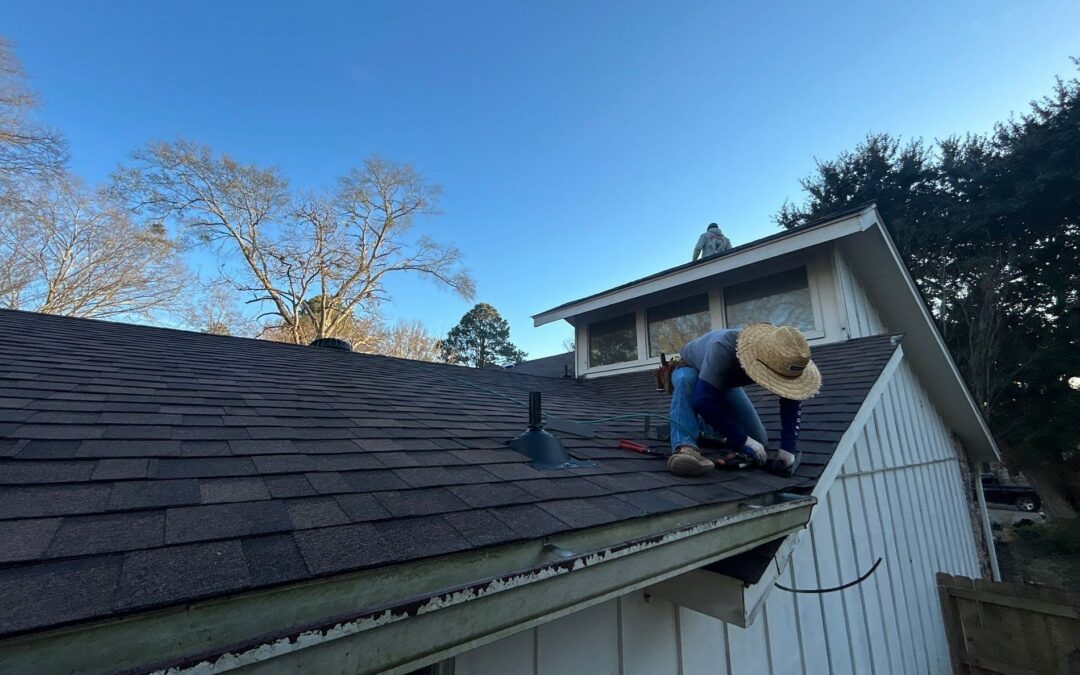
In Leeds, Alabama, roof insurance claims work like this: sudden wind/hail damage is typically covered, you document and mitigate, file quickly, meet the insurance adjuster with a contractor’s Xactimate estimate, pay a percentage deductible, complete repairs, and, on RCV policies, collect recoverable depreciation after final invoicing.
Leeds sees pop-up hail, gusty fronts, and summer downpours that can bruise shingles and loosen flashing. If you’re navigating a Leeds AL roof insurance claim, this guide explains coverage, costs, timelines, and how to avoid common pitfalls so you get a fair, efficient resolution.
- Steps to file a roof insurance claim
- How roof insurance works in Alabama
- What is not covered
- The Leeds, AL roof claim process
- Adjuster visit checklist
- Documentation that speeds approval
- Hiring the right Leeds roofing contractor
- Repair vs. replacement
- Claim timeline example
- FAQs
- Permits
- Post-claim maintenance
- Future outlook
- After-storm checklist
- Disputes and your rights
- Local next step
Steps to file a roof insurance claim in Leeds, Alabama
For a Leeds AL roof insurance claim, follow these steps to document storm damage, control costs, and keep the process moving.
- Mitigate immediately. Tarp leaks and secure loose materials to prevent more damage.
- Document everything. Capture time-stamped photos/videos of shingles, flashing, soft metals, gutters, and interior stains.
- Call a reputable local roofer. Request a storm damage inspection and an itemized Xactimate estimate with photos.
- Review your policy. Note ACV vs RCV, wind/hail percentage deductible, and Ordinance or Law coverage.
- File promptly. Report the loss with date/time, event type (hail or wind), and initial photos.
- Meet the insurance adjuster. Have your contractor present to compare scope and discuss code items.
- Approve the scope. Align on materials, ventilation, flashing, drip edge, and any code upgrades.
- Handle mortgage endorsement. If your lender is on the check, start endorsement paperwork early.
- Pull permits. Your contractor should obtain permits and schedule inspections before installation.
- Complete repairs and submit final invoice. On RCV, this triggers the release of recoverable depreciation.
Pro tip: Keep receipts for emergency tarping and dry-out services; submit them for potential reimbursement.
How roof insurance works in Alabama
Most Alabama homeowners policies cover sudden, accidental storm damage but exclude ordinary wear. Understanding key terms helps you forecast your roof replacement cost and out-of-pocket share.
Analogy: A claim is like a relay race—the homeowner documents and mitigates, the contractor assesses and estimates, and the insurer verifies and funds. Clean handoffs speed you to the finish: a safe, code-compliant roof.
What’s covered vs. not covered
Typically covered (storm damage claim):
- Wind/hail damage causing torn, creased, or missing shingles
- Impact from falling objects (tree limbs) during a storm
- Collateral dents to soft metals that corroborate hail
Typically excluded:
- Wear-and-tear and age-related granule loss
- Installation defects or manufacturer defects
- Long-term leaks, rot, or mold from neglected maintenance
Bottom line: You must maintain your roof—replace worn sealant, clean gutters, and fix minor issues—to keep coverage intact.
Leeds AL roof insurance claim basics
Leeds sits near frequent severe-weather tracks. Claims often hinge on directionality of wind/hail, slope-specific impacts, and whether damage meets carriers’ repair vs replacement thresholds.
RCV vs ACV (with a step-by-step example)
Policies pay either Replacement Cost Value (RCV) or Actual Cash Value (ACV). The Insurance Information Institute explains the difference clearly (source).
- RCV: Insurer pays to replace with like kind and quality, less your deductible. Depreciation is initially withheld, then paid as recoverable depreciation after completion.
- ACV: Insurer pays the depreciated amount only; you cover the rest.
Age-based depreciation: Carriers calculate depreciation differently, but as a simple illustration, a 12-year-old 30-year shingle could reflect roughly 40% depreciation based on age and condition.
Numeric example:
- Roof RCV (total replacement): $14,500.
- Coverage A: $300,000 with a 2% wind/hail percentage deductible = $6,000.
- Depreciation: 35% of $14,500 = $5,075.
- Initial ACV payment: RCV minus depreciation = $14,500 − $5,075 = $9,425.
- Less deductible from ACV payment: $9,425 − $6,000 = $3,425 first check.
- Recoverable depreciation (paid after completion): $5,075.
- Total insurer payout on RCV: $3,425 + $5,075 = $8,500, which equals RCV − deductible ($14,500 − $6,000).
- Your out-of-pocket: Deductible ($6,000) plus any upgrades beyond like-kind materials.
Upgrade example: If you choose impact-resistant shingles, expect a hypothetical $800–$1,200 material difference you pay. Some carriers may offer—not guarantee—premium credits. Ask your agent about FORTIFIED Roof options for added resilience (source).
Pro tip: Ask your agent about impact-resistant shingles or a FORTIFIED Roof for possible premium credits.
What is not covered on a roof insurance claim
- Wear-and-tear and end-of-life shingle aging
- Neglect and lack of routine maintenance
- Pre-existing leaks documented before the storm
- Installation defects and poor workmanship
- Manufacturer defects subject to product warranties
- Mold or rot from long-term leaks
- Cosmetic-only dents to metal unless your policy endorses cosmetic damage
The Leeds, AL roof claim process: a local guide
- Safety first and mitigation. Tarp openings and stop leaks to prevent further damage.
- Document promptly. Photograph creased shingles, missing tabs, hail hits on vents, and interior stains.
- Schedule a local inspection. Choose a contractor who knows Leeds’ storm patterns and code.
- Policy review. Confirm ACV vs RCV, percentage deductible, Ordinance or Law coverage, and deadlines.
- File the claim. Provide your evidence and date of loss; ask for the claim number.
- Adjuster meeting. Have your roofer present with measurements and an itemized Xactimate estimate.
- Resolve scope gaps. If items are missing (flashing, drip edge, ventilation), request a supplement with photos and code references.
- Mortgage endorsement. Start lender paperwork early to avoid funding delays.
- Permits and installation. Contractor pulls permits, follows manufacturer instructions, and installs to code.
- Final invoice. Submit completion docs to release recoverable depreciation (on RCV policies).
Pro tip: Keep all receipts for tarping, dry-out, and debris removal; submit for potential reimbursement subject to policy terms.
Adjuster visit: a printable mini-checklist
- Slope count: Note each slope, pitch, and orientation.
- Photo log: Label images by slope; include soft metals and collateral.
- Collateral list: Gutters, downspouts, box vents, A/C fins, window screens.
- Policy highlights: Deductible, ACV vs RCV, Ordinance or Law coverage.
- Ask the adjuster:
- Which slopes qualify for repair vs replacement and why?
- What code items (ventilation, drip edge, underlayment) are included?
- What documents will expedite payment and mortgage endorsement?
Staff vs. independent adjusters
Staff adjusters work directly for the insurer; independent adjusters are third-party contractors the insurer hires during busy storm seasons. Both apply your policy, but availability and experience can vary by carrier and event size.
Pro tip: After the inspection, email a recap to the adjuster confirming scope decisions, code items, and next steps. Written confirmation reduces misunderstandings and speeds approvals.
Documentation that speeds approval
- Time-stamped photos and a video walkaround after the storm
- Contractor report with counts per square and slope-by-slope detail
- Soft metal photos (vents, gutters) that corroborate hail impacts
- Weather validation via NOAA/NCEI Storm Events Database: filter by state/county, date, and event type, then export the CSV or PDF for your ZIP (source)
- Select Alabama and the applicable county, choose wind or hail, and set a date range around your loss date.
- Export CSV or PDF and note your ZIP in the narrative when submitting.
- Manufacturer instructions and local code references for supplements
- Permit, inspection, and final invoicing documents
Pro tip: Keep original photo metadata (date/time/location) intact; it strengthens your evidence trail.
Bottom line: The clearer your evidence, the faster the settlement.
Hiring the right Leeds roofing contractor
- License and insurance: Verify through the Alabama Home Builders Licensure Board (source), and request COIs for liability and workers’ comp.
- Local presence: Confirm a physical Leeds/Birmingham-area address and ask for two recent Leeds references (addresses used with permission).
- Insurance fluency: Look for Xactimate estimate proficiency, supplements, and code documentation.
- Manufacturer-backed systems: Full-system installs help secure stronger warranties.
- FORTIFIED options: Consider a FORTIFIED Roof and impact-resistant shingles for resilience and potential credits (source).
Pro tip: Ask who handles lender paperwork and mortgage endorsement—speed here shortens the project.
Repair vs. replacement: how carriers decide
Carriers often perform test squares (typically 10’×10′) to count functional hail hits or wind-related creases. They evaluate slope by slope. If damage exceeds internal thresholds, replacement may be warranted; otherwise, repairs may be proposed.
Brittleness tests: Some carriers bend shingle tabs to assess reparability. Use caution: excessive manipulation can cause damage not representative of normal conditions. Many manufacturers warn against aggressive bending during cold temps.
Matching considerations: If replacement shingles cannot reasonably match existing materials (color, profile), some policies or state rules may support broader replacement. Review your policy language.
Manufacturer instructions: When repairs violate manufacturer guidance—such as lifting brittle shingles or reusing compromised flashing—full replacement may be the only feasible option. See manufacturer installation guides for limits and methods (e.g., CertainTeed Residential Roofing Installation Guide) (source).
Example scenario: A south-facing slope takes direct sun and wind/hail, showing creased tabs across many courses; the insurer approves full replacement on that slope. The north and east slopes have isolated damage the contractor can repair without violating manufacturer guidance.
Bottom line: If repairs risk further damage, fail to match, or contradict manufacturer instructions, push for replacement on the affected slopes with photo evidence and documentation.
Claim timeline example (14–30 days)
- Days 1–3: Mitigate, document, contractor inspection, file claim.
- Days 3–7: Adjuster visit; scope alignment with Xactimate estimate.
- Days 7–10: Initial ACV payment issued (subject to deductible and lender endorsement).
- Days 10–20: Permits pulled; materials ordered; installation scheduled.
- Days 20–30: Installation, final inspection, invoice submitted.
- Days 25–35: Recoverable depreciation released on RCV policies.
Bottom line: Many Leeds claims wrap in 2–4 weeks when documents, scope, and lender endorsements are handled promptly.
FAQs for Leeds homeowners
How old can my roof be and still be covered?
Coverage depends on policy terms and roof condition. Some insurers apply ACV on older roofs or set age caps for new policies. If storm damage is sudden and accidental, age alone doesn’t automatically negate coverage, but settlement type (ACV vs RCV) may change.
Will insurance pay for code upgrades?
Only if you have Ordinance or Law coverage. It helps pay for code-required items like drip edge, ventilation, or decking adjustments when replacing the roof.
Are temporary repairs like tarps covered?
Often yes, as part of reasonable mitigation. Keep detailed receipts and submit with your claim for potential reimbursement.
What if my claim is denied—how do I appeal?
Ask for the denial letter with specific reasons. You can request reinspection, provide additional documentation (photos, manufacturer guidance), use policy appraisal for pricing disputes, or consult a public adjuster or attorney. For consumer assistance, contact the Alabama Department of Insurance (source).
Will filing a roof claim raise my premium?
It can, but not always. Weather-related claims are treated differently by each insurer. Ask your agent about rating practices in your ZIP code.
Do I need multiple estimates?
Not necessarily. Carriers price to market using software. A thorough, line-item scope that includes code items is more valuable than several brief quotes.
Can I upgrade to impact-resistant shingles?
Yes. You usually pay the difference between like-kind and upgraded materials. Ask about premium credits and FORTIFIED Roof options.
Bottom line: Read your policy, document thoroughly, and ask your agent how ACV vs RCV, deductibles, and Ordinance or Law coverage apply to your situation.
Permits and mortgage endorsement
Permits: Most roof replacements in Leeds require permits and inspections. See City of Leeds Building Inspections for guidance (Permits). Your contractor should pull permits and coordinate inspections.
Mortgage endorsement: If your lender is named on claim checks, expect to submit the adjuster estimate, signed contract, contractor W‑9, proof of insurance, permits, photos, and completion affidavits. Endorsement can take 7–14 business days, so start early and request processing timelines from the lender.
Bottom line: Plan for 7–14 business days for lender endorsement and keep your documents (estimate, permits, photos, invoices, W‑9, insurance) organized to avoid delays.
Post-claim maintenance
- Seasonal inspections: Check roof and flashing every spring and fall.
- Gutters: Clean twice a year and after major storms to prevent backups.
- Attic ventilation: Ensure clear intake/exhaust to reduce heat and moisture.
- Tree trimming: Cut back limbs that overhang the roof.
- Sealants: Re-seal exposed fasteners and penetrations as needed.
Future outlook for Leeds roof claims
- Storm variability: Localized hail swaths and microbursts will continue driving claims in central Alabama (source).
- Higher wind/hail deductibles: Expect wider use of percentage deductibles and roof age underwriting.
- Underwriting tightening: More carriers may limit new business on older roofs or require replacements.
- FORTIFIED adoption: FORTIFIED Roof upgrades could grow, improving resilience and potential discounts (source).
- Digital assessments: Drones and AI will supplement inspections; your clear documentation still matters.
- Possible legislation: Watch for Alabama proposals on roof age and deductible rules; track bills via the state legislature portal (source).
Drone inspections and photo requirements
Drones can safely capture steep-slope images and hail impacts. Contractors operating drones should follow FAA rules; commercial use generally requires Part 107 certification. Respect privacy and local ordinances, and consider notifying nearby neighbors before flight when appropriate. Some insurers may request specific angles and close-ups of creased tabs, vents, and ridge caps—ask your adjuster for photo standards.
A Leeds-focused after-storm checklist
Safety note: Do not climb on the roof. Use binoculars from the ground and hire a pro for steep or damaged roofs.
- Wait for safe weather and avoid downed lines.
- Photograph shingles, ridge caps, vents, and gutters.
- Check ceilings and the attic for active leaks.
- Tarp openings and stop water intrusion quickly.
- Call a local roofer for storm damage inspection.
- Review policy: ACV vs RCV and percentage deductible.
- File your claim and get a claim number.
- Schedule the adjuster meeting with your contractor.
- Pull permits before installation begins.
- Keep all receipts and organize your documents.
Disputes and your rights in Alabama
If you disagree on price or scope, your policy may allow appraisal to resolve differences. For coverage denials or delays, contact the Alabama Department of Insurance for consumer assistance or to file a complaint (source).
Leeds AL roof insurance claim: what to do next
Local, low-pressure next step: Schedule a storm damage roof inspection with a reputable Leeds contractor. You’ll get a clear scope, an itemized Xactimate estimate, and guidance on code items, mortgage endorsement, and recoverable depreciation—without obligation
Legal and financial disclaimer: This article provides general information, not legal, tax, or insurance advice. For specific guidance, consult a licensed contractor, your insurance agent, a public adjuster, or an attorney.
When you understand how a Leeds AL roof insurance claim works—coverage, deductibles, documentation, and timelines—you can secure a fair settlement and a properly restored roof.
Leeds homeowners—request a no-obligation storm damage roof inspection to assess wind/hail impacts and plan your next steps.