
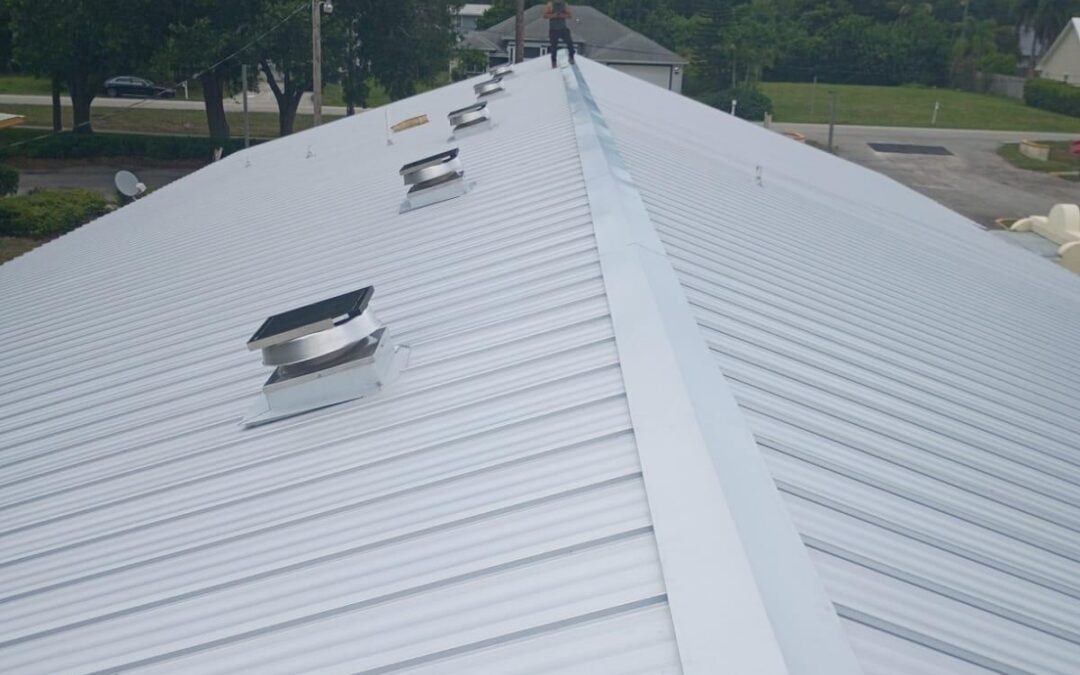
A metal roof typically lasts 40–70 years, while an asphalt shingle roof lasts 15–30 years; metal costs more upfront but offers superior durability and potential energy savings. Choose metal for long-term resilience or shingles for lower initial cost and simpler repairs. Click here for a free estimate
Choosing between a metal roof and an asphalt shingle roof affects curb appeal, comfort, insurance, resale value, and long-term maintenance. Below is a concise, research-driven comparison to help you decide based on time horizon, climate exposure, roof complexity, and budget—optimized to answer the “metal roof vs shingle roof cost” and “asphalt shingles lifespan” questions at a glance.
Quick Answer: Metal Roof vs Shingle Roof
Metal roofs, especially standing seam metal roof systems, offer exceptional longevity and storm resistance (see Durability), while architectural shingles deliver strong value for a lower upfront price (see Cost). In most U.S. markets, metal’s lifetime ROI improves if you’ll own the home 15+ years or live in wind- and hail-prone regions; shingles remain the go-to for affordability, widespread availability, and easy repairs (see Lifespan). Follow manufacturer specifications and local code for all assemblies.
Which roof lasts longer: metal or shingles?
Metal typically lasts 40–70 years, while asphalt shingles usually last 15–30 years depending on grade, climate, and ventilation. See details in the Lifespan section for product- and climate-specific guidance.
Metal vs Shingle: At-a-Glance Pros, Cons, and Lifespan
- Lifespan: Metal 40–70 years; architectural asphalt shingles 20–30 years; three-tab shingles 15–20 years.
- Upfront Cost (estimates, 2025): Shingles are typically 30–60% less than metal for similar complexity; see detailed ranges below (actual costs vary by region and installer).
- Durability: Metal excels in wind, hail, fire, and snow shedding; Class 4 impact-rated shingles narrow the gap in many climates.
- Energy Efficiency: Cool-roof metal coatings and cool-rated shingles can reduce summer cooling loads (follow manufacturer specifications), especially in hot-sun markets.
- Maintenance: Shingles generally require more periodic repairs and earlier replacement; metal minimizes replacement cycles.
- Noise & Comfort: With a solid deck, underlayment, and attic insulation, both roofs are typically quiet and comfortable.
- Resale Value: New roofs of either type boost buyer confidence; metal’s longevity and cool-roof potential can differentiate listings.
| Factor | Metal Roof | Asphalt Shingles |
|---|---|---|
| Lifespan | 40–70 years | 15–30 years |
| Installed cost (typical) | $8.50–$16.00/sq ft (standing seam) | $4.50–$8.50/sq ft (architectural) |
| Weight | ~1.0–2.5 lb/sq ft | ~2.0–4.0 lb/sq ft |
| Wind/Hail | Excellent with impact-rated panels | Good with Class 4 impact-rated shingles (UL 2218) |
| Fire | Non-combustible; Class A assemblies | Class A assemblies with proper underlayment |
| Energy | High reflectance with cool coatings | Cool-rated options available |
| Maintenance | Low; fewer replacements | Moderate; more periodic repairs |
| Solar mounting | Clamp-on (no penetrations) | Flashed, lag-bolted mounts |
Metal Roof: Pros and Cons
Below we break down the metal roofing pros and cons to guide your decision.
Pros
- Long lifespan: Quality standing seam and high-grade metal shingles often last 40–70 years or more with proper installation.
- Weather resistance: Interlocking panels resist uplift; thicker gauges and impact-rated products withstand hail better.
- Energy savings potential: Reflective cool-roof coatings and lighter colors lower surface temperatures and cooling demand.
- Fire resistance: Non-combustible; readily part of Class A roof assemblies with appropriate underlayments.
- Solar-ready: Standing seam accepts clamp-on photovoltaic (PV) mounts without penetrations, preserving watertightness and simplifying future array service.
- Sustainability: Steel and aluminum roofing often include recycled content and are fully recyclable at end-of-life.
Cons
- Higher upfront cost: Materials and skilled labor command a premium over shingles.
- Specialized installation: Requires expertise in panel layout, flashing, and thermal movement; vet installers carefully.
- Cosmetic denting: Severe hail can dimple panels; look for UL 2218 Class 4 impact-rated options to improve resistance.
- Thermal expansion: Must use correct clips/fasteners and follow manufacturer specifications to avoid noise or oil-canning.
Asphalt Shingle Roof: Pros and Cons
Pros
- Lower upfront cost: The most budget-friendly roof for many homes.
- Ease of repair: Large installer base and straightforward replacement of damaged sections.
- Style variety: Architectural shingles provide dimensional depth and wide color choices to match most neighborhoods.
- Improved performance tiers: Class 4 impact-rated shingles and enhanced wind ratings are available for tougher climates.
Cons
- Shorter lifespan: Typically 15–30 years depending on grade, climate, and roof ventilation.
- Weathering: Granule loss, UV degradation, and lifted tabs become more likely as the roof ages.
- Heat absorption: Dark, non-cool shingles can elevate attic temperatures in hot, sunny regions.
Lifespan Comparison by Material, Grade, and Climate
If you’re comparing metal roof vs shingle roof lifespan, real-world outcomes hinge on product grade, installation quality, attic ventilation, and climate exposure (UV, hail, wind, snow, and coastal salt). Follow manufacturer specifications and local codes to maximize service life. Typical ranges:
- Standing seam steel or aluminum: 40–70 years; copper and zinc can exceed that with maintenance.
- Architectural asphalt shingles: 20–30 years in temperate climates; shorter in intense UV or hail without Class 4 ratings.
- Three-tab shingles: About 15–20 years; phased out in many markets due to lower durability.
Class 4 impact-rated architectural shingles tend to last longer in hail zones than three-tab shingles. Aluminum or Galvalume standing seam resists coastal corrosion better than bare steel, and aluminum roofing is a common choice near salt spray. In high-UV Mountain West and Desert Southwest markets, reflective coatings and cool colors can slow aging for both systems.
Roof Pitch and Low-Slope Considerations
Most shingles are not recommended below a 2:12 pitch without special underlayment and detailing, and manufacturer limits must be followed. Many snap-lock standing seam profiles require a minimum slope of 3:12, while mechanically seamed profiles can be used on lower slopes per manufacturer; always follow manufacturer specifications and local code for assemblies and underlayment choice (low-slope applications may require continuous self-adhered underlayment and sealed seams per manufacturer and code).
Condensation control: In cold climates, vapor retarders, proper ventilation, and condensation-control membranes may be required under metal to prevent underside moisture issues; follow manufacturer specifications.
Cost: Upfront, Lifetime, and ROI
Upfront cost (national estimates, 2025): Typical installed costs can range roughly from $4.50–$8.50 per square foot for architectural shingles and $8.50–$16.00 per square foot for standing seam metal depending on region, roof complexity, tear-off requirements, and installer expertise; actual costs vary by region and installer.
Exposed-fastener option: Corrugated/exposed-fastener metal panels can run roughly $5.50–$9.50 per square foot installed, but expect more visible fasteners and different performance than standing seam; actual costs vary by region and installer.
Weights matter: Approximate installed weight is ~1.0–2.5 lb/sq ft for most metal systems versus ~2.0–4.0 lb/sq ft for asphalt shingles, which can matter for overlays and structural calculations. Always follow manufacturer specifications and consult local code officials or engineers for structural questions.
Lifetime cost example: If a 2,000 sq ft roof costs $14,000 for architectural shingles replaced at year 0 and year 22 versus $32,000 for standing seam metal installed once, metal can be cost-competitive over 40–50 years when you factor two shingle cycles, storm repairs, and 5–15% summer cooling savings in hot climates. Commodity prices and local labor conditions can shift these ranges.
Bid smart: Local labor markets, tear-off requirements, and underlayment upgrades drive variability. Request at least three written bids with identical scope and materials so you can fairly compare metal roof vs shingle roof cost. Include underlayment brand/type, ice-and-water coverage, ventilation spec (intake/exhaust and NFA), flashing details, fastener schedule, ridge vent model, sealed roof deck yes/no, and cleanup/disposal in your scope.
Pro tip: Ask for line-item pricing for tear-off, disposal, deck repairs per sheet, underlayment upgrades, and permit fees so you can benchmark apples-to-apples across contractors.
These price ranges reflect typical 2025 national averages and may shift with commodity prices and local labor conditions; actual costs vary by region and installer.
Energy Efficiency and Comfort
Cool-roof technologies reduce heat transfer and improve summer comfort in many climates (follow manufacturer specifications). Light or cool-rated colors reflect more solar energy than dark tones and can reduce roof surface temperatures by tens of degrees in summer. Balanced intake and exhaust ventilation (often targeting 1:300 net free area or as your local code specifies) prevents heat buildup and premature shingle aging while helping HVAC efficiency through better roof ventilation.
SRI explained: Solar Reflectance Index (SRI) combines solar reflectance and thermal emittance into a single measure of how hot a surface gets in the sun—the higher the SRI, the cooler the roof, per the CRRC directory. CRRC listings include reflectance and emittance values homeowners can compare across products.
Climate note: Cool-roof benefits depend on climate; in heating-dominated cold climates, net energy savings may be smaller. Consult local energy models and always follow manufacturer specifications for compatible underlayments and assemblies. Radiant barriers in attics can complement cool roofs in hot, sunny climates when properly ventilated.
Explore energy guidance and product-level reflectance data from trusted sources.
- Source: U.S. Department of Energy – Cool Roofs
- Source: Cool Roof Rating Council – Rated Products Directory
- Source: ENERGY STAR – Roof Products
Durability: Wind, Hail, Fire, and Codes
- Wind: Standing seam metal often achieves high wind ratings when properly fastened and flashed; architectural shingles with enhanced nailing patterns can also reach high ratings—correct installation is critical. In Florida’s High Velocity Hurricane Zone (HVHZ), verify Miami-Dade Notice of Acceptance (NOA) or Florida Product Approval numbers with your contractor (coastal wind zones).
- Hail: Cosmetic hail dimples on metal panels rarely indicate leaks, while lost shingle granules or bruising on impact-resistant (IR) shingles can accelerate aging even when no immediate leaks appear. Specify UL 2218 Class 4 impact-rated shingles or impact-rated metal for better hail performance; some insurers offer premium credits—ask your agent for documentation. UL 2218 Class 4 is the highest impact rating and does not guarantee a dent-free roof; it indicates resistance to damage under standardized test conditions.
- Fire and WUI: Metal is non-combustible and frequently part of a Class A roof assembly. In wildfire-prone regions, non-combustible metal combined with ember-resistant vents and Class A assemblies helps reduce ignition risk per local WUI guidelines.
Fire ratings are determined per UL 790/ASTM E108 for Class A assemblies; verify listing labels and assembly requirements with your contractor.
For sealed roof decks, wind resistance, and storm-hardening guidance, consult IBHS FORTIFIED Roof and FEMA Building Science resources, as well as NRCA technical bulletins. Always follow manufacturer specifications.
- Source: Insurance Institute for Business & Home Safety (IBHS) – FORTIFIED Roof
- Source: FEMA – Building Science
- Source: National Roofing Contractors Association (NRCA)
Installation Red Flags
- Unsealed or poorly flashed penetrations around vents, chimneys, and skylights.
- Under-driven or over-driven fasteners; exposed fasteners used where concealed systems are specified.
- Lack of high-temperature underlayment under metal in hot or high-solar markets.
- Misaligned panels, oil-canning, or missing clip allowances for thermal movement.
- Inadequate ridge and soffit ventilation or blocked intake at the eaves.
Maintenance and Repairs
- Metal roof maintenance: Inspect fasteners, flashings, sealants, and penetrations annually; keep valleys and gutters clear.
- Asphalt shingle roof maintenance: After storms, check for missing tabs, lifted edges, and granule loss; ensure ventilation is balanced. This is core to asphalt shingle roof maintenance.
- Repairs: Shingles are easier to patch-match; metal often requires professional panel work to maintain warranties.
Seasonal checklist:
- Inspect flashings.
- Clear gutters.
- Check attic vents.
- Photograph roof after major storms.
- Trim back overhanging branches.
- Seal minor nail pops or exposed fasteners per manufacturer guidance.
- Save invoices, serials, and warranty registration documents in a home file.
- Retighten or replace aged exposed fasteners on screw-down metal roofs as needed.
- Check sealant/service-life dates around flashings and accessories and replace per manufacturer guidance.
Minimum installer credentials: Look for membership in the Metal Roofing Alliance or NRCA and manufacturer certifications for the chosen system.
Permits, Codes, and HOA Rules
Before signing a contract, confirm local wind and uplift requirements, underlayment type, fire classification, and color restrictions with your building department and HOA. Some HOAs regulate reflectivity and color for glare concerns and may require sample submittals for metal profiles. Some HOAs also restrict high-gloss finishes and may prefer matte or textured metal to reduce glare. Some jurisdictions require enhanced nailing patterns (e.g., 6-nail) and sealed roof decks for insurance credits in wind- and hail-prone areas; ask your contractor to document code compliance. Submit manufacturer data sheets and samples if required to streamline approvals.
Overlays vs Tear-offs
Metal over existing shingles may be permissible when structure and code allow, but a full tear-off provides a flatter substrate, improved flashing, and a chance to repair decking. Overlays can save disposal costs but may mask substrate issues; your contractor should document the deck’s condition and ventilation path.
Aesthetics and Curb Appeal
- Metal: Clean lines of standing seam suit modern, farmhouse, and coastal styles; metal shingle profiles can blend into traditional neighborhoods.
- Shingles: Architectural shingles offer rich textures and familiar curb appeal at a lower installed cost.
Sustainability and End-of-Life
Steel and aluminum roofs typically include recycled content and are fully recyclable at end-of-life. Most asphalt shingles still go to landfills, though regional programs increasingly recycle shingles into paving—ask local haulers or municipalities about options when planning a tear-off.
Solar Integration and Class A Assemblies
Standing seam metal supports clamp-on mounts that avoid roof penetrations, while shingles typically require flashed, lag-bolted mounts; coordinate array layout with roofers before installation. Both roof types can achieve Class A fire-rated assemblies with the right components—verify listing labels and assembly requirements in the product documentation. Pairing solar with a metal roof can also simplify future reroofing because the PV array can often be removed and re-clamped without new roof penetrations. All PV penetrations and roof attachments must use flashed, code-compliant mounts per roofing and racking manufacturer specifications. In some jurisdictions, roofers and solar installers should coordinate stamped engineering when required by local code or utility interconnection.
Which Roof Is Best for You? A Quick Decision Checklist
- Time horizon: 15+ years in the home favors metal; under 10–12 years may favor shingles on cost.
- Climate risk: In wind- and hail-prone zones, consider Class 4 impact-rated shingles or thicker-gauge, impact-rated metal.
- Energy priorities: For the best roof for hot climates, consider cool-coated metal or cool-rated shingles with proper attic ventilation.
- Budget and roof complexity: Multiple valleys, dormers, and penetrations increase metal cost; shingles can be more economical to install on complex roofs.
- HOA and aesthetic goals: Verify color and profile approvals early to avoid delays.
Analogy: Pick the Roof Like You’d Pick a Car
Think of roofing like choosing a vehicle: an architectural shingle roof is the reliable family sedan—affordable to buy, easy to service, and perfectly capable for daily use. A standing seam metal roof is the long-haul hybrid SUV—more expensive upfront, built for harsh conditions, and cheaper to “fuel” (cool) over time. Like those vehicles, the sedan needs more frequent service intervals while the hybrid SUV runs longer between services—mirroring shingle replacement cycles versus metal longevity.
Regional Notes for U.S. Homeowners
- Hail Alley (TX, OK, KS, CO): Specify UL 2218 Class 4 impact-rated shingles or impact-rated metal; ask insurers about premium credits.
- Gulf and Atlantic Coasts: Prioritize wind ratings, sealed roof decks, and corrosion-resistant metals like aluminum or coated Galvalume; verify local code compliance.
- Snow Belt and Mountain West: Metal sheds snow and ice; use snow guards over entries and maintain ventilation to reduce ice dams.
- Desert Southwest: Cool coatings and light colors help with intense solar load and UV exposure.
Regional Climate Cheat Sheet
- Hail Alley: Class 4 impact-rated shingles or thicker-gauge metal; document post-storm inspections for claims. Tip: Consider higher deductibles if premium credits are available.
- Gulf Coast: Stainless fasteners, sealed roof deck, and wind-rated materials; aluminum roofing resists salt corrosion better than bare steel.
- Snow Belt: High-temp ice and water shield at eaves/valleys; consider snow retention devices where sliding snow is hazardous.
- Desert: Ventilation and radiant barriers plus cool-roof finishes; expect faster aging of dark, non-cool shingles.
Future Outlook: Trends and Forecasts
- Resilience demand: Expect broader adoption of impact- and wind-rated products and programs like FORTIFIED as severe weather losses rise.
- Energy codes: More jurisdictions are encouraging cool roofs, benefiting coated metal and select cool-rated shingles.
- Solar-ready designs: Standing seam’s clamp-on compatibility will spur more PV retrofits with fewer penetrations.
- Materials innovation: Advances in shingle polymers, reflective granules, and 70% PVDF metal finishes (e.g., Kynar 500/Hylar 5000) will improve longevity and color stability.
FAQs
Are metal roofs noisy in the rain?
No—over a solid deck with modern underlayment and attic insulation, metal roofs are typically as quiet as shingles. For best results, include proper attic R-values and air sealing; this is standard advice in metal roofing pros and cons discussions.
Do metal roofs attract lightning?
No. Metal does not increase strike probability, and if lightning does strike, non-combustible metal helps dissipate energy when the home’s grounding system meets code. Consult a licensed electrician if you’re in a high-exposure area.
What’s the best value if I plan to sell in 5–8 years?
Mid- to high-grade architectural shingles often maximize curb appeal per dollar and are familiar to appraisers. If your market rewards energy features or is storm-prone, a well-documented standing seam metal roof can still differentiate your listing.
Can you put a metal roof over shingles?
Sometimes. Code, weight, and substrate condition govern overlays; many jurisdictions allow metal over one layer of shingles with appropriate underlayment, ventilation, and flashing. A full tear-off enables deck repairs and flatter panels—ask your contractor and inspector.
Do metal roofs rust or fade?
Coastal-appropriate metals like aluminum and Galvalume resist corrosion; high-performance 70% PVDF finishes (e.g., Kynar 500/Hylar 5000) reduce fading and chalking. Review finish warranty terms (film integrity, fade/chalk limits) and maintenance requirements before purchase.
How long does a shingle roof last?
Most shingle roofs last 15–30 years depending on grade (three-tab vs architectural), climate (UV and hail), and ventilation quality. Proper installation and routine maintenance can extend service life.
Is a metal roof worth it in hot climates?
Often yes. Cool-roof coatings and light colors can reduce cooling loads and improve lifetime ROI, especially if you plan to stay 15+ years and face intense sun; actual performance varies by climate and installation quality.
Warranty Terms Explained
Roof warranties typically include three parts: material (product defects), finish/paint (color fade/chalk for metal), and workmanship (installer’s labor). Check proration schedules, transferability, and required maintenance; get all terms and registration steps in writing. Typical shingle “limited lifetime” material warranties are often 25–50 years prorated, while 70% PVDF finish warranties commonly offer 20–40 years against chalk and fade—verify exact terms.
Safety and Code Notes
In cold or high-solar markets, upgrade underlayments—use high-temperature ice and water shield at eaves and valleys for both systems, and follow manufacturer specifications. Confirm fastener types, ventilation ratios, and fire-rating components to maintain Class A assemblies where required.
Underlayment and Decking Materials
Synthetic underlayments offer better tear resistance and walkability than traditional felt, while high-temperature underlayment is recommended under metal in hot/sunny climates. A sealed roof deck (e.g., taped sheathing seams) adds water intrusion protection in hurricane zones and may qualify for insurance credits. Both systems perform best over solid decking (e.g., properly fastened sheathing); consult local code, manufacturer specifications, and an experienced installer.
Before the final takeaway, remember: your best choice depends on time horizon, climate exposure, roof complexity, and budget—paired with a qualified installer and code-compliant assembly.
Bottom Line
Summing up: choose based on time horizon, climate risk, and budget—metal for longevity and resilience, shingles for lower upfront cost and familiar repairs. For many homeowners, the decision comes down to how long you plan to stay and how severe your weather exposure is; both systems can be excellent when properly specified and installed. Get at least three bids from certified local contractors, ask for photos of recent installs, check references, and review how warranty service is handled.
Micro-CTA: Download or print our seasonal roof maintenance checklist as a one-page PDF (if available) and keep it with your home records.
Sources and Further Reading
- U.S. Department of Energy – Cool Roofs (cool-roof concepts)
- Cool Roof Rating Council – Product Directory (reflectance/emittance ratings)
- ENERGY STAR – Roof Products (criteria and lists)
- IBHS – FORTIFIED Roof (sealed decks, wind/hail guidance)
- FEMA – Building Science (wind and hazard-resistant construction)
- NRCA (technical manuals and best practices)
- Metal Roofing Alliance (materials, coatings, homeowner resources