
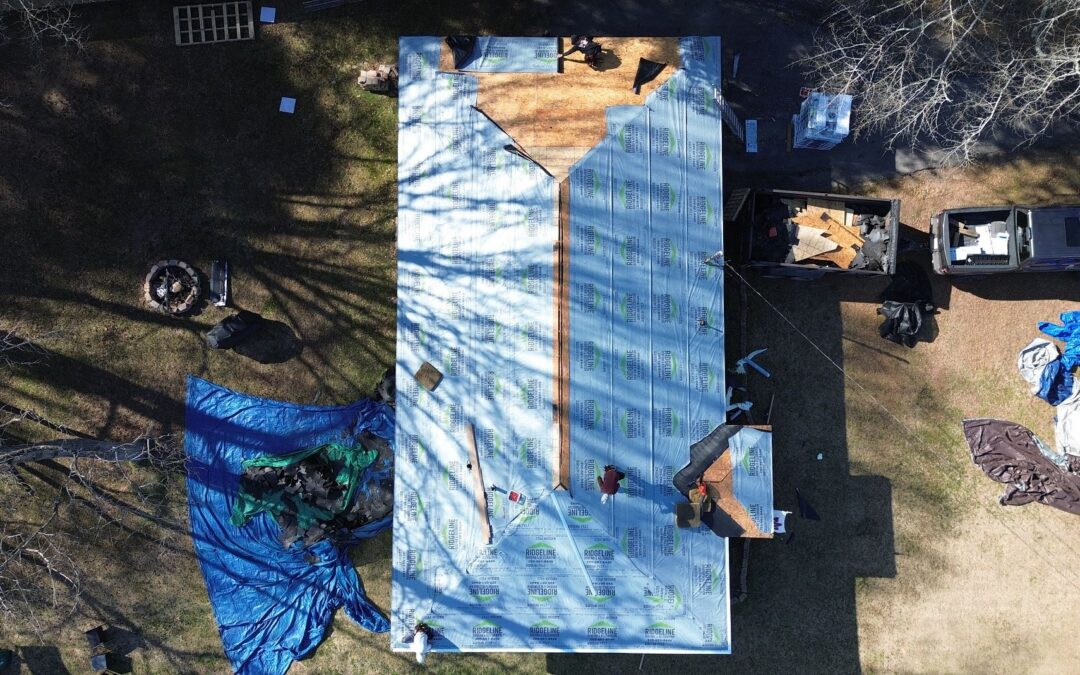
Schedule a storm damage roof inspection in Hoover AL within 24–72 hours after hail or high winds, or anytime you see missing shingles, ceiling stains, or granules in gutters; fast documentation protects your roof, speeds insurance claims, and prevents small issues from becoming costly leaks.
Key Takeaways
- Schedule a roof inspection in Hoover after hail 1/2 inch or larger, winds 50–60 mph, debris impacts, or any leak signs.
- Hoover sees spring severe weather, summer tropical downpours, and occasional tornado-driven winds.
- Early warning signs include lifted or creased shingles, dented metal, granule loss, and interior stains.
- Professional documentation improves insurance outcomes; many Alabama policies use percentage-based wind/hail deductibles.
- Upgrades like impact-resistant shingles and sealed roof decks reduce future water intrusion.
Here’s what to do next after a storm in Hoover.
When to Get a Roof Inspection in Hoover
Use this cheat sheet after severe weather; for scheduling and pricing details, see costs and timelines.
- After hail: If hail is 1/2 inch or larger—or you see vehicle or metal dents—book an inspection within 24–72 hours to check for hail damage to your roof in Hoover.
- After high winds: For gusts 50–60 mph, especially with lifted, creased, or missing shingles, call within 24–72 hours; wind damage to your roof issues worsen with each storm.
- After impacts: Schedule same-day checks when tree limbs, branches, or flying debris hit the roof or gutters.
- After heavy rain: If gutters overflowed or you notice a roof leak after storm events, inspect within 48 hours to minimize interior damage.
- Annually: Book a routine roof inspection Hoover homeowners can rely on at least once a year, and always after a significant storm.
Have more questions? Jump to the FAQs. If you suspect active leakage, photograph damage first and request emergency tarping before the next rainfall.
Storms in Hoover and Your Roof
Here’s why this matters for Hoover homeowners. Central Alabama’s weather pattern delivers frequent spring severe storms with large hail and damaging winds, while late summer and early fall bring tropical remnants that dump prolonged, heavy rain. Autumn cold fronts can also produce straight-line winds. Studies note Tornado Alley’s risk footprint has shifted eastward, increasing severe-weather exposure across the Southeast.
In Central Alabama, severe-weather season typically peaks from March through May, then again in November with late-autumn fronts that can produce damaging winds. Early spring temperature contrasts often increase straight-line wind potential across the Birmingham–Hoover metro. Tropical remnants and Gulf-fed downpours most often reach our area from August through October, saturating roofs over many hours. Hoover’s hills and valleys funnel wind differently by neighborhood, which explains why one street can see damage while the next looks untouched.
Here’s how each weather type affects shingles, flashing, and gutters in plain terms.
Wind Gusts and Straight-Line Winds
Wind damage starts by breaking the sealant bond, a process called wind uplift on shingles, which lets gusts flex tabs until they crease or tear.
- Mechanism: Repeated uplift loosens nails and opens pathways for driven rain.
- Wind can also scuff granules when debris slides across slopes.
- Typical signs: Creased tabs, loosened ridge caps, exposed fasteners, and missing shingles.
- Secondary damage: Leaks at valleys and flashings; crooked or detached gutters from debris impacts.
Hail
Hailstones bruise the shingle mat and knock off UV-protecting granules; damage often hides from ground view but still shortens roof life.
- Mechanism: Surface fractures let water and sunlight degrade the asphalt binder.
- Hail roof damage signs: Soft bruises, circular granule loss, cracked mats, dented vents and gutters, and AC spatter marks.
- Secondary damage: Early leaks around penetrations, accelerated aging, and warranty complications if ignored.
Tornadoes and Microbursts
Localized, intense winds often peel back hip and ridge shingles, loosen sheathing fasteners, and drive debris under laps.
- Mechanism: Rapid pressure changes and high-velocity debris exploit any prior weakness.
- Typical signs: Torn ridge caps, missing shingles, and sudden interior stains.
Tropical Downpours and Prolonged Rain
Long-duration rain exposes every gap earlier wind or hail created, driving water under loosened shingles and into seams.
- Mechanism: Hydrostatic pressure and capillary action force water beneath laps and around fasteners.
- Typical signs: Staining at ceilings or top-floor walls, musty attic odors, and granules washing into gutters.
Debris and Tree Limbs
Branches can puncture shingles, scrape off granules, and bend gutters; leaves clog valleys and downspouts.
- Mechanism: Impact punctures and abrasion weaken waterproofing, causing storm damage to roofs in Hoover that you may not see immediately.
- Typical signs: Shingle punctures, torn drip edge, dented gutters, and backed-up downspouts.
Local Microclimates in Hoover
Neighborhoods like Bluff Park, Riverchase, Ross Bridge, Trace Crossings, Greystone, The Preserve, and Lake Cyrus experience different wind and hail patterns due to elevation, valley winds, and tree cover. A cell that scours one ridge may spare the next street over, which is why post-storm comparisons with neighbors can be misleading.
Analogy: Your Roof Is a Raincoat with Aging Seams
Think of your roof like a quality raincoat: the fabric (shingles) sheds water, while the seams (seals, nail lines, flashing) stop intrusion. Wind stretches those seams, hail bruises them, and long rains probe for gaps. When a seam stretches once, the next prolonged downpour finds it first and turns it into a drip.
Spot Storm Damage From the Ground (No Climbing)
What to do next: Scan safely from the ground and note issues for your contractor—then let a pro verify on the roof. Avoid DIY repairs on wet roofs; call a licensed Hoover roofing contractor for tarping and temporary protection.
Roof Surface
- Lifted, creased, curled, or missing shingles, especially near ridges, rakes, and eaves.
- Dark or shiny spots where granules are missing, or unusual color patches after storms.
- Fragments of shingles or tabs on the lawn after high winds.
Metal and Accessories
- Dented ridge vents, turtle vents, gutters, downspouts, or flashing (often the easiest hail indicators).
- Flashing shifted around chimneys, sidewalls, skylights, or pipe boots.
- Gutters overflowing, sagging, or misaligned, and downspouts discharging too close to the foundation.
Interior and Attic
- Ceiling spots, peeling paint, or brown rings on drywall.
- Musty odor in the attic, damp insulation, or visible daylight at decking seams.
- Active drips during rain—a clear sign to request emergency tarping.
What a Roof Inspection Includes
- Wind evaluation: Inspectors perform a gentle “lift test” at shingle edges to check if the seal is broken, and look for nail pull-through or creases.
- Hail verification: Pros differentiate manufacturing blistering from hail bruising by feel (soft spots), pattern (random versus aligned with mat), and mat fractures visible at shingle breaks.
- Moisture tracking: Moisture meters and infrared cameras reveal wet decking and insulation; cold anomalies often map to flashing leaks or wind-driven rain paths.
- Attic ventilation and dew point checks: Inspectors review intake and exhaust balance, look for condensation signs, and identify moisture sources unrelated to roof membrane failure.
- Deck fasteners and edge nailing: Pros examine fastener patterns at eaves and ridges that influence wind resistance and long-term shingle hold.
- Flashing and penetrations: Detailed checks at chimneys, sidewalls, valleys, skylights, and plumbing boots.
- Gutters and drainage: Pitch, fasteners, seam integrity, outlet sizing, and ground discharge away from the foundation.
- Documentation: Slope-by-slope photos, hail hit counts, wind-crease tallies, and written findings create a clear record for insurers.
Your inspector will summarize slope-by-slope findings so you can compare conditions over time.
Documentation That Helps Insurance
- Take wide and close-up photos of all sides, roof planes, and interior stains; include a ruler or coin for scale on hail marks.
- Time-stamp your photos and save the date; pull the local storm report from NOAA/NWS Birmingham.
- Gather a brief weather summary (hail size, wind speeds) from authoritative sources and save links.
- Request a contractor’s report with slope-by-slope findings, recommended repairs, and materials.
Insurance and Documentation
The Insurance Information Institute notes wind and hail are among the most common homeowners claims; prompt documentation improves outcomes. Many Alabama policies include separate wind/hail deductibles listed as percentage-based deductibles of your dwelling coverage, commonly applied to your Coverage A limit. Check your declarations page to confirm whether your all‑perils deductible differs from the wind/hail percentage. Schedule the adjuster meeting with your roofer present, and avoid authorizing irreversible repairs until documentation is complete. For preparation checklists and severe-weather updates, see Alabama EMA. See the Alabama Department of Insurance for homeowner guidance: Alabama DOI: Homeowners.
Costs and Timelines After a Hoover Storm
- Inspection timing: In busy seasons, aim for a visit within 24–72 hours. Request same-day tarping if water entry is active.
- Emergency tarping: Costs vary by roof size, slope, and access. Small tarps often land in the low hundreds. Extensive shrink wraps can extend into the low thousands.
- Repairs: Minor shingle or flashing fixes may complete within a few days. Larger jobs queue up during peak storm season.
- Full replacement: Expect permitting, material ordering, and scheduling to take 1–3+ weeks during high demand.
- Materials: Specialty colors, impact-rated shingles, or upgraded ventilation can add lead time.
After metro-wide events, contractor schedules often book out for one to three weeks as crews prioritize emergency tarping, leak stops, and critical repairs. Production calendars may shift daily while adjuster meetings and materials align, so flexible dates help you secure an earlier slot. Material lead times vary by color family and impact rating; common architectural shingles in neutral colors restock fastest, while specialty tones, impact-rated Class 3/4 shingles, upgraded vents, and custom metal accessories can take longer to arrive—especially when regional demand spikes at the same time. Vendors may also face trucking or plant delays for specific colors and accessories when multiple Gulf states experience concurrent events.
Insurance-driven timing can also add days between steps as you wait for adjuster appointments, written approvals, or supplements to clear. Scheduling can pause while homeowners await inspections and decisions, then availability typically opens after the first two weeks of the surge. Meanwhile, ask your contractor about temporary protection and material availability to keep momentum without risking documentation gaps.
Repair or Replace After a Hoover Storm
- Damage distribution: Widespread hail on multiple slopes or consistent wind creases can tip the scale toward replacement.
- Threshold examples: Some contractors flag replacement when wind creases exceed roughly 8–10+ per square on multiple planes, or when hail strikes are frequent across several slopes—always subject to professional assessment.
- Age and brittleness: Older shingles crack more easily, complicating repairs and color matching.
- Deck condition: Soft spots, rot, or delamination may require re-decking.
- Code upgrades: Drip edge, underlayment, and ventilation may be required to current standards.
Note on appearance: Perfect color matching on older shingles is difficult; even small repairs can remain visible. Discuss aesthetic expectations with your contractor.
Prevention: Make Your Roof More Storm-Resilient
- Upgrade to Class 3 or Class 4 impact-resistant shingles Hoover homeowners increasingly choose for better hail performance.
- Use ring-shank nails, proper patterns, and enhanced nailing zones on modern shingles to raise wind ratings.
- Install starter strips, sealed hips/ridges, and continuous drip edge to improve wind resistance.
- Seal the roof deck (taped sheathing seams or secondary water barrier) to reduce water entry if shingles are lost; this aligns with FORTIFIED Roof Alabama guidance.
- Choose closed-cut valleys over woven in high-flow areas to manage water during heavy downpours and reduce debris catch points.
- Right-size gutters and downspouts, and ensure positive grading away from the foundation.
- Trim overhanging branches, keep valleys clear, and clean gutters before spring and fall storm peaks.
- Consider the IBHS FORTIFIED program for proven storm upgrades: FORTIFIED Home.
Here’s why these upgrades matter given the forecast trends: as downpours intensify and winds fluctuate block by block, stronger shingles, sealed decks, and improved drainage help your roof resist damage and recover faster after storms.
Example: Bluff Park Hailstorm — Before and After
Before: A fast-moving April cell drops 1-inch hail over Bluff Park. From the driveway the roof looks “okay,” but a pro finds dozens of soft hail bruises on the west slope, dented ridge vents, and stressed pipe boots. Attic readings are borderline today; summer sun will accelerate granule loss and expose fractures, raising leak risk.
After upgrades: The homeowner replaces the 12-year-old roof with Class 4 shingles, ring-shank nails, a sealed deck, and improved ventilation. Over the next two seasons, service calls drop, wind resistance improves during 50–60 mph gusts, and gutters run cleaner after intense downpours—without promising cost savings or longevity beyond manufacturer ratings.
Future Forecast for Hoover Roofs
NOAA highlights a rise in heavy downpours across the Southeast, which strains flashings and gutters during prolonged rain. Expect more frequent high-intensity bursts that exploit small weaknesses. Heavier rain also pushes systems toward larger downspout capacity and better site grading to move water away quickly. Sealed roof decks reduce interior water intrusion even when shingles are damaged—see Prevention for actionable upgrades.
- Small vulnerabilities are more likely to leak under prolonged rainfall.
- Insurers may adjust wind/hail deductibles and claim documentation requirements.
- Local codes may encourage FORTIFIED-style upgrades and sealed decks.
For upgrade steps, see Prevention.
FAQs
Do I Need to See a Leak to Justify an Inspection?
No. Many storm-related issues—like hail bruises or wind-lifted seals—precede leaks by weeks or months. Early inspections keep repairs smaller and claims timelier.
How Do I Know if Hail Damaged My Roof?
Check for dented gutters or vents, spatter on AC units, and granules in downspouts. Spatter marks appear as cleaner metal spots where oxidation was knocked away. From the ground you can’t confirm bruising; a pro will verify soft spots and mat fractures.
Can I See Hail Bruises From the Ground?
Usually not. Bruises often feel soft under the granules and may only be visible when the shingle is lifted or cut—part of a professional evaluation.
What Photos Does My Insurer Need?
Wide shots of each elevation, close-ups of metal dents, marked hail hits with a coin for scale, interior stains, and any debris. Time-stamp everything and save the local NWS storm report.
What if Only My Neighbor Has Damage?
Storm tracks vary block by block in Hoover’s hills and valleys. Your roof could be fine—or hit harder. Get your own inspection and report regardless of neighbors’ outcomes.
Will Moderate Hail Shorten My Roof’s Life?
Yes, bruising and granule loss accelerate aging by exposing asphalt to UV. Even without active leaks, documented storm damage can justify repairs or replacement per policy terms.
Is a Roof With No Leak Still Eligible for Repairs?
Often, yes. Insurers assess functional damage, not just active leaks. A professional report with photos and slope-by-slope findings helps.
Are Drone Inspections Enough?
Drones capture safe, high-resolution images, but hands-on checks confirm lifted seals, bruises, and moisture—both are valuable together.
How Long Does a Roof Inspection Take?
Most inspections take 30–60 minutes on typical homes. Complex roof designs, multiple penetrations, or documentation-heavy claims can extend the visit.
Do Impact-Resistant Shingles Lower Premiums?
Sometimes. Credits vary by insurer and policy, so ask your carrier about impact-resistant shingle discounts and required documentation.
What if Repairs Were Made Before the Adjuster Visit?
Keep detailed photos, invoices, and dates. When possible, avoid irreversible work until after documentation; if emergency tarping or safety repairs were necessary, provide receipts and images to your adjuster.
How Soon Should I Tarp a Roof Leak?
Immediately—photograph the damage first, then request emergency tarping before the next rainfall to limit interior loss.
Choose a Hoover Roofing Contractor
- Licensing and insurance: Verify Alabama licensing, and confirm general liability and workers’ comp coverage.
- Local references: Ask for jobs completed in Hoover ZIP codes 35226 and 35244.
- Credentials: Look for manufacturer certifications (GAF, Owens Corning, CertainTeed) and training.
- Documentation: Require a detailed photo report, scope, and written estimate.
- Warranties: Confirm manufacturer-backed warranties on materials, and contractor-backed warranties on labor.
- Claims support: Choose a contractor experienced in coordinating with insurers while letting you approve each step.
Request a Roof Inspection
Ready to act without pressure? Schedule a roof inspection in Hoover to document storm damage and protect your home (serving Hoover 35226 and 35244). Call 205‑555‑0199, request a quote, or email [email protected] to get on the calendar. Same-week appointments are often available after the initial surge eases.
Action Plan: After the Next Hoover Storm
- Photograph: Walk the perimeter; capture shingles, gutters, metal, and interior stains.
- Call: Book a storm damage roof inspection within 24–72 hours.
- Protect: Request tarping or shrink wrap if leaks are active.
- Decide: Review repair versus replacement options with your roofer.
- Coordinate: Share the report with your insurer, and schedule the adjuster meeting with your roofer present.
- Calendar: Set a follow-up inspection after repairs to verify performance.
Citations and Resources
- NOAA/NWS Birmingham — Severe weather resources for Central Alabama: https://www.weather.gov/bmx/severe
- IBHS — Hail research and roof performance: https://ibhs.org/hail/
- Insurance Information Institute — Wind and hail damage overview: https://www.iii.org/article/wind-and-hail-damage-to-your-home
- NOAA Climate — Heavy downpours are increasing: https://www.climate.gov/news-features/blogs/beyond-data/heavy-downpours-are-increasing
- Alabama Department of Insurance — Homeowners coverage guidance: https://www.aldoi.gov/Consumers/Homeowners.aspx
- Alabama Emergency Management Agency — Severe weather preparedness: https://ema.alabama.gov/
Note: If you add images, include descriptive alt text such as “Dented aluminum gutter from hail in Hoover AL” to support accessibility and image SEO.
In short: Inspect promptly, document clearly, protect temporarily, and plan smart upgrades.
Bottom Line
Inspect after hail or high winds, document what you find, call a pro, protect promptly, and plan upgrades. To protect your home and simplify claims, schedule a storm damage roof inspection in Hoover AL within 72 hours of major weather. Early action, smart documentation, and proven upgrades make the next storm less stressful and less expensive.