
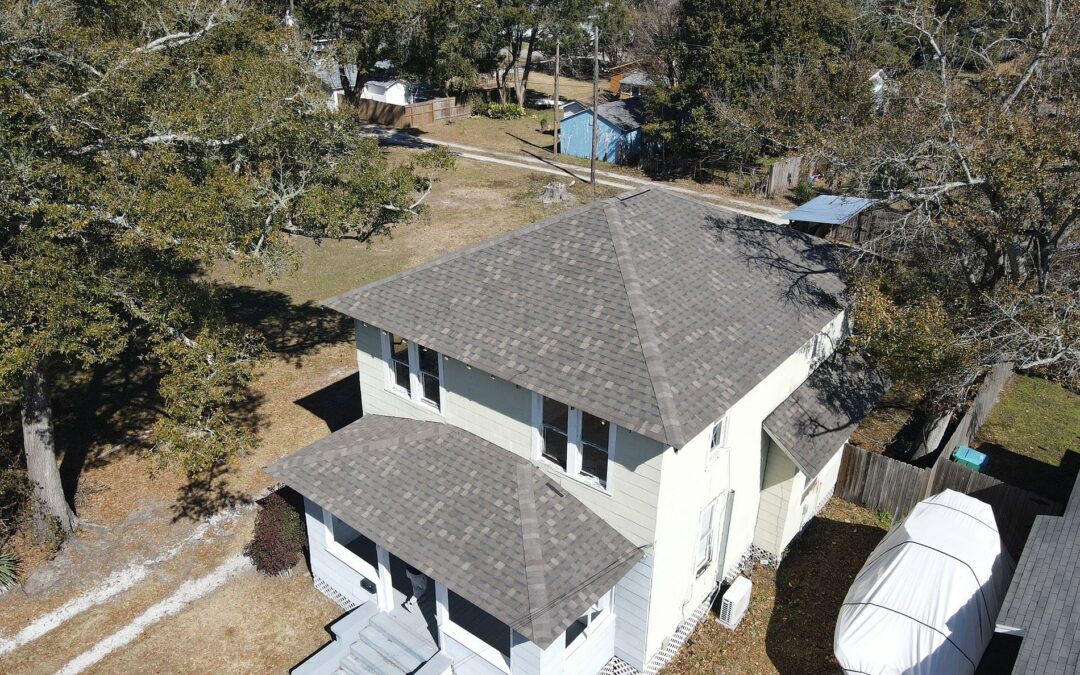
Roof ventilation in Vestavia Hills matters because our summers are hot and humid, and storms are frequent. The right system sheds heat and moisture, protects shingles and decking, and helps your home stay comfortable while extending roof lifespan. If you’re comparing roof ventilation Vestavia Hills options, the guidance below shows how to get sizing, products, and installation right.
Quick Answer: How to extend roof lifespan with roof ventilation in Vestavia Hills
Deliver balanced attic airflow with the correct Net Free Area (NFA) split between Soffit Vent intake and Ridge Vent exhaust. Keep air paths open with rafter baffles, seal ceiling leaks, and follow manufacturer and code guidance. The result: cooler, drier attics, longer shingle life, and fewer moisture problems.
- Calculate NFA from attic floor area using 1:300 or 1:150 rules.
- Split NFA about 50/50 between intake (Soffit Vent) and exhaust (Ridge Vent).
- Air seal the ceiling plane to stop house air from entering the attic.
- Keep soffits clear with rafter baffles from eave to ridge.
- Verify product NFA with manufacturer specifications.
Key takeaways to extend roof lifespan
- Roof ventilation in Vestavia Hills reduces attic heat and moisture.
- Balance intake and exhaust by NFA, not guesswork.
- Open air paths with baffles; never block soffits with insulation.
- Air seal ceilings before adding powered ventilation.
- Document NFA for warranty and permitting.
Why roof ventilation matters more in Vestavia Hills
Vestavia Hills sits in Alabama’s humid subtropical zone. Long, sunny summers elevate roof and attic temperatures. From May–September, dew points often sit in the low–mid 70s °F, raising the risk of attic moisture. In Liberty Park and Cahaba Heights, pockets of tree cover can slow drying after storms and boost nighttime humidity. This mix can age asphalt shingles faster and stress roof decking. Effective attic ventilation moderates heat swings and flushes moist air, which helps extend roof lifespan and supports better indoor comfort (NOAA/NCEI climate normals).
What ‘Proper’ Looks Like: Balanced Intake and Exhaust for Attic Ventilation in Alabama
For attic ventilation Alabama, proper systems create a continuous path from the eaves to the ridge. Intake at the soffits draws in outside air. Exhaust at the Ridge Vent releases hot, moist air at the peak. Rafter baffles keep that pathway open above insulation and preserve intake-to-exhaust balance.
Good vs. poor ventilation patterns
- Good pattern: Continuous Soffit Vent + continuous Ridge Vent; rafter baffles at every bay; bath and kitchen ducts vented outdoors.
- Poor pattern: Blocked soffits, scattered box vents, mixed gable and ridge vents that short-circuit, and bath fans dumping into the attic.
Bathroom and kitchen exhaust ducts should terminate outdoors with backdraft dampers, not into the attic.

Common vent types for homes in Vestavia Hills (pros and cons)
- Ridge Vents (exhaust): Continuous vent along the peak for even airflow.
- Pros: Uniform exhaust, low profile, good weather resistance with baffles.
- Cons: Requires adequate soffit intake and correct slot cutting.
- Soffit Vents (intake): Continuous or individual vents under the eaves.
- Pros: Essential intake; supports the stack effect; easy to maintain.
- Cons: Can be painted shut or clogged by debris and insulation.
- Box/Turtle Vents (exhaust): Static vents near the ridge when continuous ridge is not feasible.
- Pros: Flexible placement on complex roofs.
- Cons: Less even airflow; must be near the peak to avoid rain entry; do not mix randomly with gable vents.
- Gable Vents: Gable-end openings that release warm air.
- Pros: Can help in some older homes when soffit intake is limited.
- Cons: May short-circuit Ridge Vent and Soffit Vent systems; airflow depends on wind direction.
- Powered Attic Fans: Motorized exhaust fans.
- Pros: Targeted exhaust in special cases after air sealing.
- Cons: Can pull conditioned air from the house; use interlocks or humidistats only after air sealing and with smoke test verification.
- Hip Ridge Vents + Intake Strip Vents: Useful on hip-heavy rooflines common around Birmingham.
- Pros: Distributes exhaust over multiple short ridges.
- Cons: More cuts and caps; sizing and layout matter for balance.
How to size ventilation: the Net Free Area formula
Net Free Area (NFA) is the unobstructed vent opening area that allows airflow, published by vent manufacturers; convert square feet to square inches by multiplying by 144.
- 1:300 rule: Provide 1 sq. ft. of NFA per 300 sq. ft. of attic floor area when a vapor retarder is present on the warm-in-winter side.
- 1:150 rule: Without a vapor retarder, provide 1 sq. ft. of NFA per 150 sq. ft. of attic floor area.
- Balance: Split total NFA about 50/50 between intake and exhaust.
Example (1:300): A 2,400 sq. ft. attic targets 8 sq. ft. total NFA (2,400 ÷ 300). That equals 1,152 sq. in. Split intake and exhaust: approximately 576 sq. in. each. Use manufacturer-listed NFA per linear foot or per vent to size components.
Example (1:150): The same attic without a vapor retarder targets 16 sq. ft. total NFA (2,400 ÷ 150) = 2,304 sq. in. Split intake and exhaust: approximately 1,152 sq. in. each. This often requires continuous Soffit Vent intake plus full-length Ridge Vent exhaust.
Cathedral ceilings and compact roofs may require vented air channels or unvented conditioned assemblies per IRC R806.5 (see IRC R806.5); confirm details with your contractor and local code officials.
Signs your roof may be under-ventilated
- Curled, cupped, or prematurely aged shingles on sunny slopes.
- Rust on nail tips, damp sheathing, or visible mold staining.
- Musty odors upstairs, hot second floor, or overworked HVAC.
- Insulation compressed or damp near the eaves.
- Frost or rime on the underside of sheathing during cold snaps.
Ventilation, insulation, and air sealing: the winning trio
- Stack effect drives warm air up; intake at soffits and exhaust at the ridge harness this pressure safely.
- Air seal before adding a fan: seal can lights, top plates, chases, and attic hatches.
- Place vapor retarders on the warm-in-winter side where specified by code and manufacturer.
- Install rafter baffles at every eave bay to keep Soffit Vent pathways open.
- Use powered attic fans only after air sealing; add interlocks or humidistats and confirm with a smoke test.
- Radiant barrier roof decking can lower attic temperatures but does not replace balanced airflow.
- Ensure bath and kitchen ducts vent outdoors with backdraft dampers, never into the attic.
- Pair ventilation with attic insulation in Vestavia Hills for the biggest comfort and durability gains.
DIY attic ventilation checks vs pro tasks
Homeowner checks
- Flashlight scan: look for daylight at the soffits and ridge from the attic.
- Clear soffit screens: vacuum debris or remove paint clogs.
- Measure ridge length and estimate existing vent types.
- Photograph any wet spots, rusted nails, or mold for a roofer to assess.
Professional-only tasks
For safety, do not walk on roofs or cut ridge slots without training and fall protection.
- Cutting ridge slots and installing continuous Ridge Vents.
- Calculating total NFA and balancing intake/exhaust by product specifications.
- Installing rafter baffles in tight bays and around vaulted transitions.
- Air sealing complex penetrations and verifying with blower door or smoke.
Analogy: your attic’s lungs and the fireplace flue
Think of the attic as lungs. Soffit Vents inhale outside air; Ridge Vents exhale heat and moisture. Also picture a fireplace flue. Warm air rises and exits at the top when the flue is open, pulling fresh air from below. Keep the flue open at the ridge and the intake open at the soffits.
Local climate considerations for attic ventilation Alabama
Heat, humidity, and sudden storms define our region. High dew points hold moisture in attic air. After afternoon downpours, evening cooling can trigger condensation on cold roof planes. Balanced ventilation helps purge that moisture. Tree shade benefits shingles but can slow drying, so clear airflow is vital in neighborhoods like Liberty Park and Cahaba Heights. In summer, unventilated attics can reach 120–150°F; proper ventilation and air sealing help moderate these extremes, as documented by Building Science Corporation and ENERGY STAR.
Ventilation and your shingle warranty
Many shingle manufacturers require minimum attic ventilation—often aligned with the 1:300 rule with intake-to-exhaust balance. If shingles age early and ventilation is inadequate, warranty claims can be at risk. Some manufacturers also require photographic documentation of open Soffit Vent intake and Ridge Vent cuts during reroofing. Document your NFA calculations, product models, and installation photos during reroofing. Considering new shingles? Pair ventilation corrections with roof replacement Vestavia Hills for best long-term results.
Energy, comfort, and extended roof lifespan benefits in Alabama
A cooler, drier attic reduces heat transfer into the home and eases stress on attic ducts and air handlers. You may notice lower peak cooling loads, fewer hot spots upstairs, and better indoor air quality. These changes help HVAC systems run fewer and shorter cycles, saving energy and reducing wear. Cooler attics also reduce duct leakage penalties by lowering the temperature difference between duct air and the attic. Drier attics suppress mold risk and support healthier IAQ, which is especially valuable in humid Alabama summers. Together, these improvements support longer roof life and better comfort year-round.
Cost and ROI in Vestavia Hills (estimates)
Ventilation improvements are modest compared with structural repairs or early reroofing. Actual costs vary by pitch, stories, access, and roof complexity. The ranges below are ballpark estimates for planning only:
- Open or add continuous Soffit Vents: $6–$14 per linear foot (labor and materials).
- Install continuous Ridge Vent during a reroof: $9–$18 per linear foot; retrofit can be higher (prices are lower when installed during a reroof versus a retrofit).
- Rafter baffles at eaves: $2–$5 per rafter bay plus labor.
- Ceiling air sealing (can lights, top plates, chases): $400–$1,200 per typical home.
- Diagnostic testing (blower door, smoke): $250–$500.
What drives cost in Vestavia Hills
- Roof pitch and height that affect safety and staging needs.
- Number of stories and attic access quality.
- Hip/gable complexity and total ridge length available.
- Debris- or paint-clogged soffits that require extra labor.
- Soffit and fascia condition; repairs may be needed (soffit and fascia repair).
- Existing bath/kitchen ducts that need rerouting to the exterior.
ROI shows up as longer shingle life, fewer moisture issues, and potential cooling savings during peak Alabama summers.
Case study: balancing a Vestavia Hills hip roof
A 2,100 sq. ft. hip-roof home near Cahaba Heights had hot upstairs rooms and cupped shingles. The attic had scattered box vents and blocked soffits. The contractor opened soffits with continuous intake, added rafter baffles in every bay, air sealed can lights, and installed a baffled Ridge Vent across 38 feet.
After upgrades, midsummer attic air dropped from approximately 145°F to approximately 120°F at 3 p.m. Relative humidity fell from approximately 68% to approximately 52%. Shingle surface temperature on the south slope declined by approximately 12–15°F on comparable days. The homeowner reported an approximately 9% reduction in July–August electricity costs, with more consistent upstairs comfort. Final documented NFA totaled approximately 1,008 sq. in., split approximately 504 sq. in. intake and approximately 504 sq. in. exhaust to model best practices.
Myths and mistakes to avoid
Before you plan roof ventilation Vestavia Hills upgrades, avoid these common pitfalls:
- “More vents are always better.” Balance and placement matter more than raw count.
- Mixing gable and ridge vents randomly. Air follows the path of least resistance and can bypass soffit intake.
- Blocking Soffit Vents with insulation. Always install rafter baffles first.
- Relying on powered fans to fix everything. Air seal first or you may pull air from the home.
- Closing Soffit Vents in winter to “keep heat in.” Ventilation controls moisture; insulation and air sealing control heat loss.
- Installing box vents below mid-slope, where wind-driven rain can enter. Place exhaust near the peak or use Ridge Vents.
Glossary of ventilation terms
- Net Free Area (NFA): The unobstructed vent opening area available for airflow, published by the manufacturer.
- Ridge Vent: A continuous exhaust vent installed along the roof peak.
- Soffit Vent: Intake venting installed under the eaves.
- Baffle/Rafter Vent: A channeled insert that preserves airflow from soffit to ridge above insulation.
- Stack Effect: The buoyant movement of warm air rising, which drives attic exhaust at the ridge.
- Vapor Retarder: A material layer that slows moisture diffusion from the living space.
- Radiant Barrier: A reflective surface that reduces radiant heat transfer into the attic.
- Hip Ridge: The sloped edge where two roof planes meet on a hip roof; often vented with specialized ridge products.
Future outlook for roof ventilation in Vestavia Hills
Expect hotter summers and stronger storms to drive demand for robust, baffled Ridge Vents and protected Soffit Vents. Cool roof shingles and radiant barriers will complement—not replace—balanced intake and exhaust in humid climates. Sensors and solar-assist fans may appear, but the fundamentals of balanced NFA will still rule.
FAQ: Roof Ventilation Vestavia Hills
How many linear feet of ridge vent do I need for a 40-foot ridge?
Check the Ridge Vent’s NFA rating. Example: a 12 sq. in./lf Ridge Vent across 40 lf yields 480 sq. in. of exhaust. Plan for approximately 480 sq. in. of intake via Soffit Vents to balance the system.
Should I cover gable vents if I add a ridge-and-soffit system?
Generally close or baffle gable vents to prevent short-circuiting. Rely on soffit-to-ridge airflow for consistent results.
Do radiant barriers eliminate the need for ventilation?
No. Radiant barriers lower radiant heat gain but do not replace balanced intake and exhaust ventilation.
Are foam baffles fire-rated and code-compliant?
Use code-listed rafter vents with appropriate fire ratings, and install per manufacturer instructions and the IRC.
How often should I inspect my attic ventilation?
Inspect at least twice a year—spring and fall—and after major storms.
Are ridge vents enough by themselves?
Only if you have adequate Soffit Vent intake and clear air paths via rafter baffles.
Should I add a powered fan?
Only after thorough air sealing and with controls like humidistats; otherwise, fans can draw conditioned air from living spaces.
Can ventilation fix a hot upstairs?
It helps, but pair with ceiling air sealing and proper insulation for best comfort.
What about metal roofs?
Principles are similar—balance intake and exhaust—and follow the metal roofing manufacturer’s vent details.
What if I don’t have soffits?
Consider vented drip edge or roof-to-wall intake solutions designed for intake along the eaves. Follow manufacturer specifications and local code requirements.
References and source articles
- Building Science Corporation – BSD-102: Understanding Attic Ventilation: https://buildingscience.com/documents/digests/bsd-102-understanding-attic-ventilation
- International Residential Code (IRC) R806 – Roof Ventilation: https://codes.iccsafe.org/…/SecR806
- International Residential Code (IRC) R806.5 – Unvented Attic and Rafter Assemblies: https://codes.iccsafe.org/…/SecR806.5
- GAF – Attic Ventilation Calculator and Guidance: https://www.gaf.com/…/ventilation-calculator
- U.S. EPA – A Brief Guide to Mold, Moisture and Your Home: https://www.epa.gov/mold/brief-guide-mold-moisture-and-your-home
- NOAA/NCEI – U.S. Climate Normals and Data Tools (Birmingham–Hoover area): https://www.ncei.noaa.gov/products/land-based-station/us-climate-normals
- ENERGY STAR – Seal and Insulate Your Attic: https://www.energystar.gov/campaign/seal_insulate/attic_insulation
- U.S. DOE Energy Saver – Ventilation Basics: https://www.energy.gov/energysaver/ventilation
Alabama code and permitting notes
Alabama follows the International Residential Code with state amendments. For reroofs in the City of Vestavia Hills, permitting may require documentation of calculated NFA and product specifications. Confirm local submittal requirements before work begins. Save your NFA calculations and product cut sheets for potential permit close-out review.
Conclusion: schedule an attic ventilation inspection in Vestavia Hills
Protect your roof and comfort with a balanced, code-compliant system. Call (205) 555-0134 or use the form to book your attic ventilation inspection in Vestavia Hills today. Our team will calculate NFA, design intake and exhaust, and document everything for your warranty and permits. Planning a bigger project? Explore roof replacement Vestavia Hills to pair upgrades with new shingles.
Explore related services
Final micro-checklist
- Measure attic floor area.
- Calculate Net Free Area.
- Verify open Soffit Vent intake.
- Install rafter baffles eave to ridge.
- Document products and NFA for warranty and permitting.
- Photograph soffit intake and ridge cuts for your records.
Summary for featured snippet
To extend roof life in Vestavia Hills, size NFA using 1:300 or 1:150, split intake and exhaust 50/50, air seal ceilings, keep Soffit Vents clear with rafter baffles, and install a baffled Ridge Vent. This lowers attic heat and moisture and supports warranties.