
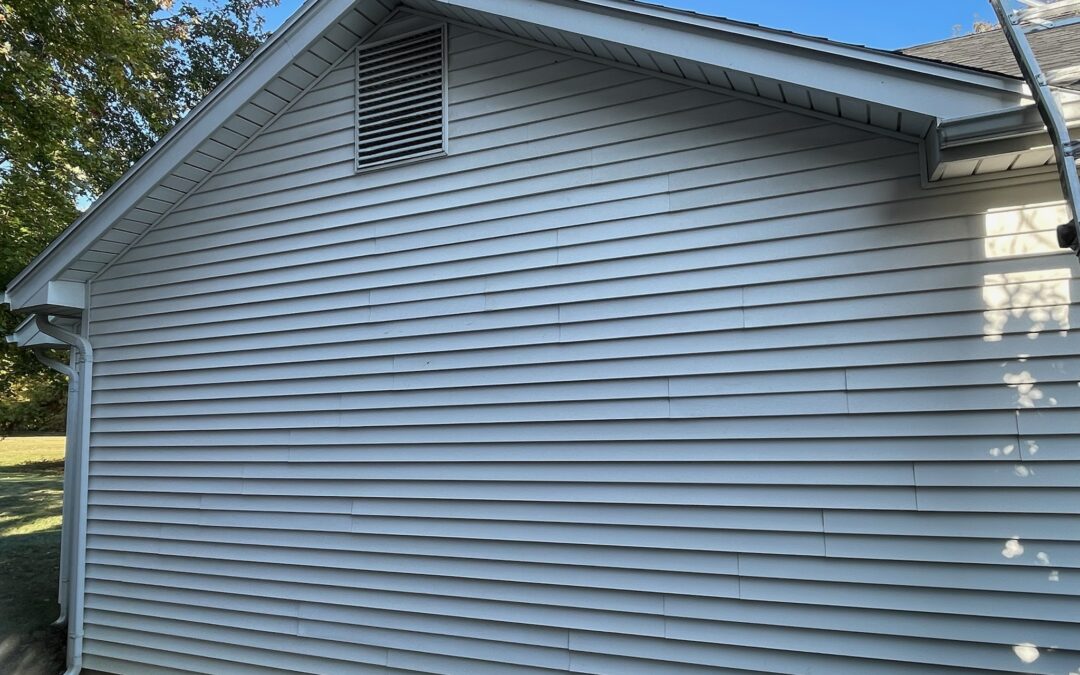
Featured snippet summary: The clearest signs your siding needs attention include waves or buckling, soft or swollen edges, hairline cracks and chalking, drafts and higher bills, interior stains or musty odors, streaks below roof-to-wall joints, and loose or gapped panels—early clues that guide timely siding repair or siding replacement.
This guide is for U.S. homeowners evaluating siding repair vs. replacement who want fast, accurate ways to spot small problems before they become expensive leaks, rot, or energy loss.
Quick answer: 7 hidden signs your siding needs attention
These are early indicators you can spot without tools—knowing how to tell if siding needs replacing can prevent costly water damage and energy loss.
- Waviness/buckling: Thermal stress or tight fasteners cause ripples; oil canning (visible waviness in metal panels due to thermal movement or substrate irregularities) signals substrate or fastening issues. Keyword: vinyl siding repair.
- Soft/swollen edges: Persistent moisture and rot at lower courses or trim show drainage failures and splashback. Keyword: house siding maintenance.
- Cracks/chalking: UV brittleness, hail strikes, and oxidation open paths for wind-driven rain. Keyword: fiber cement siding.
- Drafts/high bills: Air leaks bypass insulation and raise loads on HVAC. Keyword: air sealing exterior walls.
- Interior clues: Peeling paint, musty odors, warped drywall point to exterior wall moisture. Keyword: signs of siding rot.
- Roof-to-wall stains: Missing kickout flashing drives water behind siding and into sheathing. Keyword: kickout flashing.
- Loose/gapped panels: Failed caulk, open seams, and pest trails mean lost weather-tightness. Keyword: exterior caulking.
Why your siding matters to your roof—and vice versa
Your roof and siding function as one exterior cladding system. Roof-to-wall flashing, gutters, and kickout flashing steer water away from walls while the siding and WRB (weather-resistive barrier, commonly house wrap) shed and drain what remains. If any detail fails—say, a missing kickout flashing at a roof-to-wall end—rain can slide behind siding, saturate sheathing, and rot framing.
That is why many roofing and siding contractors coordinate roof repairs with siding repair: integration at soffit, fascia, flashing, and cladding keeps water out, improves energy efficiency, and protects interior finishes.
What causes siding problems?
- Missing or improper flashing: Misplaced step, head, or kickout flashing lets water migrate behind exterior cladding—top of the list for siding failure causes.
- Clogged gutters/downspouts: Overflowing water soaks trim and lower courses, accelerating rot and paint failure.
- Poor grading and splashback: Hardscapes and mulch reflect rain onto walls; grade that slopes toward the foundation fuels exterior wall moisture.
- Improper nailing/fastening: Overdriven nails or pinned panels prevent thermal movement, creating waves or gaps.
- UV/thermal stress and storm impacts: Heat, sun, hail, and wind force premature aging and fractures.
- Ventilation/gap issues: No rainscreen or blocked ventilation traps moisture behind siding.
Climate factors by region (best siding for my climate)
Regional weather shapes both material choice and maintenance cadence. In the Midwest and Northeast, repeated freeze–thaw cycles drive water into hairline cracks, then expand and enlarge fractures, so durable materials and vigilant caulking matter. On the coasts, wind-driven rain tests flashing details and fasteners; stainless or corrosion-resistant components help. In the Southwest, intense UV exposure can chalk finishes and embrittle vinyl; lighter colors and UV-stable formulations reduce heat load. Across the Plains, hail frequency pushes owners toward impact-rated claddings and robust underlayment. Align your siding installer’s recommendations with local codes and exposure for the best siding for my climate.
Sign 1: Wavy, buckling, or cupped siding courses
Stand 10–20 feet away and scan the wall in low-angle light. If you see ripples or cupping, your vinyl, steel, aluminum, or fiber cement siding may be stressed by overdriven fasteners, trapped humidity, or heat sources (e.g., reflective low‑E windows).
- What to check: Nail head visibility, straight and consistent exposure lines, and proximity to grills, fire features, or low‑E window reflections that can overheat panels.
Improper nailing can restrict the “thermal float” that vinyl needs to expand and contract. When panels are pinned tight, hot weather forces waves and buckles; cold snaps pull joints apart, exposing gaps to rain. Following vinyl siding installation best practices—such as center-nailing in slots and leaving slight play—prevents seasonal movement from deforming the facade.
Sign 2: Soft, swollen, or crumbly trim and lower edges
Probe base trim, kick plates, and the bottom 6–12 inches of siding with a plastic tool. If it’s spongy or flakes apart, moisture is wicking up from splashback, clogged gutters, or missing ground clearances—classic siding moisture damage.
Capillary wicking can draw water upward into wood and some composites, keeping lower courses wet for days. Splashback from hardscapes and mulch beds repeatedly drenches lower siding, multiplying decay risk. Maintain 6–8 inches of ground clearance for wood and fiber cement per typical manufacturer guidance to minimize chronic wetting.
Sign 3: Hairline cracks, hail impact stars, or chalking
Fine fractures in vinyl or fiber cement, spiderweb “stars” from hail, or longitudinal cracks near nail hems open pathways for wind-driven rain. Even small hairline cracks can admit moisture; freeze–thaw cycles then widen fractures over the season. Powdery residue on your hand indicates oxidation or chalking.
After severe weather, check for hail spatter patterns on downspouts and gutters to corroborate storm direction for an insurance inspection—helpful when documenting hail damage siding across multiple elevations.
For research on hail’s effects on exterior claddings, see the Insurance Institute for Business & Home Safety: IBHS: Hail Resources.
Sign 4: Drafts and higher energy bills (air sealing exterior walls)
If outlets on exterior walls feel breezy or certain rooms swing hot/cold, gaps in the air barrier may be letting outside air bypass insulation. Stack effect draws cold air in low and pushes warm air out high in winter (the reverse in summer), amplifying losses when walls leak.
Uncontrolled air leakage behind siding can short-circuit insulation and raise heating and cooling loads. For precise targeting, pair blower door testing with thermal imaging during siding replacement to guide air sealing exterior walls and upgrades to your WRB.
Learn more about sealing the building envelope from the U.S. Department of Energy: U.S. DOE: Air Sealing Your Home.
Sign 5: Interior clues—peeling paint, musty odors, or warped drywall
Hidden exterior failures often show up inside first—peeling paint, swollen baseboards, musty smells, and stains along exterior walls signal exterior wall moisture. Use a non-invasive moisture meter on suspect drywall and log readings over several rainy days to spot patterns.
If you encounter minor surface mold, wear basic PPE (gloves, goggles, N95) and review guidance at EPA: Mold & Moisture before any cleanup, then have the wall assembly assessed for leaks.
Sign 6: Stains below roof-to-wall intersections (kickout flashing and siding leaks)
Where a sloped roof terminates into a sidewall, kickout flashing should divert water from step flashing into the gutter. Proper kickout flashing integrates under the cladding and over step flashing and the WRB to shingle water out and away from the wall cavity.
Missing or undersized kickouts are among the most common causes of wall rot at roof-to-wall transitions in wet climates. If you see streaking or rot below these joints, consult a pro to evaluate the roof, flashing, and siding as one system.
For code guidance, see MN DLI: Kickout Flashing.
Sign 7: Loose, rattling panels, open seams, failed caulk—or pest activity
On breezy days, rattling and movement hint at loose fasteners or panels that have lost their “hang.” Open seams, brittle caulk, and gaps at penetrations invite water and pests. Insects and rodents exploit failed caulk and soffit vents; replace brittle sealants with high-quality, paintable exterior caulking and proper backer rod. Loose J-channels around windows can funnel water into the wall cavity, so reseat or replace them during repairs.
Example: Your home’s exterior is a raincoat—roof is the hood, siding is the shell
Imagine your house wearing a raincoat. The roof is the hood, shedding most water. The siding is the shell, directing the rest down and out. Flashing is the seam tape that keeps it all tight. Like cleaning and reproofing a jacket, seasonal home exterior maintenance—spring and fall—keeps the system performing.
Safety note
Skip the ladder unless you have fall protection. Use binoculars for ground inspections and call a licensed, insured roofing and siding contractor for elevated work or complex roof-to-wall details.
What to do next: Siding inspection checklist for U.S. homeowners
- Walk the perimeter after rain and note stains below roof-to-wall areas, chimney chases, and bay windows.
- Check siding in low-angle light for waves, cracks, and hail impacts; document with photos.
- Probe lower trim and corners gently; flag soft or swollen spots for a siding inspection.
- Verify caulk at windows/doors, hose bibs, lights, and electrical penetrations; re-seal as needed.
- Peek in the attic along eaves after storms for wet sheathing—roof leaks often track down to walls.
- Look for vegetation contacting siding; trim back to allow drying and airflow.
- Confirm downspout extensions discharge 4–6 feet from the foundation.
- Look for missing or damaged kickout flashing at roof-to-wall intersections.
- Call a licensed, insured roofing and siding contractor for a storm damage inspection if severe hail or wind has hit your area.
Costs: siding repair vs. siding replacement (U.S. ranges)
Budgeting helps you decide between quick fixes and full upgrades. Typical national ranges:
- Localized vinyl siding repair: $250–$750 per section depending on access and color match.
- Fiber cement patch and paint: $400–$1,000 per affected area.
- Full siding replacement: roughly $6–$14 per square foot installed, material and complexity dependent.
These ranges reflect typical single-family homes; complex elevations, historic details, or difficult access can push costs higher. Prices vary by region, access, story height, architectural complexity, and code upgrades—use these as broad guides for cost to replace siding and siding repair cost. Adding continuous insulation during siding replacement may qualify for local rebates or federal tax credits; check current incentives for energy-efficient siding.
Repair vs. replacement: How pros decide
Not every hidden sign means full replacement. Pros consider the source of failure, extent of damage, material condition, and whether you want energy upgrades such as continuous insulation and a higher-performance WRB.
Permitting and approvals matter. Many jurisdictions require a siding permit when more than a small area is replaced, and HOAs often need pre-approval of colors and profiles. If more than 25% of an exterior wall is altered, codes may trigger upgrades to WRB, flashing, and continuous insulation. Clarify scope with your contractor and local building department before work begins.
Material insights for the U.S. market
- Vinyl siding: Cost-effective and repairable; monitor heat distortion, hail cracks, and chalking. Typical vinyl siding maintenance includes gentle washing annually; expect color fade in high UV zones. Repaint is uncommon; replacement is typical if you need to replace vinyl siding broadly.
- Fiber cement siding: Durable and fire-resistant; needs correct clearances and paint maintenance. Plan to repaint every 8–12 years depending on exposure and color. Keep fastener heads sealed and caulked to prevent wicking.
- Engineered wood siding: Attractive and lighter to install; maintain paint and clearances to avoid swelling. Reseal cut ends and repaint about every 7–10 years, faster on harsh exposures.
- Metal (Steel/Aluminum): Impact resistant; can show oil-canning if substrate is uneven or fasteners are mis-set. Wash annually and touch up coatings as needed in coastal environments.
- Wood (Cedar/Redwood): Classic look; requires vigilant sealing, back-venting, and splashback control. Reseal or repaint every 3–5 years, more often on sunny or wet exposures.
For all materials, follow manufacturer installation manuals and local codes to ensure warranty coverage and long-term performance.
Cost and insurance notes
For storm damage (hail, wind-driven rain), contractors often coordinate insurance inspections of roofing, gutters, fascia, and siding together. Insurers typically assess whether impacts breach the cladding surface or diminish service life.
To strengthen an insurance claim siding damage file, document storm dates, save a local weather report or hail map screenshot, and request a joint roof and siding inspection so the claim considers all exterior systems. Thorough photos, test squares, and moisture readings help substantiate damage.
Future outlook: resilience, energy, and code shifts
Expect more severe wind and hail across many regions, driving demand for impact-resistant siding and roofing. Integration at roof-to-wall transitions will draw greater scrutiny in codes and manufacturer instructions, especially around kickout flashing, rainscreen gaps, and window flashing.
Climate resilience upgrades will become the norm: ventilated cladding, pressure-equalized rainscreen siding assemblies, corrosion-resistant fasteners, and WRBs with higher hydrostatic head ratings. More local jurisdictions are aligning with IRC/IBC guidance, tightening requirements for flashing, water management, and continuous insulation. As energy prices rise, more homeowners will bundle envelope improvements—WRB upgrades, taped sheathing, and continuous insulation—during siding projects to reduce loads and improve comfort.
Technology will accelerate exterior diagnostics and quality control. Drones can safely scan upper stories and roof-to-wall joints, thermal cameras reveal hidden moisture and bypassed insulation, and AI photo analysis flags subtle panel deformation or hail impacts across elevations. Expect more cities to adopt stringent flashing details, kickout requirements, and rainscreen mandates, along with documentation standards (photo logs, blower door tests) at permit closeout. As these tools and codes converge, homeowners will benefit from earlier detection, fewer callbacks, and longer-lasting assemblies.
FAQs
How long does siding last in U.S. climates?
Many vinyl systems last 20–40 years; fiber cement can exceed 30 with proper paint; wood varies by maintenance and climate. Roof-to-wall flashing quality, gutter performance, and ventilation dramatically influence longevity.
Can roof leaks damage siding?
Yes. Water can travel along sheathing and exit behind siding, especially at valleys and roof-to-wall joints without kickout flashing. Look for stains and swollen trim below those intersections. Timely roof repair often prevents siding failure.
What are the early signs my siding needs replacing?
Common signs your siding needs replacing include recurring waves or buckling, persistent soft or swollen lower courses, spreading cracks and chalking, rising energy bills with wall drafts, and stains or rot below roof-to-wall joints. Multiple failures across elevations usually tip the scale from repair to replacement.
Is it cheaper to repair or replace siding?
For isolated damage, repair vs. replace siding often favors targeted fixes. But if issues are widespread—systemic moisture, brittle or chalked panels, or poor flashing—replacement can be more cost-effective long term, especially when bundled with energy upgrades and code improvements during one project mobilization.
How do I spot hail damage on siding vs. cosmetic scuffs?
Hail damage siding shows as circular impact stars, fractured edges, or granule-like spall on brittle finishes. Cosmetic scuffs typically rub off and don’t fracture the substrate. Compare windward vs. leeward walls, check gutters/downspouts for spatter, and document with raking light photos.
Do I need a permit to replace siding?
Many jurisdictions require a siding permit for full replacement or when more than a set area is altered. Requirements vary by city/county and HOA rules. Ask your local building department and contractor about permits, inspections, and any code-triggered upgrades before work begins.
Before you call a pro: quick prep
Use this siding inspection checklist to make your visit efficient:
- Document clear photos in daylight, including close-ups and wide shots.
- List locations (e.g., north wall, below chimney, roof-to-wall left of deck door).
- Note recent weather context—storm dates, wind direction, hail size, and duration.
Call to action: Get a pro exterior assessment
Book a free exterior assessment within 48 hours. If you’ve spotted one or more signs from the list above, schedule a comprehensive evaluation with a licensed team. In your request, link to siding repair for targeted fixes, siding replacement for full upgrades, and consider a roof inspection to address roof-to-wall details together—your best path to a durable, leak-free result.
Call us today tap the button below to connect with a trusted siding contractor near me.
CONTACT US TODAYSchedule preventative home siding maintenance every spring and fall—clean gutters, verify downspout extensions, and do a quick siding inspection—to catch small issues before they spread.
Citations and helpful resources
- Insurance Institute for Business & Home Safety (IBHS): Hail Resources
Why it matters: Independent research on hail performance helps homeowners and pros assess cladding damage and resilience. - U.S. Department of Energy: Air Sealing Your Home
Why it matters: Authoritative guidance on sealing exterior walls and reducing energy loss informs upgrade decisions during siding projects. - U.S. Environmental Protection Agency: Mold & Moisture
Why it matters: Practical health-focused advice for recognizing and addressing indoor mold linked to moisture intrusion. - Minnesota DLI: Kickout Flashing
Why it matters: Clear code guidance on roof-to-wall kickouts that protect siding, sheathing, and interior finishes from water damage.
Remember: small exterior clues often precede major leaks. Integrating roof and siding solutions—flashing, WRB, gutters, and cladding—prevents repeat failures and extends the life of your home’s envelope. If in doubt, get professional eyes on the problem early.