
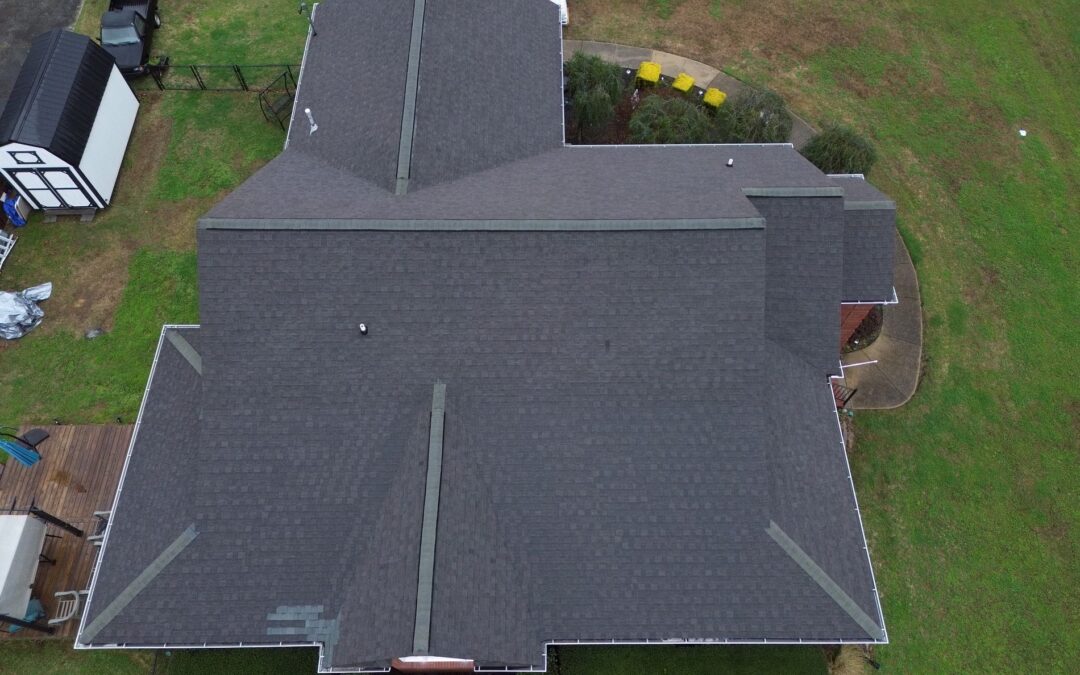
Heavy rain has a way of revealing roofing problems that may have been building quietly for months or even years. For Brentwood homeowners, that can mean a small ceiling stain, damp attic insulation, or overflowing gutters suddenly turning into a clear sign that the roof needs immediate attention. When Brentwood roofing problems after heavy rain appear, quick action matters. What begins as a minor leak can expand into damaged decking, mold growth, insulation failure, and costly interior repairs if it is left alone.
Many homes in Brentwood face a combination of factors that can make roofs more vulnerable during strong storms. Seasonal rain patterns, mature trees that drop debris into valleys and gutters, older housing stock in some neighborhoods, and drainage challenges around the roofline all create more opportunities for water intrusion. Even homes that look perfectly sound from the street may have worn flashing, aging shingles, or attic ventilation issues that only become obvious when a hard rain tests the entire system.
That is why homeowners should treat post-storm warning signs seriously. A roof is a lot like a raincoat. If the outer surface looks mostly intact but the seams are failing, water can still get through and soak everything underneath. The same thing happens with roofing systems. A few lifted shingles or cracked flashing pieces can allow rainwater to move under the surface and travel far from the original entry point.
According to the National Weather Service, heavy rainfall and flash flooding can develop rapidly and threaten homes even when the storm seems brief. The Federal Emergency Management Agency (FEMA) also emphasizes the importance of maintaining roofs, drainage paths, and the overall building envelope to reduce storm-related property damage. Those recommendations apply directly to homeowners trying to prevent roof leaks after heavy rain.
Why Heavy Rain Causes Roofing Problems in Brentwood
Heavy rain does not always create roofing damage from scratch. More often, it exposes weak points that were already present. In Brentwood, roofs can wear down from constant sun exposure, temperature swings, prior wind events, clogged gutters, and simple material aging. Then, once a prolonged or intense rain arrives, water finds the easiest path inside.
This can happen around roof penetrations, in valleys where water flow is concentrated, beneath lifted shingles, or at flashing transitions around chimneys and vents. On homes with older roofs, underlayment may also be less effective than it once was. On homes shaded by mature trees, moisture may linger longer on the roofing surface, increasing the chance of deterioration.
Brentwood homeowners also need to consider drainage. If gutters are packed with leaves or downspouts are not directing water away efficiently, rainwater can back up along the eaves and push beneath roofing materials. In other words, the roof itself may not be the only issue. Gutter drainage issues often play a major role in storm-related leaks and water damage prevention.
The Early Signs Your Roof May Need Attention Now
Some signs of roof trouble are dramatic, such as active dripping during a storm. Others are subtle. The key is recognizing the early indicators before the next storm makes them worse. If you notice any of the following, it may be time to schedule a storm damage roof inspection or Brentwood roof leak repair.
- Ceiling stains or wall discoloration: Brown, yellow, or copper-colored marks often point to water intrusion above.
- Attic dampness: Wet insulation, darkened wood, or a musty smell can indicate a roof leak that has not yet become visible in living areas.
- Missing or damaged shingles: Cracked, curled, or loose shingles can allow rainwater to slip underneath.
- Granules in the gutters: Asphalt shingle granule loss may suggest age-related wear or storm impact.
- Sagging or soft spots: These can signal trapped moisture, weakened decking, or long-term structural stress.
- Damaged flashing: Chimneys, skylights, vents, and valleys are common leak points after heavy rain.
- Overflowing gutters: Water backing up at the roof edge can contribute to leaks along eaves and fascia boards.
- Mold or mildew odors: Lingering moisture in the attic or upper walls may already be affecting indoor air quality.
It is easy to dismiss a small stain or a brief drip after a storm, but that can be a costly mistake. Roof leaks after heavy rain often start intermittently. They may only appear under certain wind directions or after prolonged rainfall, which makes them seem minor when they are not.
Interior Signs Often Show Up Before Exterior Damage Is Obvious
Many homeowners first notice trouble from inside the home rather than from the yard. Ceiling spots, peeling paint, bubbling drywall, warped trim, and damp insulation are all signs your roof may need attention now. In fact, by the time a stain reaches the ceiling, the moisture may have already traveled through the attic and along framing members for quite some time.
This is one reason leaks can be deceptive. Water rarely drips straight down from the exact point where it entered. It may move along rafters, nails, or decking before becoming visible. A leak near a bedroom ceiling may have started around a vent boot, chimney, or roof valley several feet away. That is why professional diagnosis is so valuable in Brentwood roof leak repair. Treating only the visible symptom does not solve the real source.
A brief example makes this clear. One Brentwood homeowner noticed what looked like a harmless, quarter-sized stain forming near an upstairs hallway light fixture after a storm. It dried between rain events, so it seemed minor. When a roofer inspected the area, the actual cause turned out to be flashing failure near a chimney. Water had been sneaking in and traveling through the attic for weeks. Catching it then meant a targeted repair. Waiting another season might have meant replacing insulation, drywall, and sections of roof decking as well.
Exterior Roofing Problems to Watch for After a Storm
Once the rain stops, homeowners often look outside for obvious damage. That is smart, but it should be done safely and from the ground when possible. Exterior warning signs can include:
- Shingles that are cracked, curled, displaced, or missing
- Debris buildup in roof valleys
- Bent or rusted flashing around roof penetrations
- Visible sagging along the roofline
- Gutters pulling away from the fascia
- Granule piles near downspouts
- Water spilling over gutter edges during rain
- Branches scraping or resting on the roof surface
In Brentwood, mature landscaping can be beautiful, but overhanging limbs and falling debris may accelerate roof wear. Leaves can trap moisture in valleys, clog drainage routes, and create hidden wet areas that shorten the life of shingles. As a result, roof maintenance should include more than shingle checks alone. Trees, gutters, drainage, and attic conditions all influence how well the roofing system performs in heavy weather.
How to Safely Check for Damage After Heavy Rain
Homeowners can do a basic visual review after a storm, but safety comes first. Never climb onto a wet roof, and do not use a ladder in high winds or when the ground is unstable. Instead, start inside and then inspect the exterior from ground level.
- Look for fresh ceiling stains, damp walls, or attic moisture.
- Use binoculars to check for missing shingles, lifted edges, or debris accumulation.
- Inspect gutters and downspouts for overflow, blockages, or separation from the roofline.
- Check around chimneys, skylights, and vents for visible flashing problems.
- Take photos of anything unusual in case repairs or insurance documentation are needed.
If you see sagging, exposed underlayment, active interior dripping, or signs of electrical risk near wet areas, skip the DIY review and call for professional help. In those situations, emergency roof repair may be the safer and more cost-effective option.
How Poor Attic Ventilation and Insulation Make Storm Problems Worse
Not every post-storm issue starts on the outer roof surface. Sometimes the roof leak symptoms are made worse by conditions inside the attic. Poor attic ventilation can trap heat and moisture, which accelerates shingle aging and increases condensation risk. Inadequate or damp insulation can also make a leak more destructive because it holds moisture against wood framing and ceiling materials instead of allowing it to dry properly.
For Brentwood homeowners, this matters because attic conditions influence both roof lifespan and leak severity. A roof with decent shingles but poor ventilation may age faster than expected. After heavy rain, that same attic can become a humid environment where mold growth and wood deterioration develop more quickly. If a contractor recommends evaluating attic airflow during a storm damage roof inspection, that should be seen as part of a complete roofing solution, not an upsell.
Good ventilation and insulation support water damage prevention by helping the roof system dry more efficiently between storms. They also improve energy performance, which adds another practical reason to address attic health while handling roofing repairs.
Why Small Leaks Often Become Big Repair Bills
One of the biggest mistakes homeowners make is waiting to see whether the problem returns. Unfortunately, water intrusion usually spreads quietly. A small opening in flashing or under a lifted shingle can wet insulation, stain drywall, weaken decking, and invite mold growth long before there is a dramatic leak in the living room.
That is why Brentwood roof leak repair should not be delayed once warning signs appear. Water damage prevention is almost always cheaper than restoration. A targeted repair now may cost far less than replacing insulation, repainting ceilings, fixing framing, and correcting microbial growth later.
The same principle applies to gutters. When clogged systems repeatedly overflow, the extra water can damage fascia boards, siding, soffits, and foundations in addition to the roof itself. So while homeowners often think of roofing and gutters as separate tasks, they function as one weather-management system.
When Brentwood Roof Repair May Be Enough
In many cases, a full roof replacement is not necessary. Brentwood roof repair may be sufficient when the damage is isolated and the rest of the system remains in good condition. That is especially true if the roof is newer, the decking is still sound, and the problem can be traced to one or two manageable failure points.
Repair may be the right choice when:
- The leak comes from a limited flashing issue
- Only a small number of shingles are damaged
- The roof is well within its expected service life
- There is no widespread sagging or rot
- Previous repairs have not been excessive or recurring
- Drainage improvements can resolve the underlying issue
For homeowners trying to control costs, targeted repairs can be a smart option. But the key word is targeted. The goal is not to patch symptoms temporarily. The goal is to identify the root cause and fix it in a way that holds up through future storms.
When Roof Replacement Deserves Serious Consideration
There are also times when repair is no longer the most cost-effective path. If heavy rain is exposing multiple weak areas across an aging roof, replacement may provide better value over time. This is particularly true when homeowners are paying repeatedly for patchwork fixes that do not address system-wide wear.
Replacement may make more sense when:
- The roof is near or beyond its expected lifespan
- Leaks have appeared in several locations over time
- There is visible decking damage or persistent sagging
- Past patch jobs have failed repeatedly
- Insurance documentation supports broader storm-related damage
- The cost of repeated emergency roof repair is approaching replacement value
Insurance considerations can also affect the decision. If a recent storm caused significant damage, homeowners may need a documented inspection to understand what repairs are covered and whether partial replacement creates matching issues. A trusted roofing professional can help explain the practical tradeoffs between immediate repair costs and long-term durability.
Cost efficiency matters too. A roof that needs a new patch every rainy season may become more expensive than a properly installed replacement with modern materials, upgraded underlayment, and better flashing details. In some cases, replacement is less about cosmetic age and more about restoring dependable storm resilience.
The Value of a Professional Storm Damage Roof Inspection
Because leaks are often harder to trace than they appear, a professional storm damage roof inspection is one of the most important steps after heavy rain. An experienced roofer can examine shingles, flashing, penetrations, valleys, gutters, attic moisture conditions, and structural indicators to determine where the issue began and how far it may have spread.
This is especially useful in Brentwood homes where architectural details, chimneys, skylights, and tree coverage can create complex leak patterns. Good inspections do more than confirm that a leak exists. They help homeowners understand whether they need Brentwood roof leak repair, emergency roof repair, drainage improvements, attic corrections, or a broader roof replacement plan.
Documentation also matters. Photos, written findings, and moisture observations can support insurance claims, future maintenance planning, and informed budgeting. In an environment where heavy storms may become more frequent, having a clearer picture of roof condition is a practical advantage.
Preventive Roof Maintenance That Helps Before the Next Storm
Once any immediate leak concerns are addressed, homeowners should think preventively. Roof maintenance is one of the most effective ways to reduce the chance of repeat issues. Small seasonal tasks can significantly improve how the roof handles the next round of bad weather.
- Schedule regular roof inspections, especially after major storms
- Clean gutters and downspouts before rainy periods
- Trim overhanging tree branches
- Check attic ventilation and insulation levels
- Replace damaged shingles promptly
- Monitor flashing around chimneys, skylights, and vent pipes
- Watch for recurring ceiling stains, even if they seem small
- Confirm that water is draining away from the home properly
In Brentwood, where mature trees and seasonal weather changes can quietly stress roofing systems, preventive maintenance is often the difference between a manageable service call and a disruptive leak event during the next storm.
Looking Ahead: Why Future Rain Patterns Matter
Looking forward, homeowners should expect roofing systems to face more pressure from increasingly intense rain events. Even if yearly rainfall totals do not seem dramatically different, heavier downpours over shorter periods can overwhelm aging materials and expose weak drainage design. That means roofs in Brentwood may need to perform under more demanding conditions than they did a decade ago.
Over the next several years, this is likely to make proactive inspections, stronger underlayments, improved flashing systems, and better attic ventilation more important. More homeowners may also invest in upgraded shingles, improved gutter guards, and drainage corrections to handle rapid stormwater flow. In practical terms, the future of roof care will probably be less reactive and more strategic.
For homeowners, the takeaway is simple: waiting for a major leak is not a strong plan. As storms become less predictable and more intense, routine roof maintenance and early intervention will likely become the most cost-effective way to protect both the home and the budget.
Frequently Asked Questions
How soon should I call a roofer after heavy rain?
If you notice active leaking, ceiling stains, attic moisture, or visible roof damage, call a roofer as soon as conditions are safe. Quick action improves the chances of limiting interior water damage and may reduce the scope of needed repairs.
Does one leak mean I need a full roof replacement?
No. One leak does not automatically mean full replacement. Many leaks can be solved with Brentwood roof repair if the damage is isolated and the roof still has useful life remaining. A professional inspection can determine whether repair or replacement makes more sense.
Can clogged gutters really cause roof leaks?
Yes. Gutter drainage issues can force water back toward the roof edge, where it may work under shingles or damage fascia and soffit areas. Keeping gutters clear is an important part of water damage prevention and overall roof maintenance.
Final Thoughts
Brentwood roofing problems after heavy rain should never be ignored, even when the signs seem small. A ceiling spot, damp attic insulation, missing shingles, damaged flashing, or overflowing gutters can all indicate that your roof may need attention now. The sooner these issues are inspected, the better the chance of limiting damage and avoiding more expensive repairs later.
Whether the solution is Brentwood roof leak repair, emergency roof repair, improved gutter drainage, attic ventilation corrections, or a full storm damage roof inspection, the important thing is to act promptly and thoughtfully. Heavy rain does not create every roofing issue, but it does reveal the weak points already in place. Addressing those weak points now is one of the best ways to protect your home, manage future repair costs, and keep your roofing system ready for the next storm. Contact us today!