
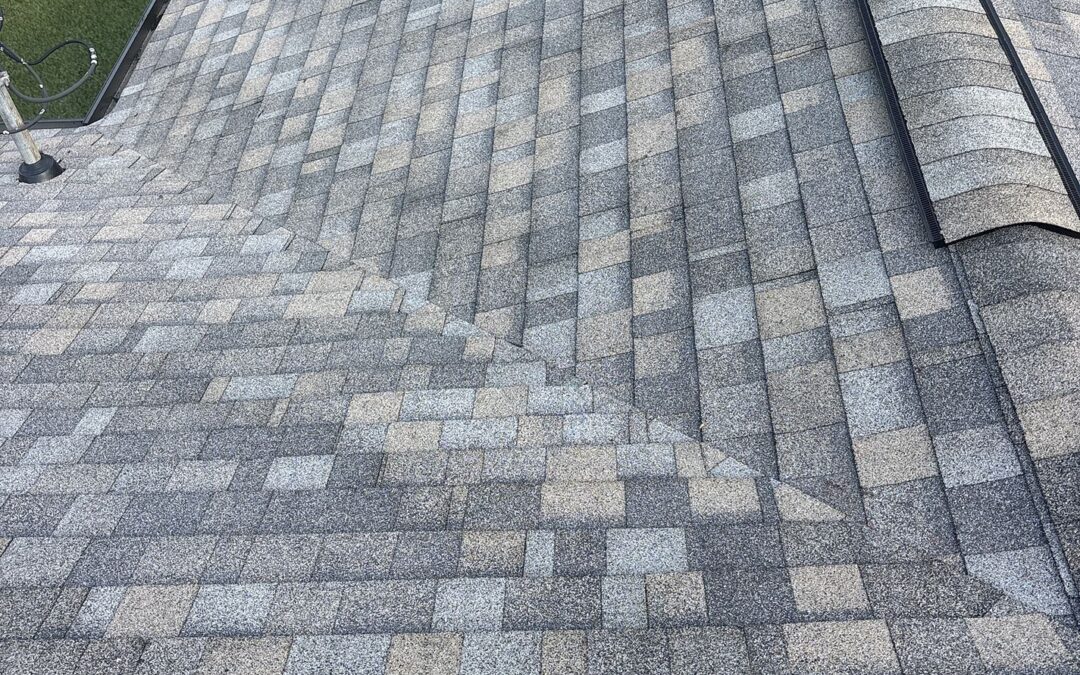
Biggest roofing mistakes homeowners make include delaying inspections, ignoring attic ventilation, reusing flashing, choosing a re-roof overlay instead of full tear-offs, and hiring the cheapest bid. Prevent roof leaks by scheduling annual checkups, balancing intake/exhaust, replacing flashing, tearing off old layers, and vetting licensed, insured contractors.
Your roof is a system. To avoid the most common roofing errors—and truly prevent roof leaks—use proven roof maintenance tips, follow a practical roof inspection checklist, and act early before minor issues escalate. This guide breaks down mistakes and shows how to fix them with code-compliant, manufacturer-approved solutions from the best roofing contractor in your area.
Quick Answer: Common Roofing Mistakes and Fast Fixes
Use these fixes to extend roof life.
- Delaying inspections — Schedule annual and post-storm checkups.
- Ignoring attic airflow — Balance soffit intake and ridge exhaust (1:150 or 1:300).
- Reusing old flashing — Replace step, counter, and chimney flashing at reroof.
- Choosing overlays — Opt for a full tear-off to repair the deck.
- Hiring the cheapest bid — Verify license, insurance, and certifications.
- Mismatching materials — Select assemblies rated for wind, hail, fire, and salt.
- Mishandling claims — Document damage and match scope to code.
- Skipping permits and codes — Pull permits and follow local/IRC rules.
- Underlayment mistakes — Install correct type, coverage, and ice/water protection.
- Neglecting gutters — Clean twice yearly and size drains to roof area.
- Misunderstanding warranties — Register and know coverage limits.
Mistake #1: Roof Inspections and Maintenance — Catch Problems Early
Roofs rarely fail overnight. Small defects—lifted shingles, popped nails, cracked pipe boots, or clogged gutters—compound into sheathing rot, mold, and leaks. Early detection keeps repairs simple and affordable. Most leaks originate at flashing and penetrations; focus inspections there according to the NRCA consumer roofing guidance.
7-Point Roof Inspection Checklist
- Inspect shingles for granule loss, curling, blisters, and exposed nails.
- Check flashing at walls, chimneys, skylights, and valleys for rust, gaps, or failed sealant.
- Examine penetrations (vents, pipes) for cracked boots or loose collars.
- Review valleys for debris, shingle end-laps, and metal oxidation.
- Clean gutters and confirm downspouts discharge well away from the foundation.
- Scan the attic for daylight, moisture stains, mold odors, or compressed insulation.
- Inspect soft metals (drip edge, vents) for hail dings and sealant failure.
Typical costs: Minor roof repairs (e.g., replacing a few shingles or a pipe boot) often range $150–$600 nationally, while larger repairs can exceed $1,000. See benchmarks on HomeAdvisor’s roof repair cost guide.
Early detection lowers lifecycle cost. Fixing a cracked boot or loose flashing today can prevent saturated insulation, sheathing replacement, and interior drywall repairs tomorrow. Proactive maintenance also protects manufacturer and workmanship warranties by showing you maintained the system.
Building science research shows that keeping water out during extreme weather dramatically reduces losses. IBHS testing indicates sealed roof decks can reduce water intrusion by up to 95% when shingles are lost during high winds; review the IBHS FORTIFIED Roof standards on sealed decks.
Seasonal Roof Care Checklist
- Clear spring debris, clean gutters, and inspect flashing after winter storms.
- Verify summer ventilation, trim branches, and check UV-exposed sealants.
- Remove fall leaves, extend downspouts, and confirm attic airflow with baffles.
- Monitor winter ice dams, keep soffit vents clear, and safely remove excess snow if advised.
Pro Tip: After hail, wind, or heavy snow, take date-stamped photos from the ground and in the attic, then schedule a licensed roofer to verify damage before it spreads.
Mistake #2: Attic Ventilation and Insulation — Roof Leak Prevention 101
Excess attic heat and moisture shorten shingle life and drive condensation, mold, and wood rot. Balanced intake (soffit) and exhaust (ridge or roof) ventilation, combined with air sealing and insulation, keep the roof system healthy and energy bills lower.
- Provide net free ventilation area (NFA) at 1:150 of attic floor area, or 1:300 with a qualifying vapor retarder at the ceiling plane, split roughly 50% intake and 50% exhaust.
- Calculate NFA: A 1,800 sq ft attic at 1:150 needs 12 sq ft NFA (1,728 sq in), with about 864 sq in intake at soffits and 864 sq in exhaust at ridge or roof vents.
- Size the ridge vent: If your ridge vent provides 18 sq in NFA per linear foot, install approximately 48 linear feet to reach about 864 sq in of exhaust capacity.
- Avoid short-circuiting: Do not mix powered attic fans with ridge vents unless intake is engineered to prevent negative pressure and back-drafting conditioned air.
- Keep pathways clear: Install baffles at soffits so insulation never blocks airflow, and air-seal ceiling penetrations to keep indoor moisture out of the attic.
See DOE Energy Saver guidance on home ventilation and the Building America Solutions Center: Attic Ventilation guide. Also consult Building Science Corporation’s primer on venting, vapor, and drying.
Pro Tip: Verify your ridge vent’s NFA per linear foot and multiply by total ridge length to ensure exhaust capacity equals soffit intake.
Mistake #3: Reusing Old Flashing and Roof Accessories
Flashing is where most leaks begin. Reusing old, corroded, or improperly sized flashing invites water intrusion and warranty problems.
- Replace step flashing: Use individual pieces at least 5 by 7 inches, yielding a 2–3 inch exposure, with minimum 3-inch overlaps; weave with each shingle course.
- Install counterflashing right: Cut a reglet in masonry about 1 inch deep, insert counterflashing, and seal with a compatible sealant; avoid surface patches.
- Use kick-out flashing: Add kick-outs at roof-to-wall intersections to direct water into the gutter; project 2–4 inches beyond the siding plane.
- Prevent galvanic corrosion: Match metals and avoid dissimilar metal contact; in coastal zones, use stainless steel fasteners (304/316). See the American Galvanizers Association guidance on dissimilar metals.
For system details, see the NRCA consumer roofing resources.
Pro Tip: Photograph flashing details before and after replacement to document workmanship for warranties and future resale.
Mistake #4: Re-Roof Overlay vs. Tear-Off — Roof Replacement vs Re-Roof
Installing a new roof over old shingles (a re-roof overlay) adds weight, traps heat, hides deck damage, and commonly limits or voids manufacturer warranties—making roof replacement vs re-roof an easy decision for long-term value.
- Choose a full tear-off: Expose the deck, replace damaged sheathing, and install new underlayment, flashings, and accessories.
- Know code limits: The IRC restricts reroofing where there is existing water damage or more than one roof layer. See IRC R908 reroofing summary (example jurisdiction).
- Protect warranties: Many manufacturers do not cover overlays; confirm eligibility in writing.
Mistake #5: Choosing the Cheapest Bid or an Unlicensed Roofer
Low bids often hide cut corners: thin underlayment, skipped ice/water barrier, reused flashing, or uninsured labor.
Must-Haves for the Best Roofing Contractor
- Verify licenses: Confirm active state/local license status.
- Confirm insurance: Obtain certificates of general liability and worker’s comp naming you as certificate holder.
- Check local references: Request three recent, nearby projects similar to yours.
- Ask for manufacturer certifications: Look for GAF Master Elite, CertainTeed Select ShingleMaster, or equivalent.
- Demand a detailed scope: Require line items for tear-off, deck repair, underlayment, ice/water, flashing metals, fasteners, ventilation plan, and cleanup.
Red Flags to Avoid
- Avoid big deposits: Decline large upfront payments unrelated to materials ordering.
- Beware storm chasers: Be cautious with out-of-state crews lacking a permanent local address.
- Decline high-pressure tactics: Refuse to sign anything before the insurance adjuster’s visit.
- Watch for missing details: Avoid proposals without materials, methods, and timeline specifics.
- Avoid AOB pitfalls: Do not sign assignment-of-benefits agreements unless required by law and fully understood.
Mistake #6: Choosing Roofing Materials That Don’t Match Your Climate
The U.S. spans hurricane coasts, hail belts, wildfire zones, and salty shorelines. Mismatched materials wear out early and raise risk. Choose climate-matched assemblies to prevent roof leaks and improve durability.
- Select wind-rated systems: Choose shingles and attachments tested for higher wind ratings; consider sealed roof deck practices in coastal areas. Review the IBHS FORTIFIED Roof standards.
- Resist hail impacts: Use Class 4 impact-rated asphalt shingles or 24–26 gauge standing seam metal with concealed fasteners to resist impact.
- Choose fire resistance: Install Class A fire-rated assemblies and maintain defensible space with ember-resistant details at eaves and vents.
- Prevent corrosion: Specify corrosion-resistant flashings and fasteners (stainless, aluminum) and compatible sealants in coastal/salt air zones.
- Reduce heat load: Consider cool roof surfaces and adequate ventilation in hot/sunny climates; see ENERGY STAR cool roof guidance.
- Detail metal correctly: Use high-temperature underlayment under metal (especially in hot-sun or low-slope conditions) per manufacturer specs.
Regional examples: Along the Gulf Coast, pair ring-shank nails with enhanced fastening patterns and a sealed deck to reduce wind-driven rain intrusion. Along the Front Range, combine Class 4 impact-rated shingles with thicker metal valleys to resist hail. In wildland–urban interface zones, select Class A assemblies and ember-resistant vent screens to reduce ignition risk. These strategies align with IBHS recommendations for resilient roofs.
Insurance incentives: Some insurers offer premium discounts for Class 4 impact-resistant roofs (UL 2218 Class 4) in hail-prone states; check your carrier and state filings. Review the Insurance Information Institute overview of impact-resistant roofing and potential discounts.
In some states, carriers require UL 2218 Class 4 documentation and specific shingle model identification before credits apply; contact your agent to verify paperwork and timelines for premium adjustments. Credits vary by state and insurer and may require photos of packaging labels and on-roof product identification.
Pro Tip: Ask for product ICC-ES reports and manufacturer technical bulletins to confirm ratings and compatible accessories for your climate.
Mistake #7: Insurance Claims for Roof Damage — Step-by-Step Guide
After hail or high winds, rushed decisions or signing before an adjuster visit can lead to under-scoped repairs and disputes. Understand key terms and sequence your claim the right way to avoid costly delays.
- Document damage: Capture date-stamped photos of shingles, flashings, soft metals, and interior stains.
- File promptly: Report the claim and schedule an on-site meeting with your adjuster and a licensed local roofer.
- Understand terms: ACV (Actual Cash Value) is depreciated value; RCV (Replacement Cost Value) pays ACV plus recoverable depreciation once work is completed; depreciation is the age/wear deduction; supplements document added scope to meet code or uncover hidden damage.
- Follow deductible rules: Pay your deductible; deductible waivers or rebates may constitute insurance fraud in many states—decline them.
- Match scope to code: Ensure the written scope includes tear-off, deck repairs, underlayment, ice/water shield, flashing, ventilation, and permits per local code and manufacturer instructions.
How to handle supplements: 1) Document needed changes with photos, code citations, and invoices. 2) Submit a supplement request to the carrier with clear line items. 3) Obtain written approval before continuing work on those items.
For resilience-based upgrades that may earn insurance incentives, review the IBHS FORTIFIED Roof program.
Pro Tip: Ask your contractor to attend the adjuster meeting and provide a line-item estimate with photos tied to each item.
Mistake #8: Permits & Code Compliance
Permits protect your investment. Non-permitted work can complicate insurance claims, home sales, and appraisals.
- Pull required permits: Confirm requirements, ensure your contractor pulls the permit, and schedule inspections.
- Post the card: Display the permit card on-site and keep inspection sign-offs with your warranty paperwork.
- Follow adopted codes: Adhere to IRC and local amendments for fastener patterns, ventilation, and flashing details.
- Secure HOA approvals: Obtain HOA/ARC approvals before work, especially for color or material changes.
- Keep records: Save permits, inspection sign-offs, and photos with your warranty documents.
Mistake #9: Underlayment & Ice/Water Shield Errors
Underlayment is your secondary water barrier. The wrong type, coverage, or placement invites leaks—especially in cold or windy climates.
- Match slope to coverage: On 2:12–4:12 slopes, follow manufacturer instructions for double coverage with appropriate laps.
- Use self-adhered membranes: Install ice and water shield at eaves, valleys, penetrations, and low-slope sections as required by code and climate.
- Protect valleys: Use full-width self-adhered membrane in open valleys or W-style metal valley flashing for robust water shedding.
- Specify quality: Choose synthetic or felt underlayment per shingle manufacturer specs to maintain warranty eligibility.
For best practices, consult the NRCA Roofing Manuals.
In snow climates, see FEMA guidance on preventing ice dams.
Mistake #10: Gutters & Roof Drainage
Water that can’t leave the roof finds its way in. Poor drainage saturates eaves, fascia, and foundations.
- Clean regularly: Clear gutters twice a year; add guards where trees shed heavy debris.
- Size downspouts: Provide roughly one downspout per 600–800 sq ft of roof area; a 2,000 sq ft roof may need three to four downspouts depending on rainfall intensity.
- Set slopes: Pitch gutters 1/16–1/8 inch per foot toward outlets to maintain flow.
- Go bigger when needed: Use 6-inch K-style gutters and larger downspouts in heavy rainfall regions or on long eave runs.
- Extend discharge: Direct downspouts 4–6 feet from the foundation and fix negative grading.
- Add kick-out flashing: Install kick-outs at roof-to-wall intersections to route water into gutters.
Mistake #11: Roof Warranties — Register & Understand Coverage
Roof systems often include three layers of protection. Know which applies and what voids coverage.
- Understand material warranties: Manufacturer coverage addresses shingle defects (limited lifetime or term-based) but may exclude improper installation or ventilation.
- Leverage system warranties: Enhanced “system” warranties require certified installers and approved accessory packages; they may include extended non-prorated coverage.
- Confirm workmanship coverage: Contractor workmanship warranties cover installation defects for a stated term; they are typically transferable once within a set window, sometimes with a fee.
- Register and track: Transfer windows and fees vary by manufacturer; review terms and register promptly via resources like GAF warranty registration.
Pro Tip: Photograph product labels and serial numbers in the attic (vents, underlayment rolls, insulation bags) and store them with your invoice for hassle-free warranty claims.
Analogy: Your Roof Is a Raincoat—But Only If It’s Zipped and Sealed
Think of your roof like a high-performance raincoat. Shingles are the fabric that sheds water, while flashing and underlayment are the zippers and seam tape that stop leaks at joints. Overlaying a new layer on a torn coat or skipping seam tape lets water sneak in—small gaps become big leaks.
Roof Replacement Cost and Lifespan by Material
Costs vary by home size, slope, story count, region, and product tier. National ranges below are directional; obtain local, line-item bids for accuracy, and compare roof replacement vs re-roof proposals apples-to-apples.
- Install asphalt shingles (architectural): Roughly $8,000–$18,000 for typical homes; lifespan 18–30 years with proper ventilation and maintenance.
- Choose standing seam metal (24–26 ga): Roughly $18,000–$45,000; lifespan 40–70 years with high-temp underlayment and correct details.
- Select concrete/clay tile: Roughly $20,000–$50,000+; lifespan 50+ years with reinforced framing and specialized flashings.
- Invest in natural slate: Roughly $30,000–$100,000+; lifespan 75–100+ years with expert installation and periodic maintenance.
Cost drivers: Complexity (hips, valleys, dormers), steepness, story count, tear-off layers, sheathing repair, disposal fees, regional labor rates, and material availability all move the needle. Upgrading to corrosion-resistant metals or impact-rated shingles adds cost but may lower long-term repairs.
ROI factors: Enhanced system warranties, Class 3/4 impact-rated products, or IBHS FORTIFIED details can improve resilience and appeal to insurers or buyers, potentially offsetting higher upfront cost. FORTIFIED or enhanced-system packages may raise project price but can improve long-term ROI through fewer losses, lower lifetime maintenance, and stronger resale signals. Appraisers and buyers in storm-prone markets increasingly recognize Class 4 and FORTIFIED features in listing remarks and valuations.
For resale and ROI trends, review the Remodeling Magazine Cost vs. Value Report.
Pro Tip: Request three detailed, apples-to-apples proposals with the same product lines, underlayments, flashing metals, venting plan, and cleanup to make a fair comparison.
Future of Roofing: What Smart Homeowners Should Watch
- Adopt impact ratings: Class 3 and Class 4 impact-rated shingles are expanding beyond hail belts, improving resilience and insurability.
- Seal roof decks: Coastal codes and insurer incentives increasingly favor sealed roof decks to reduce wind-driven rain intrusion; see the IBHS FORTIFIED Roof standards.
- Use drone thermography: Thermal imaging drones map hidden moisture for targeted repairs and proactive maintenance, reducing tear-off surprises.
- Cool and clean roofs: Higher reflectivity and algae-resistant surfaces are becoming mainstream in hot, humid climates; see ENERGY STAR cool roof guidance.
- Apply wind-driven rain research: Building science advances are refining details that stop rain intrusion under extreme gusts; review IBHS research on wind-driven rain.
FAQs
How often should I get my roof inspected?
Schedule annual inspections and post-storm checkups. Regular maintenance catches small issues—loose shingles, failing flashing, clogged gutters—before they cause leaks and structural damage. See the NRCA homeowner resources.
How do I know if I need a roof repair or a full replacement?
Repair when damage is localized (a few shingles, a single flashing detail). Replace when you see widespread granule loss, curling shingles, recurring leaks, or moisture-damaged decking. Ask for both options with line-item costs from a licensed roofer.
What voids a roofing warranty?
Common issues include improper ventilation, overlays, unapproved accessories, and installation outside manufacturer specs. Register your warranty promptly and keep all documentation, including permits and inspection records.
What is the best time of year to replace a roof?
Schedule spring or fall installs for milder temperatures and steadier weather, which help adhesives set and crews work efficiently. Book early to secure reputable contractors during peak season; see Angi’s guidance on the best season to replace a roof.
How long does an asphalt shingle roof last with proper ventilation?
Expect 18–30 years for architectural asphalt shingles when installed to manufacturer specs with balanced attic ventilation and regular maintenance. For component life studies, see InterNACHI’s building component life expectancy data.
Can I claim a roof leak on homeowners insurance?
Policies generally cover sudden, accidental damage (e.g., wind, hail) but not wear-and-tear or deferred maintenance. Document the event, mitigate further damage, and review your policy’s ACV and RCV terms. For coverage basics, see the Insurance Information Institute’s homeowner policy guide.
Sources and Further Reading
- NRCA: Consumer Roofing Resources
- IBHS: FORTIFIED Roof Standards
- Building America Solutions Center: Attic Ventilation
- DOE Energy Saver: Home Ventilation
- Building Science Corporation: Venting, Vapor, and Drying
- ENERGY STAR: Cool Roof Guidance
- HomeAdvisor: Roof Repair Cost Guide
- IRC R908: Reroofing (Public Code Summary)
- FEMA: Protect Your Home from Ice Dams
- IBHS: Risk Research on Wind-Driven Rain
- Insurance Information Institute: Impact-Resistant Roofing and Discounts
- GAF: Warranty Registration
- Remodeling Magazine: Cost vs. Value Report
By avoiding the biggest roofing mistakes homeowners make—and focusing on inspections, ventilation, code compliance, and qualified installers—you can improve roof longevity, prevent leaks, and avoid costly surprises.