

For fast results: clean gutters, check flashing and vent boots, verify attic ventilation/insulation, and use non-penetrating clips to hang Christmas lights from roof edges. Do a quick roof inspection Alabama checklist, choose UL-listed LEDs, and plug into a GFCI outdoor outlet. Work midday on dry surfaces and avoid staples or lifted shingle tabs. Contact us with any questions!
Alabama winter roof prep: step-by-step how to hang Christmas lights safely
This quick How-To helps you hang Christmas lights from the roof while protecting shingles, flashing, and electrical circuits. Estimated time: 2–4 hours for a single-story. Difficulty: Moderate. Tools: extension ladder, non-penetrating clips, UL-listed LED strands, 16 AWG outdoor cords, GFCI access, gloves. Safety: dry surfaces, three points of contact, spotter, eye protection (CPSC; OSHA).
- Inspect from the ground and attic. Walk the perimeter for missing or lifted shingles, loose ridge caps, sagging gutters, or cracked sealant. From the attic, look for stains, damp insulation, or daylight at penetrations and chimneys. Avoid roof walking if damp, frosty, or below freezing. Source: CPSC holiday safety and OSHA ladder guidance.
- Clean gutters, valleys, and downspouts. Remove leaves and pine straw for effective gutter cleaning Alabama homeowners rely on, then flush downspouts to ensure water exits 4–6 feet from the foundation. Refasten loose hangers and correct sagging sections to prevent overflow into soffits.
- Check flashing, vent boots, and skylights. Reseal tiny gaps at step and counterflashing with roof-safe sealant and replace brittle vent boots. Clear skylight weep channels and confirm shingles lap correctly along sidewalls to resist wind-driven rain.
- Verify attic ventilation and insulation. Keep soffit baffles clear and target R-38 to R-49 in most Alabama homes (IECC Zones 2–3). Balanced intake (soffit) and exhaust (ridge) reduces condensation and extends shingle life in asphalt shingles winter conditions. Source: Energy.gov attic guidance.
- Lay out lights and plan circuits. Test UL-listed, outdoor-rated LED strings, tally wattage by run, and map to a GFCI outdoor receptacle. Do not mix LED and incandescent on the same run to avoid overloads and uneven brightness.
- Use non-penetrating clips at edges. Attach to gutters, drip edge, or fascia using plastic clips; on metal, use magnetic clips if panels are ferrous. Never lift shingle tabs or staple into roofing—both can break seals and invite leaks.
- Set the ladder correctly and work in teams. Place on level ground with the 4:1 rule, extend 3 feet above the eave, and maintain three points of contact. Have a spotter to stabilize and hand up strands to limit trips up and down. See OSHA guidance above for best practices.
- Route cords safely with drip loops. Keep connections off the ground, create a downward loop before each plug to shed water, and avoid valleys and downspout outlets. Add a clip within 2–3 inches of every connector for strain relief.
- Wind-proof exposed edges. Tighten clip spacing to 6–12 inches at corners and rakes and keep 12–18 inches along straight eaves. Add extra clips near plugs, transitions, and peaks to reduce uplift during gusty fronts.
- Final test and timer setup. Press test/reset on the GFCI, verify all strands illuminate, and program a dusk-to-dawn or smart timer for consistent holiday light safety without manual switching in wet weather.
Safety essentials and weather alerts
Always work on dry, unfrosted surfaces, wear gloves with grip, and keep three points of contact on the ladder (see How-To Step 7 for ladder setup). If lightning or a severe thunderstorm warning is issued, unplug displays and wait for all-clear from your local NWS office before resuming work.
Why Alabama roofs need winter-specific prep
Alabama’s mild winters still challenge roofs: Gulf lows push moisture inland, dew points often sit in the 30s–40s, and December–January cold fronts can deliver 1–3 inches of rain with 35–45 mph gusts in Birmingham, Huntsville, Montgomery, and Mobile, with coastal exposure adding salt-laden wind. North-facing eaves and shaded valleys in Huntsville and Birmingham hold dew and frost longer—plan late-morning installs after surfaces dry. These patterns increase uplift forces on light runs, strain gutters, and make asphalt shingles brittle on cold mornings. NWS local climatology and event summaries support these typical conditions (NWS Birmingham).
Analogy: Roof prep is like winterizing a car—you check fluids, tires, and the battery before a cold snap so you’re not stranded. Here, you clear gutters, inspect flashing, and confirm ventilation so your roof “starts” every storm without leaks.
Ventilation and insulation for Alabama attics (R-38 to R-49)
In most Alabama homes (IECC Zones 2–3), aim for R-38 to R-49 attic insulation. Combine continuous soffit intake with ridge exhaust and keep baffles clear so insulation doesn’t choke airflow. Proper ventilation limits condensation and keeps shingles from overheating on sunny winter afternoons. See Energy.gov.
Hang Christmas lights on Alabama roofs without damage
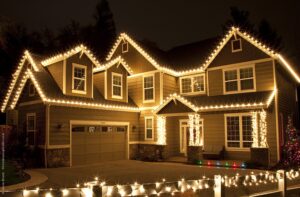
To hang Christmas lights from the roof without harming asphalt shingles or metal panels, use plastic gutter/eave clips on the fascia and drip edge or magnetic clips on ferrous metal. Avoid lifting shingle tabs, which breaks sealant bonds and can void warranties even without penetrations. Choose outdoor-rated, UL-listed LED strings on GFCI outdoor circuits for holiday light safety. For asphalt shingles winter performance, limit foot traffic and work when surfaces are warm and dry. If you prefer metal roof Christmas lights, use magnetic clips and avoid drilling into panels. IBHS recommends upgraded edges and sealed decks for better wind-driven rain protection in coastal and storm-prone zones (IBHS FORTIFIED Roof).
Common mistakes that cause leaks and callbacks
- Stapling or screwing lights into shingles or metal panels
- Lifting shingle tabs to tuck wires, breaking the adhesive seal
- Running cords through ridge or soffit vents where water can follow
- Overloading circuits or mixing incandescent and LED on the same run
- Clipping lights inside valleys or across downspout outlets
- Walking on frosty shingles or wet metal roofs
- Skipping GFCI outdoor protection on exterior outlets
Tools and materials checklist
- UL-listed, outdoor-rated LED light strands (consistent color temperature across runs)
- Non-penetrating gutter/eave clips; corrosion-resistant for coastal zones (UV-stable plastic or 304 stainless)
- Magnetic clips for ferrous metal roofs (verify pull strength and weather rating; test with a small magnet on an inconspicuous area to confirm panels are ferrous)
- Outdoor extension cords: 16 AWG or heavier, especially for runs over 25 feet
- UL-listed, weather-resistant in-use outlet covers
- Weather-resistant timers or smart plugs rated for outdoor use
- GFCI-protected receptacle access or portable GFCI
- Extension ladder with non-marring standoffs, gloves with grip, and eye protection
Electrical load and LED energy savings
LEDs cut energy use by ~75–90% versus incandescent and run cooler, lowering fire risk (source: Energy.gov). Simple load math for a 15-amp, 120V circuit: 15 A × 120 V = 1,800 W. For safety, keep continuous load ≤80% ≈ 1,440 W, and leave an extra ~20% headroom during wet weather.
- 70-count LED minis: ~2.4 W per strand. Theoretically, ~600 strands fit under 1,440 W, but manufacturer limits usually cap connection at 40–60 strands—follow the label.
- C7 LED strand: 25 bulbs at ~0.6 W each ≈ 15 W per strand. You could run ~96 strands at 1,440 W, but again, observe manufacturer limits.
- C9 LED strand: 25 bulbs at ~0.8 W each ≈ 20 W per strand. Roughly ~72 strands at 1,440 W—well above common strand-cap rules; adhere to the packaging.
Never mix LED and incandescent on the same run, keep connections off the ground with drip loops, and use outdoor-rated cords (16 AWG or heavier) plus in-use covers. Many manufacturers limit LED minis to 40–60 connected strands despite low wattage—plan circuits by both watts and strand limits. For planning, icicle lights often draw ~5–15 W per 9–12 ft LED strand, while 4×6 ft LED net lights commonly draw ~24–40 W; verify your packaging and adjust runs accordingly.
Wind thresholds and storm protocol in Alabama
Add extra securing or remove exposed runs when sustained winds are forecast at 25–30 mph or gusts exceed 40 mph. Open gables and rakes face higher uplift and may warrant proactive removal when advisories are issued. Monitor your local forecast office—central Alabama: NWS Birmingham; coastal Alabama: NWS Mobile. For statewide preparedness tips, see Alabama EMA.
Gutters and guards: how to clip without damage
With gutter guards, choose clips compatible with your type—micro-mesh, perforated, or reverse-curve—so they grip the front lip without prying the cover or lifting shingle edges. Use front-lip compatible clips only; do not defeat the guard’s water-shedding curve. Avoid inserting clips under shingle tabs or through guard perforations; route cords outside valleys and keep downspout outlets clear so water flow is uninterrupted. Around downspouts and drip edges, keep cords elevated with clips and avoid damming water paths.
Metal roofs without gutters: mounting options
- Magnetic clips on ferrous standing-seam or ribbed panels (confirm magnet strength and corrosion resistance)
- Under-eave fascia hooks anchored to wood fascia boards
- Ground-based displays (trees, shrubs, and freestanding frames) to avoid roof foot traffic entirely
Never drill temporary fasteners into panels or trim; that invites rust and leaks, especially in coastal zones with salt exposure. When routing near drip edges on metal, keep cords out of primary runoff paths to prevent capillary intrusion at laps and seams.
Schedule a pre-holiday roof check (Alabama)
Beat the first big front. Book a 30–45 minute roof inspection and tune-up before you decorate. Pros can also evaluate FORTIFIED Roof Alabama eligibility for added wind and water resilience (IBHS).
After-holiday removal: safe take-down checklist
- Pick a dry, calm day with unfrosted surfaces; confirm no active precipitation or lightning.
- Set your ladder with the 4:1 rule and a spotter; keep three points of contact (see OSHA in How-To).
- Unclip gently—do not yank on cords or pry under shingle tabs or guard lips.
- Coil cords and strands with reusable ties, label by eave or gable, and store in breathable bins.
- Inspect for clip marks, dislodged drip edge, or disturbed sealant; address minor issues promptly.
- After storms, recheck clips and shingles before storage and note any areas needing a pro’s review.
Maintenance calendar: November through January
- November: Final leaf-drop cleanup, roof inspection Alabama checklist, and gutter cleaning Alabama service if needed. Confirm GFCI test/reset at exterior outlets.
- December: Mid-season check after the first strong cold front; re-secure clips on corners and rakes and verify timer settings.
- January: Remove lights on a dry, mild day; perform final inspection and schedule any repairs before spring rains.
Wind-proofing your holiday lights for Alabama weather
- Clip spacing: 6–12 inches at corners, rakes, and gables; 12–18 inches on straight eaves.
- Strain relief: Add a clip within 2–3 inches of every plug or connector to reduce pull forces.
- Routing: Keep cords away from valleys, ridge vents, and downspout outlets to avoid water paths.
Use the timer guidance in the How-To.
Regional tips across Alabama
- Huntsville/North Alabama: More frequent frosts and occasional black ice in shaded eaves; decorate late morning once dew evaporates. Dec–Jan fronts commonly bring 1–3 inches of rain and gusts into the upper 30s to low 40s mph per NWS summaries—typical values, not guarantees. Asphalt shingles winter brittleness is most noticeable at daybreak; wait for warming.
- Birmingham/Tuscaloosa: Heavy leaf loads in valleys and gutters; prioritize cleaning and verify downspouts are clear before a Gulf low. North-facing roof sections keep dew longer—avoid early starts on those eaves.
- Montgomery: Freeze–thaw swings highlight flashing weaknesses; reseal minor cracks and keep soffit baffles open. Use 12–18 inch clip spacing along long straight eaves exposed to crosswinds, and add extra clips on open gables that face prevailing winds.
- Mobile/Gulf Coast: Higher winds and salt air; select corrosion-resistant clips (UV-stable plastic or 304 stainless) and consider removing roofline runs ahead of coastal wind advisories. Rinse hardware with freshwater post-season to slow corrosion; ideal for metal roof Christmas lights longevity.
- Auburn–Opelika: Campus-area trees shed late; plan a second gutter clean in early December and tighten clip spacing on open gables facing prevailing winds.
- Dothan/Wiregrass: Fewer freezes but strong moisture surges; manage dew and overnight fog with midday installs and elevated cord routing near downspouts.
- Gulf Shores/Orange Beach: Salt spray accelerates corrosion; avoid steel fasteners, choose 304 stainless or UV-stable plastics, and rinse hardware after removal.
Costs and when to hire a pro
Typical professional holiday light installation in Alabama ranges from roughly $2–$4 per linear foot for simple rooflines on single-story homes, often totaling $250–$600. Two-story or steep-slope premiums can raise costs to $4–$7 per foot, especially with complex peaks. Optional add-ons—takedown ($100–$250), storage ($75–$150), and timer programming ($25–$75)—provide convenience but add to the budget. A basic roof tune-up (minor sealing, vent boot replacement, gutter rehanging) commonly ranges $150–$450 depending on scope. Hire a pro if slopes are steep, heights exceed your ladder, active leaks exist, or electrical load planning feels uncertain—DIY becomes unsafe when wind, frost, or circuit capacity is questionable.
Timing: decorate in safe temperature windows
Plan installs for late morning to afternoon when temperatures rise above freezing and surfaces are dry. North Alabama often starts with frost or heavy dew—wait for sun and airflow to dry the roof before stepping on ladders near eaves. If thunderstorms or lightning are in the forecast, postpone work and unplug displays until the threat passes per local NWS alerts.
ADA and accessibility for holiday displays
Keep cords off walkways, maintain 36-inch clear paths, and avoid light sequences that flash more than ~3 Hz to reduce risks for sensitive viewers. Secure cords at grade with covers where crossings are unavoidable.
Compliance and warranty reminders
Penetrating roofing with staples or screws can void shingle or panel warranties and create leak paths. Lifting shingle seals—even without a visible hole—may also void manufacturer warranties. Electrical safety bodies recommend weather-resistant, outdoor-rated equipment, in-use covers, and GFCI protection for exterior outlets (see CPSC). For long-term resilience in wind-driven rain, consider FORTIFIED Roof Alabama upgrades (sealed deck, enhanced edges) via IBHS.
Forecast and trends
NOAA/Climate.gov reports increasing heavy rainfall events across much of the Southeast, elevating the need for clean gutters, sealed roof decks, and robust drip edges during winter storms (NOAA Climate.gov). Stay informed with your local forecast office (NWS Birmingham or NWS Mobile) and statewide preparedness via Alabama EMA.
Frequently asked questions
Can I staple Christmas lights to my roof in Alabama?
No. Staples and nails pierce roofing, void warranties, and invite leaks. Use non-penetrating clips on gutters, drip edge, or fascia.
Can I hang lights on gutters with guards?
Yes, with guard-compatible clips that grip the front lip on micro-mesh, perforated, or reverse-curve guards. Do not pry up the guard or shingle edges.
How do I hang lights on a metal roof without gutters?
Use magnetic clips on ferrous panels, under-eave fascia hooks, or shift to ground-based displays. Never drill temporary holes, and route cords outside primary drip paths.
What wind speed should I take lights down?
Increase securing or remove exposed runs when sustained winds reach 25–30 mph or gusts exceed 40 mph. Monitor your local NWS forecast for advisories.
How many LED strands can I connect on one circuit?
On a 15-amp, 120V circuit, target about 1,440 W maximum continuous load (80% of 1,800 W). Follow manufacturer strand limits—LED minis are often capped at 40–60 strands. Use the timer guidance in the How-To for safe operation schedules.
Are warm white LEDs better for rooflines than cool white?
Warm white (2700–3000K) gives a classic look; cool white (4000–5000K) suits modern facades. Match color temperature across all strands.
Do I need GFCI outdoor outlets?
Yes. GFCI outdoor protection reduces shock risk in wet conditions and is standard for exterior receptacles.
Is frost a big deal for asphalt shingles in winter?
Yes. Cold shingles are brittle and more prone to scuffing. Work midday on dry surfaces.
What is a FORTIFIED Roof and is it worth it in Alabama?
FORTIFIED Roof adds a sealed deck, stronger edges, and improved flashing to resist wind-driven rain—valuable from the Gulf Coast to the Tennessee Valley.
Post-storm inspection checklist
- Recheck clip spacing at corners and rakes and retighten where needed.
- Confirm cords and plugs are off the ground with intact drip loops.
- Look for displaced gutter sections or downspout elbows and clear debris.
- Scan for lifted shingle edges or disturbed ridge caps from gusts.
- Inspect the attic for new stains near penetrations and around chimneys.
- Test GFCI reset after any nuisance trip and replace damaged strands.
Think of your roof like a raincoat: if you punch holes (staples) or clog seams (gutters), you get soaked. With this Alabama-focused plan, your “coat” stays watertight while your holiday lights shine.
Internal resources: See also: Gutter cleaning Alabama guide and Wind‑resistant roofing upgrades Alabama.
Disclaimer: This article covers basic maintenance. Contact licensed electricians or roofers for electrical design, structural repairs, or steep/complex roofs, and defer work during wet, icy, or high-wind conditions.